Humidity and Temperature: The Interplay in Reptile Enclosures
🤔 Maintaining optimal reptile enclosure humidity control is crucial for your pet's health. This article explores the critical relationship between temperature and…
Read article
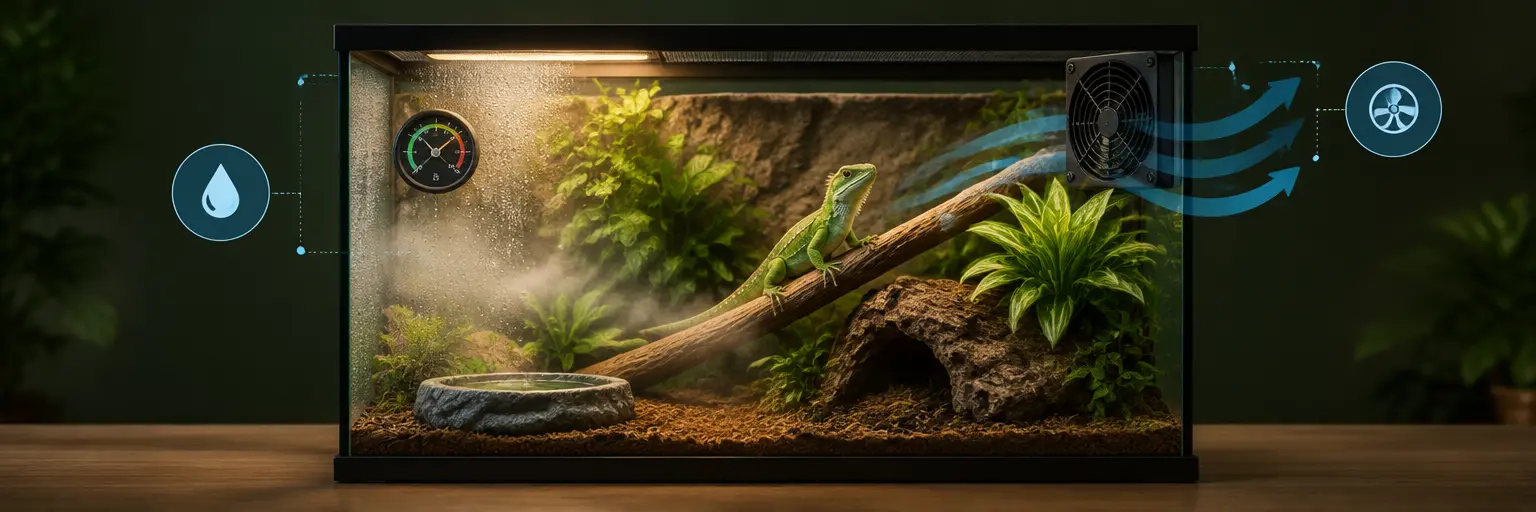
Mastering humidity and ventilation in reptile enclosures is the secret to a thriving, healthy pet—whether you’re keeping a tropical chameleon, a desert-dwelling bearded dragon, or a forest-floor gecko. Getting these two factors right prevents respiratory infections, painful shedding issues, and dangerous mold growth, while also boosting natural behaviors like basking and burrowing. Our expert guides break down the science of reptile environmental control, offering step-by-step setup tips, species-specific humidity ranges, and smart ventilation strategies that work with any terrarium type. From choosing the right substrate and misting systems to adjusting airflow for proper heat gradients, we cover it all. Say goodbye to guesswork and hello to a vibrant, stress-free habitat your exotic companion will love. Whether you’re a first-time keeper or a seasoned hobbyist, you’ll find practical, actionable advice to fine-tune your enclosure’s climate—ensuring your cold-blooded friend stays active, hydrated, and resilient year-round. Explore our tips today and create the perfect microclimate for your reptile’s long-term well-being.
🤔 Maintaining optimal reptile enclosure humidity control is crucial for your pet's health. This article explores the critical relationship between temperature and…
Read article
😊 Proper reptile enclosure ventilation is crucial. This guide explores the pros and cons of using fans, offering expert advice on reptile…
Read article
🤔 Poor ventilation significantly impacts reptile appetite and digestion. PetCareWorld explores how inadequate airflow compromises your reptile's health, leading to reduced food…
Read article
😊 Ensure your reptile thrives! Stagnant air in reptile enclosures breeds illness. Learn crucial reptile enclosure ventilation tips to maintain a healthy…
Read articleCreating the ideal environment for your scaly companion goes beyond choosing the right substrate or heat lamp. Humidity and ventilation are the twin pillars of reptile health, directly influencing shedding, respiratory function, and immune response. At PetCareWorld, we break down the science of terrarium climate control into actionable steps, helping you avoid common pitfalls like mold growth or dehydration. Whether you keep a desert-dwelling bearded dragon or a tropical crested gecko, understanding these dynamics ensures your pet thrives, not just survives.
Proper humidity is not a one-size-fits-all number; it is a species-specific requirement. Reptiles rely on environmental moisture to loosen old skin during ecdysis (shedding). When humidity is too low, retained shed can constrict toes or tails, leading to necrosis. Conversely, excessive moisture can invite bacterial or fungal infections, especially in species adapted to arid climates. For example, leopard geckos need 30-40% humidity, while green tree pythons prefer 70-80%. Monitoring with a digital hygrometer is non-negotiable, as analog gauges often drift in accuracy.
Ventilation plays a critical role in maintaining that delicate balance. Airflow prevents stagnant, humid pockets from forming near the substrate, which are breeding grounds for pathogens. It also facilitates evaporative cooling, helping your reptile regulate body temperature without overheating. A well-ventilated enclosure mimics natural breezes, encouraging normal respiratory function. When you design your setup, consider a mesh top or side vents that allow passive air exchange without creating a draft that stresses your pet.
Glass terrariums with solid glass tops are notorious for trapping humidity, making them hard to dry out for desert species. In contrast, screen-top cages offer excellent airflow but often struggle to retain moisture for tropical reptiles. The solution lies in hybrid designs: use a solid glass lid partially covered with acrylic, leaving a small gap for ventilation. For wooden vivariums, install adjustable vents near the top and bottom – this creates a chimney effect where warm, moist air rises and exits, while cooler, drier air enters from below.
Active ventilation systems, such as low-speed computer fans fitted into exhaust ports, are game-changers for large enclosures. They allow precise control over humidity spikes, especially after misting. However, avoid pointing fans directly at your reptile, as constant airflow can cause dehydration or respiratory irritation. Instead, position fans to circulate air gently across the substrate and foliage. For bioactive setups, ventilation also supports the microfauna (springtails and isopods) that break down waste, keeping your ecosystem healthy.
Your substrate is the unsung hero of humidity control. Coconut coir, sphagnum moss, and orchid bark are excellent moisture retainers, ideal for rainforest species. They can hold water for days, gradually releasing humidity into the air. Conversely, sand, paper towels, and reptile carpet dry out quickly, making them perfect for arid terrariums. To create humidity gradients, layer moisture-locking substrate under a hide on one side and keep the other side dry, giving your reptile the choice to regulate its own microclimate.
Be wary of substrates that worsen ventilation issues. Fine substrates like play sand can become compacted, trapping moisture and promoting anaerobic bacteria. Coarser materials, such as cypress mulch, allow air pockets to form, improving gas exchange. If you use a misting system, pair it with a drainage layer and substrate that dries within 24-48 hours to prevent mold. Always monitor substrate moisture with your hand – it should feel damp, not soggy – and replace top layers weekly to maintain hygiene.
Seasonal changes impact both ambient humidity and your reptile's hydration needs. During winter, indoor heating systems dry out the air, often dropping humidity below target. Counteract this by increasing misting frequency or using a cool-mist humidifier near the enclosure. In summer, outdoor humidity can rise unexpectedly, especially in coastal areas; you may need to switch to top ventilation and reduce misting. A programmable misting system with a hygrostat (humidity controller) automates these adjustments, providing consistency while you sleep or work.
For diurnal species like iguanas, mist on a morning-evening schedule to mimic dew cycles. For nocturnal species like geckos, mist after lights-out, as this is when they are most active and likely to drink droplets. Do not mist during basking hours, as water droplets on a hot basking rock can cause burns. Always use reverse-osmosis or dechlorinated water to avoid mineral deposits on glass and respiratory irritation from chlorine vapors. Observe your reptile's behavior – if it constantly sits near the water bowl, the air is likely too dry.
Poor ventilation and improper humidity manifest early through subtle signs. A reptile with a respiratory infection will exhibit open-mouth breathing, wheezing, or nasal discharge, often accompanied by a loss of appetite. Chronic low humidity causes stuck shed, dry scales, and sunken eyes, while overly damp conditions lead to scale rot – characterized by discolored, pitted, or ulcerated skin. These conditions are painful and can become systemic if untreated, so regular visual inspections are your first line of defense.
If you notice any red flags, first correct your enclosure’s microclimate rather than medicating blindly. Increase ventilation by opening vents or lowering water dish placement. Provide a "humid hide" – a closed container with damp moss – as a rescue spot for stuck shed. For suspected bacterial issues, consult a reptile vet; they may prescribe antibiotics or recommend a dry-docking protocol. Keep detailed records of temperature, humidity, and behavior daily; this data is invaluable for diagnosing recurring issues. Prevention through correct airflow is always cheaper and less stressful than treatment.
Check at least twice daily – morning and evening – using a reliable digital hygrometer. Humidity fluctuates with temperature, misting, and even human activity. For high-maintenance species, consider continuous monitoring with a Bluetooth hygrometer that alerts your smartphone. Rapid swings are more harmful than a stable, slightly-off target, so prioritize consistency over perfection.
Yes, but only if it produces cool mist and does not release any antimicrobial additives or scents. Place it outside the enclosure to avoid wetting your reptile directly. However, room humidifiers are less precise; invest in a hygrostat to control output. Reptile-specific misting systems are often safer as they can be set on timers and positioned for even coverage.
For a paludarium with both water and land, use a screen lid that covers 40-60% of the top. Add a small, adjustable fan on one side set to run for 15 minutes every few hours – this drives moisture across the water feature without creating fog. Ensure the land area remains drier, with substrate that drains to a false bottom, to prevent waterlogging.
No, never seal a terrarium completely. Reptiles produce ammonia and carbon dioxide, which need to escape. Without ventilation, toxic gas buildup can cause neurological symptoms and suffocation. If you struggle to maintain humidity, use a partial glass lid with a 1-inch gap, or install breathing tubes. Always prioritize airflow over moisture retention.
Signs of excessive airflow include a constantly dry substrate that cakes and crumbles, difficulty maintaining humidity after misting, and your reptile spending time hiding under humid hides or near the water bowl. You may also see a windshield effect – a visible draft from vents. While airflow is beneficial, drafts stress reptiles. Reduce vent size or cover some openings with mesh to slow air movement.







