Recall Training for Birds: The Benefits of Regular Practice
😊 Boost your feathered friend's safety and strengthen your bond with consistent bird recall training. Discover the numerous benefits of regular practice…
Read article

Master the art of Bird Recall Training with PetCareWorld’s expert guidance—transform your feathered friend into a confident, off-perch companion who returns to you on command, every time. 🦜 Whether you’re raising a curious parrot, a playful budgie, or a spirited cockatiel, recall training is the cornerstone of trust, safety, and enrichment, turning daily interactions into rewarding bonding sessions. Our step-by-step methods blend positive reinforcement, patience, and proven techniques to help you teach your bird to fly to your hand or shoulder, even in distracting environments. Discover how to use high-value treats, clicker cues, and consistent practice to build a rock-solid response, while avoiding common pitfalls that stall progress. From beginner basics to advanced distance challenges, our tips cover indoor and outdoor safety, flight suit options, and essential body language reading—ensuring a happy, well-socialized pet that feels secure and eager to engage. Unlock the joy of a bird that comes when called, and enjoy a deeper connection that lasts a lifetime. Explore our expert advice today and start your journey toward effortless recall success! 🏆
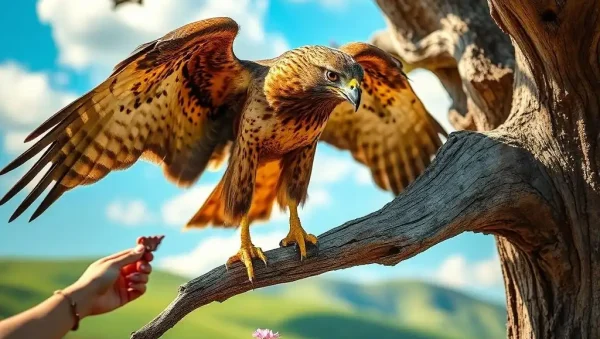
😊 Boost your feathered friend's safety and strengthen your bond with consistent bird recall training. Discover the numerous benefits of regular practice…
Read article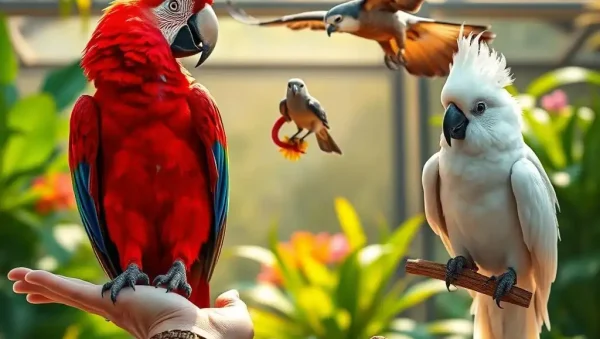
😊 Discover effective bird recall training methods tailored to different species. PetCareWorld's expert guide helps you adapt training to your bird's unique…
Read article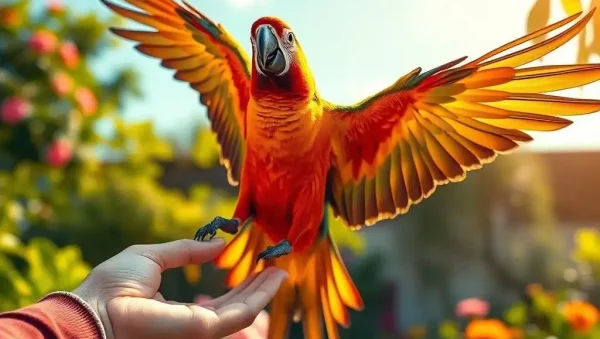
😊 Master reliable bird recall with clicker training! PetCareWorld's expert guide reveals a powerful, effective method to improve your bird's responsiveness and…
Read articleWelcome to our dedicated Bird Recall Training hub at PetCareWorld, where we transform the challenge of teaching your feathered friend to return on command into a rewarding bonding experience. Whether you own a parrot, cockatiel, budgie, or conure, reliable recall is the cornerstone of safe indoor flight and supervised outdoor adventures. In this comprehensive section, we provide expert-approved techniques, positive reinforcement strategies, and troubleshooting insights to help you build a rock-solid recall. From foundational target training to advanced distance recalls, our guides are designed with both novice and experienced bird owners in mind, ensuring your companion enjoys freedom while staying safe under your watchful eye.
Before your bird can master flying back to you, you must establish a foundation of trust and clear communication. This subcategory focuses on the essential first steps: creating a positive association with your recall cue (such as a specific word or whistle) and using high-value treats like sunflower seeds or millet. We emphasize short, frequent sessions inside a small, safe room to minimize distractions. You’ll learn how to read your bird’s body language—fluffed feathers, alert eyes, or vocalizations—to gauge readiness. By pairing the cue with a reward every single time, you condition an automatic response that becomes your bird’s strongest instinct.
Key techniques include stationing your bird on a perch, stepping back a few feet, and rewarding any movement toward you. Gradually increase distance as success improves. We also cover the importance of using a unique, distinct cue that isn’t used in everyday conversation. Consistency is vital: every family member must use the same word and tone. Avoid chasing or punishing a bird that ignores the cue, as this breaks trust. Instead, we provide proven methods to rebuild motivation, such as varying treats and incorporating favorite toys. This foundation ensures your bird sees recall as a game, not a chore.
Target training is a powerful precursor to reliable recall because it teaches your bird to move toward a specific object—like a chopstick or a small stick—on command. In this section, we explain step-by-step how to introduce a target stick, reward touches, and then transfer that behavior to “come” or your chosen recall word. This method leverages your bird’s natural curiosity and problem-solving abilities, making recall a deliberate, precise action rather than a hopeful guess. You’ll learn how to shape behavior by rewarding successive approximations, ensuring your bird fully understands what earns the treat.
Using a target, you can guide your bird from a distance, creating a visual bridge that reinforces spatial awareness. For example, you might present the target near you, then gradually move it farther away, rewarding your bird for flying to you and then touching the target. This subcategory also covers verbal cue transfer: once the physical action is solid, you pair the word “come” with the target, then phase out the stick. We provide troubleshooting for birds that get distracted by the target’s movement or become overexcited. With patience, target training evolves into a recall that works even in moderately stimulating environments.
Indoor recall training is the safest classroom for your bird, allowing you to control variables like other pets, open windows, or loud noises. This subcategory offers a structured curriculum for moving from perch-to-hand recalls to flying across a room. We recommend starting in a bird-proofed room with closed doors and covered mirrors. Begin with distances of 3–5 feet, then expand to 10–15 feet as your bird’s confidence grows. You’ll learn how to incorporate gentle distractions like a quiet TV or a family member walking through, teaching your bird to prioritize your cue above background stimuli.
We also introduce the concept of “recall games” that keep sessions fun: hidden treats, recall from a play gym, or alternating recall between two people. These drills build muscle memory and reinforce that coming to you always results in something wonderful. Importantly, we cover how to handle setbacks—if your bird lands elsewhere, simply walk closer and cue again without frustration. Frequent, short sessions (5–10 minutes) are more effective than long, tiring ones. Our indoor drill plans are adaptable for small birds with limited flight space and larger parrots requiring more room, ensuring every bird progresses at its own pace.
For birds that have mastered indoor recall, venturing outdoors requires advanced preparation and rigorous safety protocols. This subcategory delves into recalling your bird in open spaces, parks, or your garden while managing wind, wildlife, and open skies. We stress that outdoor recall should only be attempted with a harness or in a fully enclosed aviary–style setting first, transitioning to free flight only after months of flawless indoor performance. You’ll learn how to condition your bird to the complexity of outdoor sounds and sights using positive reinforcement, starting with short supervised outings on a leash or harness.
We provide expert advice on emergency recall techniques, such as using a high-pitched whistle paired with an ultra-rewarding treat (like a peanut) that you reserve only for outdoor sessions. The importance of reading weather conditions, avoiding flight at dusk or during strong winds, and recognizing when your bird becomes overstimulated are covered in depth. Our guides also address legal considerations and insurance advice for free-flight birds. By following our structured outdoor progression—from harness training to supervised flights in a secure yard—you’ll give your bird the joy of real flight while ensuring every return is instant and reliable.
Even dedicated owners face hurdles: a bird that flies away when the cue is given, responds only when hungry, or ignores recall during hormone season. This subcategory provides a diagnostic framework to identify the root cause of recall failure. We walk you through factors like insufficient reward value, inconsistent cue usage, or environmental overstimulation. For example, if your bird stops responding, we recommend reverting to shorter distances and increasing treat value. If your bird lands on high furniture, we explain how to use target training and step-up commands to safely retrieve without creating fear.
We also address behavioral issues like territorial aggression or jealousy, which can sabotage recall. Solutions include separate training sessions for multi-bird households and reinforcing calm behavior. Additionally, we discuss medical conditions affecting vision or wings that might impair flight recall. Our practical, empathetic approach ensures you never feel alone in this journey. Each troubleshooting article includes real-world case studies from our community and avian behaviorists, offering actionable steps to rebuild a positive reinforcement loop. Remember, patience and persistence are your greatest tools—every bird learns at its own pace.
Most birds show basic recall within 2–4 weeks of daily 10-minute sessions, but full reliability varies by species, age, and prior handling. Young, socialized birds may learn in 2 weeks, while older or rescued birds might take 2–3 months. Consistency is the biggest factor—daily practice in a quiet room yields faster results than sporadic sessions. Always progress from short distances to longer flights, and never rush outdoor free flight until indoor recall is 100% consistent for several months.
Yes, with adaptation. Parrots, cockatiels, budgies, and conures are highly trainable due to their intelligence and social nature. Doves and pigeons also respond well to food-based recall. Flightless birds or those with clipped wings require a different approach: focus on step-up commands and target training within arm’s reach. Always respect your bird’s physical capabilities—for instance, very small birds have shorter attention spans, so keep sessions brief and high-energy.
High-value, small, and healthy treats like millet spray pieces, sunflower seeds, or tiny bits of almond are ideal. Reserve these exclusively for recall sessions to maintain their extraordinary value. For birds with weight issues, use pellets or vegetables like sweet corn kernels. Rotate treats weekly to prevent boredom. The treat should be delivered immediately after the recall response, within one second, to strengthen the association clearly.
Only after your bird has demonstrated flawless recall in a controlled outdoor area like a screened porch or large aviary for at least 6 months. Even then, absolute safety requires a harness or a fully enclosed flight suit as a backup. Birds can be spooked by hawks, sudden noises, or gusty winds. We strongly advise against free flight in open public spaces unless you are a professional handler. Start with harness training to provide a safety net while you assess your bird’s outdoor reliability.
Never punish or chase—that teaches your bird to avoid you. Instead, calmly walk closer, re-offer the cue, and reward any attempt to move toward you. If ignoring becomes a pattern, reduce the distance, increase treat value, and check for distractions you can remove. Review your tone: a bright, cheerful voice works better than a stern one. After the session, reflect on whether you’ve been overusing the cue; if so, choose a new word and retrain.







