Bird Cage Environment: Understanding the Impact of Air Quality
😊 Maintain optimal bird health by understanding how air quality directly impacts your feathered friend. Learn practical steps to improve bird cage…
Read article
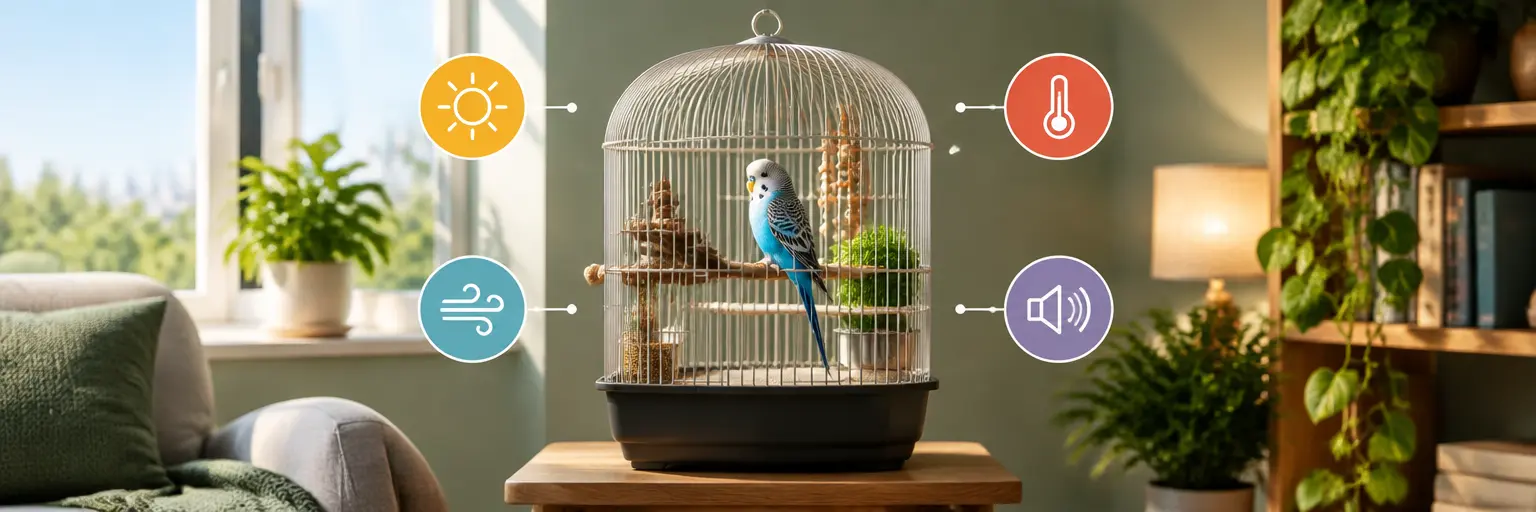
Mastering bird cage placement and environment is essential for your feathered friend’s health, happiness, and longevity. Where you position the cage and how you shape its surroundings directly impacts your bird’s stress levels, sleep quality, and social behavior. 🐦 For optimal well-being, place the cage in a lively but safe room—away from direct drafts, windows, and extreme temperatures. Ensure it’s at chest height so your bird feels secure yet included in family activities. The environment should balance natural light cycles with 10–12 hours of darkness for rest, and avoid placing the cage in the kitchen due to toxic fumes from non-stick cookware. 🏠 Additionally, provide visual barriers on one side (like a wall or plants) to prevent overstimulation, while keeping the other open for interaction. Remember, a well-placed cage reduces feather plucking, screaming, and anxiety. 🔍 Discover key factors like room temperature (65–80°F), humidity, noise levels, and perch variety to create a safe haven that mirrors your bird’s natural habitat. With the right setup, you’ll foster trust, curiosity, and vitality in your avian companion. 🌿
😊 Maintain optimal bird health by understanding how air quality directly impacts your feathered friend. Learn practical steps to improve bird cage…
Read article
😊 Discover the ideal location for your feathered friend's cage! PetCareWorld's expert guide reveals the best bird cage room placement, analyzing each…
Read article
😊 Discover the secrets to a thriving avian companion! PetCareWorld's guide on "Best bird cage environment setup" reveals the perfect blend of…
Read articleWelcome to PetCareWorld's dedicated resource on Bird Cage Placement and Environment, a critical yet often underestimated aspect of avian care. Where you position your bird's cage and how you manage its surrounding microclimate directly impacts their physical health, mental stimulation, and overall longevity. This subcategory dives deep into the art and science of creating a safe, stress-free sanctuary for your feathered companion. From avoiding toxic kitchen fumes to mimicking natural daylight cycles, we provide actionable, research-backed advice to transform your home into a bird-friendly haven, ensuring your pet thrives, not just survives.
The room you select sets the stage for your bird's daily life. High-traffic areas like the living room offer social interaction, which is vital for intelligent species like parrots and cockatiels, promoting emotional bonding and reducing feather plucking. However, kitchens are a major no-go zone due to hidden dangers like non-stick pan fumes (PTFE) and accidental burns. Similarly, avoid quiet, isolated rooms that can trigger depression, as birds are flock animals that need visual and auditory contact with their human family.
Elevation matters enormously. Place the cage at chest level or higher, as birds instinctively feel safer when they can look down on their surroundings. A cage placed on the floor triggers deep-seated prey anxiety, as ground-level positioning feels vulnerable to hidden predators. Ensure the cage is against at least one wall to provide a sense of security and a clear "escape route" view, but avoid direct drafts from windows, doors, or air conditioning vents that can cause sudden temperature drops and respiratory infections.
Birds have a high metabolic rate and sensitive respiratory systems, making stable environmental conditions non-negotiable. The optimal temperature range for most pet birds is between 65°F and 80°F (18°C - 27°C). Sudden fluctuations are more dangerous than a steady cooler temperature, as they stress the immune system. Monitor humidity levels too; a dry home (below 30%) can cause dry skin, brittle feathers, and respiratory irritation. Use a cool-mist humidifier near (not inside) the cage during winter months to maintain 40-60% relative humidity.
Air quality is your bird's lifeline. Beyond avoiding aerosol sprays, candles, and smoke, you must invest in a HEPA air purifier specifically placed near the cage to filter out dander, dust, and microscopic toxins. Birds are extraordinarily sensitive to airborne pollutants because their air sacs exchange oxygen far more efficiently than mammals do. Be vigilant about off-gassing from new furniture, carpets, or cleaning products. A high-quality air purifier with activated carbon is a small investment compared to emergency vet bills for respiratory distress.
Avian vision perceives ultraviolet (UV) light, which is invisible to humans but crucial for vitamin D3 synthesis and calcium absorption. Without adequate UVB, birds develop metabolic bone disease, weak eggshells, and brittle feathers. While direct sunlight is best, placing the cage near a window without a UV-filtering film (which blocks 99% of UVB rays) still helps, but never leave the cage in direct, unfiltered sun for long periods as it can cause heatstroke. A full-spectrum avian lamp (specifically emitting 5-10% UVB) is essential for indoor birds, programmed to mimic sunrise and sunset.
Controlling photoperiod (day length) is equally vital. In the wild, birds rely on daylight to regulate hormones, molt, and breeding behavior. On average, birds need 10-12 hours of quiet, dark sleep nightly to maintain a healthy immune system. Avoid using white or blue LEDs at night, as they disrupt melatonin production. Use a separate, dim red bulb if you need to check on your bird after dark. Establishing a consistent 7:00 AM "lights on" and 7:00 PM "lights off" routine prevents hormonal aggression and chronic stress.
Identify and eliminate invisible stressors. Never place the cage directly across from a television or computer screen, as flickering images and fast motion cause overstimulation and anxious pacing. Similarly, avoid positioning near a front door or hallway where strangers pass frequently, which triggers alarm calls and territorial behavior. Ideally, the cage should have a clear view of household activity but be partially shielded by a plant or a decorative screen to offer a "safe corner" retreat without being hidden from the flock.
Perching stability matters in placement—ensure the cage stand is wobble-free. Birds use their beak to grip bars, and any rocking motion undermines their balance and confidence. Check for swinging curtains, ceiling fans, or shadow-producing hanging plants that cast predatory silhouettes. For multi-bird homes, place cages so that birds can see each other but cannot physically touch beaks to prevent territorial fights. Maintain at least 2-3 feet of clearance between cages to allow for personal space and reduce aggression signals.
Your bird's environment needs dynamic adjustments as seasons change. In summer, move cages away from south-facing windows to prevent overheating, and ensure the room has cross-ventilation circulation without exposing the bird to a direct draft. In winter, pull the cage 12-18 inches away from exterior walls and single-glazed windows to avoid cold radiation, which saps body heat. Consider adding a ceramic heat emitter (not a heat lamp, which can burn) during extreme cold snaps, but always with a thermostat to prevent overheating.
Seasonal rotation of the cage's location within the same room is a subtle but effective enrichment technique. Moving the cage 30-45 degrees every few weeks introduces novel visual perspectives, breaking monotony and encouraging exploratory behavior. However, never move the cage to a completely different room without a gradual acclimatization period (introduce the new room for 1-2 hours daily over a week). Birds can become disoriented and stressed with sudden relocations, which may trigger a temporary decrease in appetite or vocalization. Consistency of your presence matters more than the furniture around them.
No, absolutely avoid the kitchen entirely. Even with separate zones, aerosolized cooking oils, smoke from burnt food, and debut cleaning agents travel through the air. The most lethal threat is non-stick cookware (Teflon) which releases PTFE gases that are instantly fatal to birds' sensitive lungs, even when no smoke is visible.
Keep the cage at least 18 inches away from windows. Direct, unfiltered sunlight can cause hyperthermia, and background noise or sudden movements of outdoors (e.g., predators, cars) create chronic stress. A sheer curtain between the cage and window diffuses harsh rays while still providing ambient light.
No. Standard LED or incandescent bulbs emit zero UVB rays needed for vitamin D3 synthesis. You must use a specialized avian bulb that explicitly states "UVB 5.0" or higher. These bulbs degrade over time, so replace them every 6-12 months per manufacturer instructions, even if they still produce visible light.
Aim for 40-60% relative humidity. Use a digital hygrometer placed near the cage but not inside, to monitor. If your home falls below 35%, use a cool-mist humidifier, or alternatively, provide a shallow dish of water placed outside the cage (not for drinking, but for ambient evaporation), and mist the bird with lukewarm water 3-4 times weekly.
For most birds, a 2-3 week interval is optimal, but only within the same room and always in small increments (e.g., shifting 10 inches left). Avoid moving to a new room unless you have a quarantine protocol. Over-rotation causes anxiety; under-rotation causes boredom. Watch your bird's body language—fluffed feathers or aggressive beak lunging signals stress, while active chirping and playing indicate approval.