Clicker Training for Problem Behaviors: Addressing Unwanted Actions in Birds
😊 Discover how clicker training can effectively address unwanted behaviors in your feathered friend. PetCareWorld shows you how to use positive reinforcement…
Read article
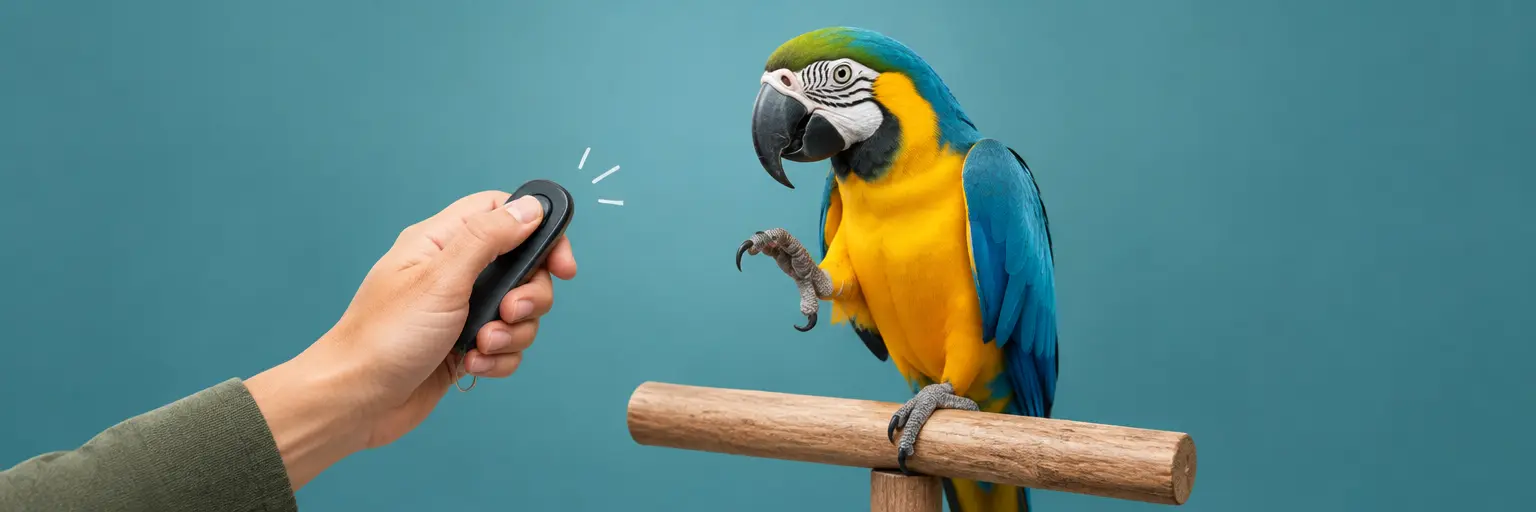
Discover the transformative power of clicker training for birds—a science-backed, positive-reinforcement method that turns everyday moments into exciting learning opportunities. Whether you have a playful parrot, a curious cockatiel, or a clever budgie, this approach harnesses your feathered friend’s natural intelligence to build trust, reduce fear, and eliminate problem behaviors like biting or excessive screaming. Using a simple click sound paired with a tasty treat, you’ll clearly communicate exactly what your bird does right, making training sessions fun, stress-free, and amazingly effective. In this guide, you’ll discover step-by-step techniques for target training, trick teaching, and even harness or step-up commands, all tailored to your bird’s unique personality and pace. Perfect for beginners and seasoned bird owners alike, clicker training not only strengthens your bond but also provides essential mental stimulation that prevents boredom and feather plucking. Unlock your bird’s hidden potential, boost their confidence, and enjoy a more harmonious home—all with a tiny click and a reward.
😊 Discover how clicker training can effectively address unwanted behaviors in your feathered friend. PetCareWorld shows you how to use positive reinforcement…
Read article
😊 Discover the science behind clicker training's effectiveness for birds! PetCareWorld reveals how this positive reinforcement method leverages avian learning principles for…
Read article
😊 Give your rescue bird a happy, healthy life! Our rescue bird clicker training guide on PetCareWorld provides expert advice and practical…
Read articleClicker training is one of the most effective, science-backed methods for teaching birds desired behaviors, reducing feather plucking, and building a trusting bond. This subcategory within PetCareWorld’s Bird Care section dives deep into positive reinforcement techniques tailored specifically for avian companions—from parakeets to macaws. Whether you’re addressing biting, screaming, or just want to teach fun tricks, you’ll find expert-crafted, step-by-step guidance here. We focus on ethical, force-free methods that respect your bird’s natural intelligence, making training sessions both enjoyable and mentally enriching for your feathered friend.
Before you pick up a clicker, you must understand the core principles that make this method so powerful. Clicker training relies on operant conditioning: the clicker’s sharp, consistent sound marks the exact moment your bird performs a desired action, immediately followed by a high-value treat. This creates a clear communication bridge—your bird learns that “click equals treat,” encouraging repetition of the behavior. Unlike verbal praise, which varies in tone and timing, the clicker delivers a precise, unmistakable signal every single time, accelerating learning speed and reducing frustration for both of you.
In this section, we’ll walk you through the essential tools: a reliable clicker, a treat pouch, and training treats that are small, healthy, and irresistible (like millet spray or tiny sunflower seeds). You’ll learn how to “charge” the clicker—building a positive association before any formal training begins. We also emphasize setting up a distraction-free training area, choosing a time when your bird is relaxed and hungry, and keeping sessions short (3-5 minutes) to match avian attention spans. Master these foundations, and you’ll avoid common pitfalls like overfeeding or confusing your bird with inconsistent cues.
Target training is the gateway to all other clicker skills. You’ll use a target stick or a chopstick with a colorful tip, teaching your bird to touch it with its beak or foot. Start by presenting the target near your bird, and the instant it investigates or touches it, click and reward. Then, gradually move the target farther away, encouraging your bird to step toward it, stretch, or even climb onto your hand. This simple exercise builds confidence, physical coordination, and teaches your bird that interacting with you equals positive outcomes—a perfect antidote for fearful or hand-shy birds.
Once your bird reliably targets, you gain endless possibilities: you can guide it onto a scale for health checks, teach it to step up onto your finger without biting, or move it safely between perches and cages. Target training also forms the basis for more complex tricks like turning around, fetching, or flying to a specific spot. In this section, we provide troubleshooting tips for hesitant birds, such as using a longer stick initially or breaking the task into smaller approximations. You’ll learn how to fade the target stick gradually, ensuring your bird responds to verbal cues and hand signals alone—maximizing safety and convenience in daily handling.
Beyond basic manners, clicker training unlocks your bird’s remarkable cognitive abilities. You can teach impressive behaviors like waving, playing basketball, recycling small toys, or even vocalizing on cue. The key is shaping: breaking a complex behavior into tiny, achievable steps, rewarding each progressive approximation until the full action emerges. For example, to teach “spin,” you reward the bird for turning its head slightly, then a quarter turn, then a full circle—each session builds on the last. This process stimulates your bird’s brain, preventing boredom and associated behavioral issues like feather destructive chewing or repetitive screaming.
Equally important is using clicker training to solve problem behaviors. Does your bird bite when you reach into its cage? Teach it to target a stick instead, redirecting its beak to a positive action. Does it scream for attention? Train it to press a bell or flap its wings quietly instead—rewarding calm behavior while ignoring the yelling. This section covers desensitization and counter-conditioning techniques, where you pair previously scary triggers (like nail clippers or towels) with clicks and treats, transforming fear into excitement. You’ll leave with a toolkit to address aggression, phobias, and over-bonding issues—all through respectful, choice-based training that builds lasting trust.
Consistency trumps duration when it comes to bird training. Aim for two to three short sessions daily—morning and evening are often ideal, as birds are naturally most active and alert. Each session should last no more than five minutes, with clear start and end signals (like a special treat or a “finished” phrase) to help your bird anticipate transitions. Within this section, we share sample weekly schedules that balance new skill acquisition with maintenance of previously learned behaviors. You’ll also learn to recognize your bird’s “learning fatigue” signs—avoidance, preening, or aggressive neck stretching—and how to pause before frustration builds.
Tracking your bird’s progress is vital for long-term success. We recommend keeping a simple training journal, noting the date, target behavior, number of successful repetitions, and any novel distractions. This helps you adjust criterion levels—e.g., raising the bar only when your bird succeeds at least 80% of the time. You’ll also discover how to generalize behaviors across different environments (from living room to vet’s office) and to gradually thin the reinforcement schedule without losing reliability. By monitoring milestones, you’ll celebrate tiny wins, identify plateau phases early, and maintain motivation for both you and your feathered pupil.
Diet and environment directly influence your bird’s ability to learn. A bird on an all-seed diet may be lethargic or irritable, so we advocate for a balanced pelleted base, fresh vegetables, and occasional fruit—training treats should be low-fat and healthy, not sugary junk. This section covers crafting a training treat schedule that doesn’t unbalance your bird’s daily caloric intake, using alternatives like chopped veggies or tiny pieces of nut. We also stress the importance of hydration, proper sleep (10-12 hours of darkness), and a physically enriching cage with toys that encourage foraging—all of which prime your bird’s brain for optimal focus during sessions.
Safety extends beyond treats. Ensure your clicker volume is moderate, never startling your bird. Use only bird-safe training equipment, avoiding strings, snaps, or small parts that could be ingested. We also discuss ethical boundaries: force, punishment, or negative reinforcement are strictly forbidden, as they damage trust and cause chronic stress. Instead, you’ll learn to create a “communication contract” where your bird can opt out—signaling “no, thanks” by turning away—fostering autonomy. Additionally, we advise pairing training with environmental enrichment puzzles that simulate natural foraging, making your bird’s whole day a joyful, learning experience. These pillars ensure your training approach promotes not just obedience, but lifelong well-being.
Most birds understand the clicker-treat connection within one short session. However, mastering a basic behavior like targeting may take a few days to a couple of weeks of daily practice. The timeline depends on your bird’s species, age, and previous experiences. Patience and consistency are key—young, curious birds often learn faster, while rescued birds may need extra time to build trust. Focus on progress, not perfection.
Yes, clicker training works with virtually all bird species, from tiny finches to large parrots. Even non-talking birds like canaries can learn target behaviors. The key is adapting treat size, session length, and training location to the bird’s physical and sensory needs. For nervous species, use a quieter clicker and begin at a distance. Consult your avian vet if unsure about your bird’s health suitability.
High-value, low-fat treats are ideal—items your bird doesn’t get in its daily bowl. Examples include small pieces of sunflower seed, a tiny bit of walnut, millet spray, or chopped bell pepper. Ensure treats are small (pea-sized) to avoid overfeeding during multiple repetitions. Rotate treat types to keep your bird’s motivation high, but avoid sugar or salt, which can harm avian health.
Teach your bird an incompatible quiet behavior, like pressing a small bell or whistling softly. Click and reward this calm action, while ignoring screaming entirely—no eye contact, no “shush,” no reaction. Also train relaxation cues (e.g., “settle” when it fluffs on a perch). Over time, your bird learns that quiet leads to treats, while screaming yields nothing. Consistency across all family members is crucial.
Absolutely, but it requires extra patience and a slower pace. For abused birds, start by simply sitting near the cage, clicking and tossing treats from a distance, allowing voluntary approach. Build positive associations without pressure. Use high-value treats and end sessions on a happy note. Many veteran birds thrive with clicker training, gaining confidence and physical coordination. Always monitor for stress signals and adjust accordingly; consult a professional avian behaviorist if needed.







