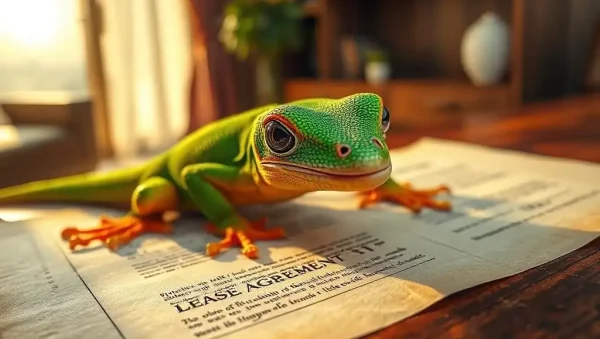
Legal Considerations for Reptile Ownership: What Every Owner Must Know
Owning a reptile is a rewarding experience, but it carries a unique set of legal responsibilities that vary widely by location. At PetCareWorld, we break down the complex regulations surrounding reptile ownership—from permits and endangered species laws to housing standards and liability issues. This subcategory empowers you to navigate the legal landscape confidently, ensuring your exotic pet stays healthy and your ownership remains compliant.
🔍 Understanding Local, State, and Federal Laws
Reptile laws are rarely uniform, and what is legal in one state may be strictly prohibited in another. For instance, certain python species are banned in Florida due to invasive risks, while other states require no permits at all for the same animal. Local municipalities often add their own ordinances, covering noise, enclosure sizes, and even the number of reptiles you can own. Before acquiring any reptile, you must research your city, county, state, and federal regulations. The U.S. Fish and Wildlife Service (USFWS) enforces federal laws like the Lacey Act, which prohibits the interstate transport of illegally obtained species.
Ignorance is not a legal defense. Many owners face fines, confiscation of pets, or even criminal charges simply because they missed a county registration step. Start by visiting your state’s fish and wildlife agency website, then call your local animal control office for a complete picture. Keep documented proof of your research and permits, as inspectors may request them at any time. For exotic species, international treaties like CITES (Convention on International Trade in Endangered Species) also come into play, adding another layer of compliance for imported or rare reptiles.
📜 Permits, Licenses, and Registration Requirements
Most jurisdictions require a specific permit for reptiles classified as dangerous, exotic, or endangered. These permits are not automatic; they often involve a background check, proof of secure housing, and an application fee. For example, venomous snake owners in Texas must obtain a “Venomous Snake Permit,” while California bans most native reptiles from being kept as pets without a special license. Even common species like leopard geckos may need a simple pet registration in some cities. The process ensures you have the experience and facilities to handle the animal safely, protecting both you and the public.
Renewal is just as important as initial approval. Many permits expire annually or biennially, and failing to renew can result in immediate loss of your pet. Keep a calendar alert for all expiration dates, and store copies of permits digitally and physically near your reptile’s enclosure. If you move to a new state, your existing permit may become void, forcing you to reapply under different rules. Always check if your insurance policy covers exotic pet ownership, as some insurers require proof of legal permits before extending liability coverage.
🦎 Endangered Species and CITES Compliance
Endangered reptiles, such as many tortoise and iguana species, are heavily protected under both U.S. law and international treaties. The CITES agreement classifies species into appendices that dictate trade restrictions. For instance, a radiated tortoise (Appendix I) cannot be legally traded across borders except under exceptional circumstances, while a green iguana (Appendix II) requires export permits. Illegal possession of a CITES-listed reptile can lead to severe penalties, including imprisonment. Even captive-bred specimens of protected species often require certificates of captive propagation, proving they were not taken from the wild.
When purchasing any reptile, request a documented lineage or a CITES certificate. Reputable breeders happily provide these documents, while pet stores may not. If you inherit or rescue a reptile, verify its legal status immediately—the previous owner’s violations do not transfer to you, but harboring an illegal animal does. Contact the USFWS Office of Law Enforcement if you are unsure about a species. Additionally, never attempt to release a captive reptile into the wild, as this can violate state laws against introducing non-native species and harm ecosystems.
🏠 Zoning, Housing, and Public Safety Regulations
Your home’s zoning classification can determine whether you may keep a large constrictor or a venomous species. Residential zoning often restricts certain reptiles to commercial or agricultural areas due to escape risks. For example, a residential neighborhood may prohibit reticulated pythons outright, while agricultural zones allow them with a secure outdoor pen. Building codes may also dictate enclosure strength, ventilation, and temperature controls, especially for animals that can bite or crush. Your landlord or homeowner’s association (HOA) may add separate rules, including pet deposits or outright bans on reptiles.
Public safety laws typically focus on escape prevention. You must have locking, escape-proof enclosures that meet minimum size and security standards. If your reptile escapes, many states require immediate notification to local authorities, and failure to do so can result in fines. Venomous species often need double-locking mechanisms, warning signs on the enclosure, and a bite protocol plan. Some cities mandate that owners of large constrictors carry liability insurance of up to $1 million. Always document your enclosure’s specifications and maintenance, as these records can prove compliance during inspections.
⚖️ Liability, Insurance, and Negligence Risks
Reptile owners can be held strictly liable for injuries caused by their pets, even if the bite occurred due to unintentional handling. Unlike dog laws, which often require a “one bite” rule, reptile attacks are treated with extreme caution because of the potential for serious injury or envenomation. If your snake bites a neighbor, your homeowner’s insurance may not cover the claim unless you purchased a special exotic pet rider. Many insurers exclude reptiles entirely, leaving you personally responsible for medical bills, legal fees, and potential punitive damages. A single lawsuit can bankrupt an uninsured owner.
To manage risk, always purchase a separate exotic animal liability policy if your regular insurance excludes reptiles. Document every interaction with your reptile, including feeding, handling, and enclosure maintenance, to show reasonable care. Post clear warning signs if you keep venomous species, and never let children or untrained adults near the animal unsupervised. If a bite occurs, seek immediate medical help and preserve the reptile for identification—this can be crucial for antivenom selection and legal defense. Proactive safety measures not only protect others but also reduce your legal exposure significantly.
❓ Frequently Asked Questions
Do I need a permit to own a common pet snake like a ball python?
Most states do not require a permit for ball pythons, but some cities do. For example, New York City bans them, while Denver allows them with a small fee. Always check your local municipality and county regulations before purchase, as municipal rules often override state wide laws.
What happens if I am caught owning a reptile without a required permit?
Penalties vary, but you may face fines ranging from $100 to $10,000, confiscation of the animal, and in severe cases, misdemeanor criminal charges. Authorities may also place you on a watchlist for exotic animal ownership, making future permits harder to obtain.
Are all venomous snakes illegal to keep as pets?
No, most states allow venomous snakes with a specific permit, but some states like Hawaii and New York ban them entirely. Permitted species often require proof of experience, secure housing, and a venomous snake inspection. Always verify your state’s exact list.
Can I own a sea turtle as a pet?
No, all sea turtles are protected under the Endangered Species Act and CITES, making private ownership illegal in the U.S. and most countries. Even possessing a shell or egg is a federal offense. Consider a land tortoise instead, but check if your state permits it.
If I move to another state, does my reptile permit transfer?
No, permits are jurisdiction-specific. You must immediately apply for new permits in your new state before bringing your reptile across state lines. Some states require a health certificate and a 30-day quarantine. Failure to do so can lead to confiscation.