When to Seek Professional Help: Identifying Serious Issues in MultiCat Dynamics
🤔 Is your multicat household less harmonious than you'd like? PetCareWorld reveals key signs of serious issues, offering practical solutions for achieving…
Read article
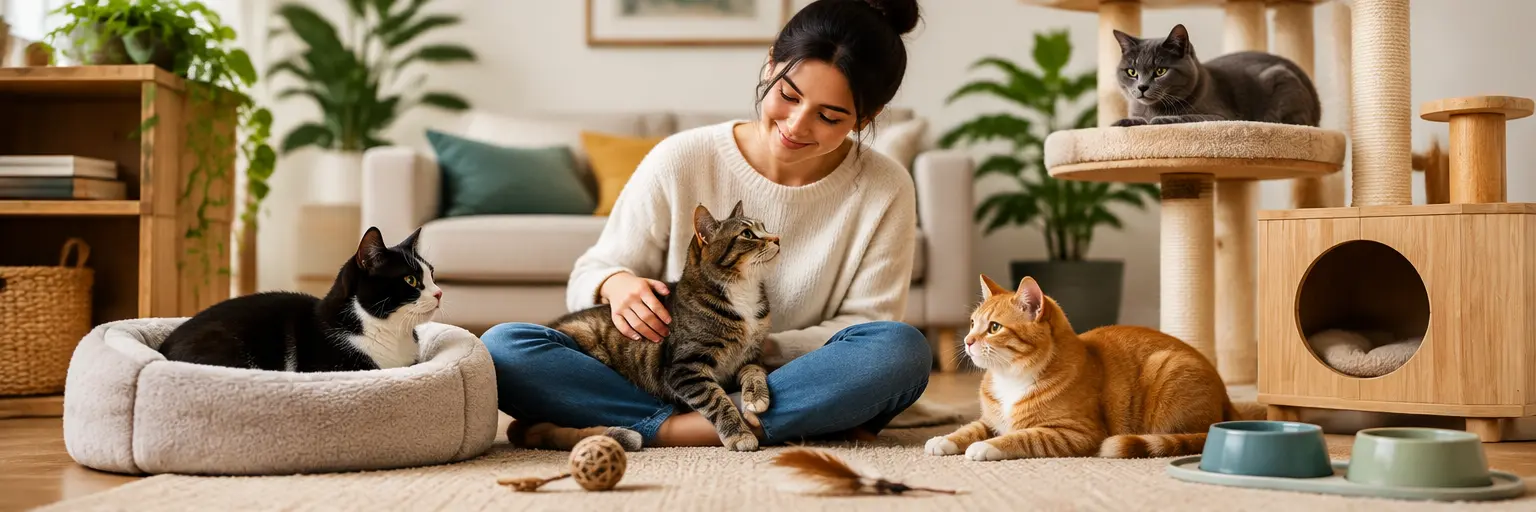
Bringing multiple cats into one home can be a rewarding journey, but it often comes with hisses, territorial standoffs, and hidden stress. Creating a harmonious multi-cat household isn’t about luck—it’s about understanding feline psychology and setting up an environment that supports natural instincts. From gradual introductions and scent swapping to providing vertical spaces, separate resources, and interactive play, the key lies in reducing competition and building positive associations. Whether you’re introducing a new kitten, managing adult cat clashes, or simply want to deepen the bond between your current felines, expert-backed strategies can transform chaos into calm. Discover how to read subtle body language, prevent resource guarding, and design a home where every whisker feels secure, confident, and loved. With patience and the right tools, you can turn your household into a peaceful, playful sanctuary for all your furry companions.

🤔 Is your multicat household less harmonious than you'd like? PetCareWorld reveals key signs of serious issues, offering practical solutions for achieving…
Read article
😊 Navigating multicat household hierarchy problems? PetCareWorld reveals the dynamics of feline social structures, offering expert advice to create a harmonious, stress-free…
Read article
😊 Successfully navigating a multi-cat household hinges on smart resource management. PetCareWorld's expert guide offers essential tips for minimizing conflict and maximizing…
Read article
😊 Successfully integrating a new cat into your home requires careful planning. PetCareWorld's step-by-step guide on introducing a new cat to resident…
Read articleBringing multiple cats into your home can double the joy, but it can also double the stress if introductions and daily dynamics go wrong. At PetCareWorld, we understand that a multi-cat household isn’t just about having more litter boxes—it’s about crafting an environment where every feline feels secure, respected, and free from chronic conflict. This subcategory dives deep into the science of feline social behavior, offering actionable strategies to reduce hissing, hiding, and territorial disputes. Whether you’re adding a new kitten to a resident cat or managing a house with five senior felines, our expert-backed guidance will help you transform chaos into calm. From resource distribution and vertical space to reading subtle body language, you’ll learn how to build a home where each whiskered resident thrives—not merely survives. Let’s unlock the secrets to a peaceful, purr-filled multi-cat sanctuary.
Cats are often mislabeled as solitary animals, but they actually form complex social groups called colonies. In a household, this means your cats don’t see themselves as a “pack,” but rather as cohabiting individuals with shared resources. The key to harmony lies in understanding that each cat needs its own “safe zone” where it can eat, sleep, and eliminate without feeling watched or challenged. When you recognize that hissing isn’t always aggression—it can be a warning to maintain personal space—you’ll stop punishing normal communication and start facilitating better boundaries.
Focus on resource partitioning to meet every cat’s territorial instinct. Provide multiple food stations in different rooms, separate water fountains, and at least one litter box per cat plus one extra (rule of thumb: N+1). Place these essentials away from high-traffic areas to reduce ambush opportunities. Additionally, observe your cats’ preferred lounging spots; if two cats consistently fight over a sunny windowsill, add a second perch nearby. This proactive approach prevents resource-guarding behaviors before they escalate, creating a foundation of security that reduces stress hormones and promotes social tolerance.
In multi-cat households, vertical territory is your best friend. Cats naturally seek high vantage points to observe their surroundings and escape lower-level conflicts. Installing shelves, cat trees, and window perches at varying heights allows each cat to claim an “upper level” without direct confrontation. A 2009 study in the Journal of Veterinary Behavior found that providing elevated resting areas significantly decreased aggressive encounters and increased time spent in positive proximity among cohabiting cats. Your goal is to create a “cat superhighway” of elevated walkways that connect rooms, enabling cats to move through the home without ever touching the floor—where ambushes often happen.
Implement the “rule of 10” for environmental enrichment: at least 10 different perching spots spread across your home, each with a clear view of a doorway or window. Also, consider horizontal space—hidey holes like cardboard boxes, igloo beds, and tunnels give shy cats a retreat during tense moments. Rotate toys and introduce puzzle feeders weekly to prevent boredom, which is a leading trigger for redirected aggression. By layering your environment with these feline “speed bumps,” you’ll dilute tension and encourage more natural, confident movement, making every cat feel like it owns the space rather than merely occupying it.
The most common mistake in multi-cat households is rushing introductions. Whether you’re bringing home a new kitten or a rescue adult, a forced meet-and-greet almost guarantees weeks of hissing and hiding. Instead, follow a staged process that takes at least two weeks. Start by keeping the new cat in a separate “safe room” with its own food, litter, and bedding. Swap scents by rubbing a cloth on each cat’s cheeks and placing it in the other’s area. After a few days, allow visual contact through a cracked door or a baby gate, then move to supervised, short face-to-face sessions using a quiet toy to redirect attention.
Use positive reinforcement to build new associations. Feed both cats on opposite sides of the door during scent swapping, so they link each other’s smell with something delicious. During visual meetings, toss high-value treats like chicken or tuna whenever both cats appear relaxed, not when they stare or growl. Gradually increase the session length over 10-14 days, watching for signs of stress like flattened ears, tail puffs, or excessive grooming. If fights erupt, step back a stage and slow down—never punish a cat for reacting, as that increases anxiety. Patience here isn’t just a virtue; it’s the difference between a household of friends and a house of enemies.
Food and bathroom access are the top triggers for inter-cat aggression, yet many owners place these resources in single, visible locations. In a harmonious multi-cat home, you must spread resources so no cat feels forced to pass a “guard” to eat or eliminate. Place food bowls in separate corners of the kitchen or in different rooms entirely, ideally at least 6 feet apart. For litter boxes, follow the N+1 rule and put one on every floor, away from appliances that make sudden noises. Use open-top boxes for easier escape routes—some cats hate being cornered in a covered box when another cat approaches.
Monitor eating speed to prevent “stealing” behavior. Many cats eat too quickly, then turn to stealing from a slower peer, triggering a chase. Consider using slow-feeder bowls or puzzle feeders to equalize eating time. Also, install microchip-activated pet doors on food stations or litter boxes if one cat is being bullied, giving the shy cat private 24/7 access. Regularly clean litter boxes twice daily to reduce odor, which can make cats more irritable. By treating these resources as “pay-per-use tolls” rather than shared open spaces, you’ll drastically cut down growling, swatting, and the stress that leads to inappropriate elimination.
Cats communicate through subtle signals long before claws come out. A flicking tail, dilated pupils, or a low, growling meow are early warnings that tension is building. In a multi-cat home, your job is to become a feline translator. Learn to spot “pilomotor response” (fur standing up), a crouched posture, or a direct stare with pinned-back ears—these indicate imminent fight behavior. Conversely, a slow blink, a relaxed tail held high, or a soft rub against a doorframe signals comfort. When you notice early stress, intervene calmly with a distraction: toss a tissue, click your tongue, or place a pillow between the cats to break the stare without yelling.
Use the “airplane ears” test to gauge tolerance. If one cat’s ears flatten sideways while another approaches, it’s saying “back off.” Create exit routes by ensuring multiple doorways are open or adding a low barrier like a cardboard box that a cat can jump over to escape. Never physically separate fighting cats with your hands—use a thick towel or a spray of water (directed near, not on the cat). After an altercation, give each cat separate quiet time and then re-engage them with interactive play using a fishing-pole toy to burn off aggressive energy. Recognizing these pre-fight cues allows you to turn a potential brawl into a brief, harmless standoff, reinforcing that disagreements don’t have to escalate. Over time, your cats will learn that you’re a reliable referee, making them less likely to engage in risky behavior.
Most cats require 2 to 4 weeks to adjust to a new housemate, but full acceptance can take 2-6 months for adults. Kittens often adapt faster (1-2 weeks). The key is to follow a slow, staged introduction process and never force interaction. Watch for relaxed body language and mutual grooming as signs of success; if fights persist beyond 4 weeks, consult a veterinarian or a feline behaviorist for targeted interventions.
Generally, a male-female pair often bonds more easily, followed by female-female. Two unneutered males are the most prone to fighting due to hormone-driven territoriality. However, spayed/neutered cats of any sex can coexist if introductions are proper. Focus less on gender and more on matching energy levels and personalities—a calm senior cat may not appreciate a hyperactive kitten, regardless of sex.
If a fight results in visible wounds, immediately separate them into different rooms for at least 48 hours to allow stress hormones to drop. Clean any wounds gently with diluted antiseptic and consult your vet if puncture marks are deep. After separation, restart the introduction process from step one—scent swapping and feeding near a closed door—to reset negative associations. Avoid punishing the aggressor; instead, increase resource density and supervise all future interactions until trust rebuilds.
Yes, if you address the root cause—resource insecurity. Move food bowls to opposite sides of the room or into separate rooms entirely. Use puzzle feeders to stretch meal time. If one cat still guards, feed them on a strict schedule with you present, then remove bowls after 20 minutes. Adding a synthetic feline facial pheromone diffuser (like Feliway) near feeding stations can also reduce anxiety and inhibit hissing triggers.
Adding a third cat can work, but only if your current pair already has a stable, non-aggressive bond. Introducing a new cat into an established pair often shifts the social balance, sometimes causing the newcomer to be bullied by both. Assess your space and time commitment first—three litter boxes become four, and vertical perches must multiply. If your existing cats show frequent friction, fixing that dynamic before adding another is more prudent than hoping a third cat will act as a peacemaker.







