The Relationship Between Bird Size and Cage Bar Spacing
😊 Ensure your feathered friend's safety with our Bird cage spacing safety guide! Learn the crucial relationship between bird size and appropriate…
Read article
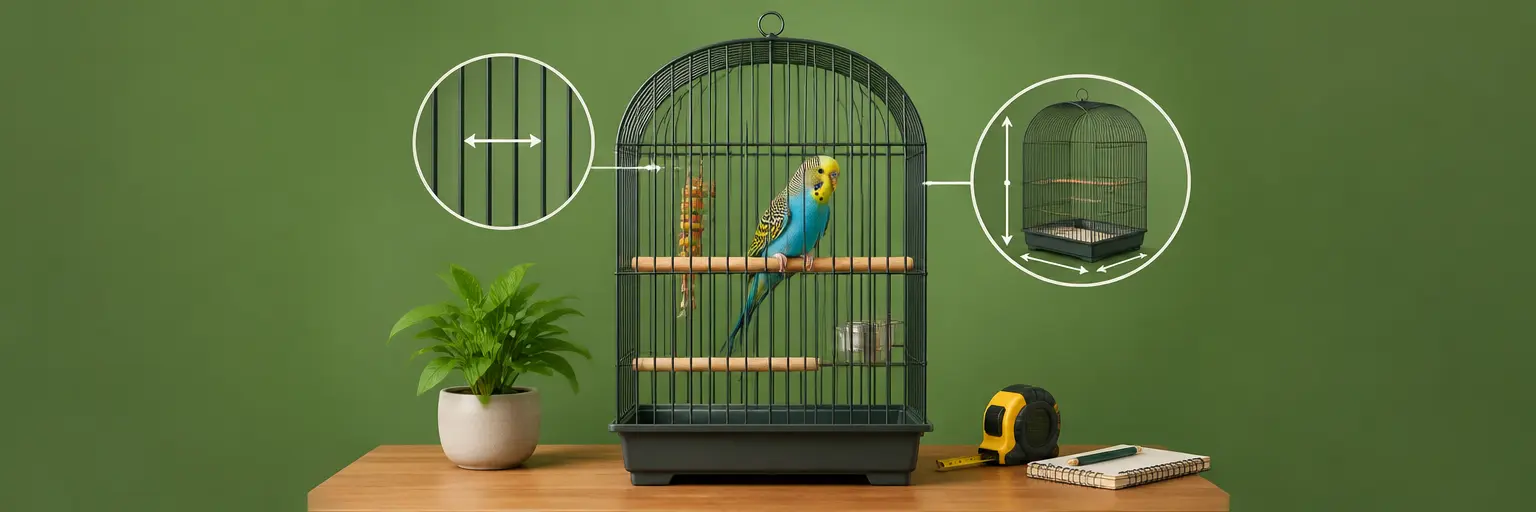
Choosing the right bird cage starts with understanding size and bar spacing—two critical factors that directly impact your feathered friend’s safety, comfort, and happiness. A cage that’s too small restricts movement and can lead to behavioral issues, while improper bar spacing risks injury or escape. Whether you’re housing a tiny finch or a large parrot, getting these dimensions right ensures your bird has room to stretch, climb, and play without getting stuck. At PetCareWorld, we break down the essentials: bar spacing should be tight enough to prevent head entrapment yet allow proper ventilation, while cage size must support natural wing flapping and exercise. Poor choices here can cause stress, feather damage, or even fatal accidents. Our expert guidance helps you measure your bird’s wingspan, activity level, and species-specific needs to select a cage that feels like a safe, spacious sanctuary. From avoiding common mistakes like wide bars for small birds to understanding minimum height requirements, we’ve got you covered. Take the guesswork out of setup—your bird’s well-being depends on this simple yet vital decision.

😊 Ensure your feathered friend's safety with our Bird cage spacing safety guide! Learn the crucial relationship between bird size and appropriate…
Read article
😊 Ensure your feathered friend's safety with the right cage! PetCareWorld explains the crucial role of safe bird cage bar spacing in…
Read article
🐦 Discover the perfect home for your feathered friend! Our best bird cage size guide ensures ample space for flight, play, and…
Read articleChoosing the right bird cage is one of the most critical decisions you will make for your feathered companion’s health and happiness. The correct cage size and bar spacing are not just about comfort—they directly impact your bird’s safety, exercise, and mental stimulation. This guide from PetCareWorld covers everything you need to know, from species-specific dimensions to the dangers of improper wire gaps, ensuring your avian friend thrives in a secure and spacious home.
The ideal cage dimensions depend entirely on your bird’s wingspan, activity level, and natural behavior. A budgie, for instance, requires far less horizontal space than a macaw. The general rule is that the cage should be at least three times the bird’s wingspan in width and allow for full wing flapping without touching the bars. Height also matters for vertical climbers like parrots, while ground-dwelling species prefer wider, shorter enclosures. A cramped cage leads to feather plucking, aggression, and obesity, while an oversized cage (relative to bar spacing) can cause injury.
For beginners, start with the minimum dimensions: finches need 30 inches in length, cockatiels 24x18x24 inches, and African greys a minimum of 36x24x48 inches. However, bigger is always better. Providing multiple perches and toys within a large space encourages natural foraging and flight exercise. Remember, the cage’s floor space is more important than height for most species, so prioritize a length that lets your bird hop and fly horizontally. Always research your specific breed’s requirements before purchase.
Bar spacing is the vertical and horizontal distance between adjacent wires, and it is a critical safety metric. If the gaps are too wide, your bird can squeeze its head through, get stuck, and suffer strangulation or broken bones. If too narrow, your bird may trap its toes or beak, leading to panic and injury. Standard spacing guidelines: 1/4 to 1/2 inch for budgies and lovebirds, 1/2 to 3/4 inch for cockatiels and conures, 3/4 to 1 inch for amazons and African greys, and 1 to 1.5 inches for large macaws and cockatoos.
Check the cage’s manufacturer specifications before buying, and always test the gap with your finger. A good rule of thumb: if your pinky finger can slide through easily, the spacing is likely too wide for small birds. Also, inspect the bars for sharp edges or weak points that could bend under pressure. Horizontal bars are excellent for climbing species, while vertical bars offer easier gripping. Remember that baby birds and smaller individuals may need tighter spacing than the average for their species.
Square or rectangular cages are superior to round or dome-shaped ones. Round cages waste floor space, cause birds to feel insecure due to lack of corners, and can lead to disorientation and continuous circling behavior. Rectangular cages provide defined perching areas, allow for multiple escape routes, and fit better against walls. When selecting a cage, look for a removable tray for easy cleaning, a grill to separate waste, and secure double-locking doors to prevent escape attempts.
Consider the cage’s material: powder-coated metal is durable and safe, while galvanized wire must be washed and scrubbed to remove zinc residue, which is toxic. Stainless steel is the premium option, resistant to chewing and rust. Avoid cages with painted surfaces that can chip. The cage’s height should allow you to reach the top perch comfortably for interaction. Place the cage in a bright, draft-free area at eye level, away from kitchen fumes and direct sunlight, to promote a calm and engaging environment.
Once you have the correct size and bar spacing, the layout inside the cage determines your bird’s quality of life. Install perches of varying diameters (natural wood branches are ideal) to exercise feet and prevent arthritis. Position perches away from food and water bowls to avoid contamination. Add multiple food stations to encourage foraging and movement. Provide chew toys made of safe woods, leather, and paper to satisfy innate chewing instincts and reduce stress.
Ensure there is enough clear flying space—avoid cluttering the cage with too many toys. A flight corridor should be available from one end to the other. Place the cage against a wall for a sense of security, but leave one side open for observation. Never put the cage on the floor or on unstable surfaces. Also, use a cage cover at night to provide darkness for sleep, but ensure it’s breathable. Regularly rotate toys to maintain novelty, and always inspect accessories for wear and tear to prevent accidental ingestion.
One frequent error is buying the smallest available cage to save space, ignoring the bird’s need for exercise. Another is using incorrect bar spacing—often by just looking at the bird’s head width but forgetting that young birds can squeeze through narrower gaps. Many owners also place the cage in a draughty hallway or near a window that gets too hot, leading to respiratory issues. Overcrowding the cage with toys is also counterproductive—it reduces flying area and can cause injury.
Improper perching surface is another mistake: sandpaper perches wear down feet, and plastic perches offer no grip variation. Avoid using standard wire mesh floors without a protective covering, as they can cause bumblefoot. Also, note that cage size cannot compensate for lack of out-of-cage time—even a huge cage is not a substitute for supervised daily exercise. Finally, never place two birds of different sizes together in a cage with bar spacing meant for the larger one, as the smaller bird can escape or be injured.
For budgies and other small parakeets, the maximum safe bar spacing is 1/2 inch, but 1/4 to 3/8 inch is recommended for juveniles or smaller adults. Wider gaps can allow a budgie to trap its head, causing fatal injuries, so err on the side of tighter spacing even if the cage is slightly larger.
No. Fish tanks or glass terrariums lack ventilation, leading to high ammonia levels from droppings, which causes respiratory disease. They also provide no climbing surfaces or bar grips. Always use a proper wire cage with species-appropriate bar spacing to ensure airflow and exercise.
There is no set timeline, but replace the cage if you notice rust, sharp edges, broken welds, or compromised bar spacing (bent bars). A well-maintained stainless steel cage can last decades, while powder-coated cages may chip over time. Inspect monthly for structural integrity, especially after a bird’s chewing.
For most parrots, horizontal length (and width) matters more than height because birds fly front-to-back, not up-and-down. However, species like conures and macaws enjoy vertical climbing, so provide tall cages but ensure the floor area is also generously sized. A long, wide cage is safer than a tall, narrow one.
Yes, horizontal bars are excellent for climbing species like cockatiels and lovebirds, as they allow footgrips and encourage natural scaling. However, vertical bars are also useful for hanging and perching orientation. A mix of both is ideal, but ensure the spacing is uniform and safe for your bird’s head and toes.