Cat Play and Cognitive Function: Keeping Your Feline's Mind Sharp
🤔 Stimulate your cat's mind and improve cat cognitive function with engaging playtime! PetCareWorld shows you how interactive games combat age-related decline…
Read article
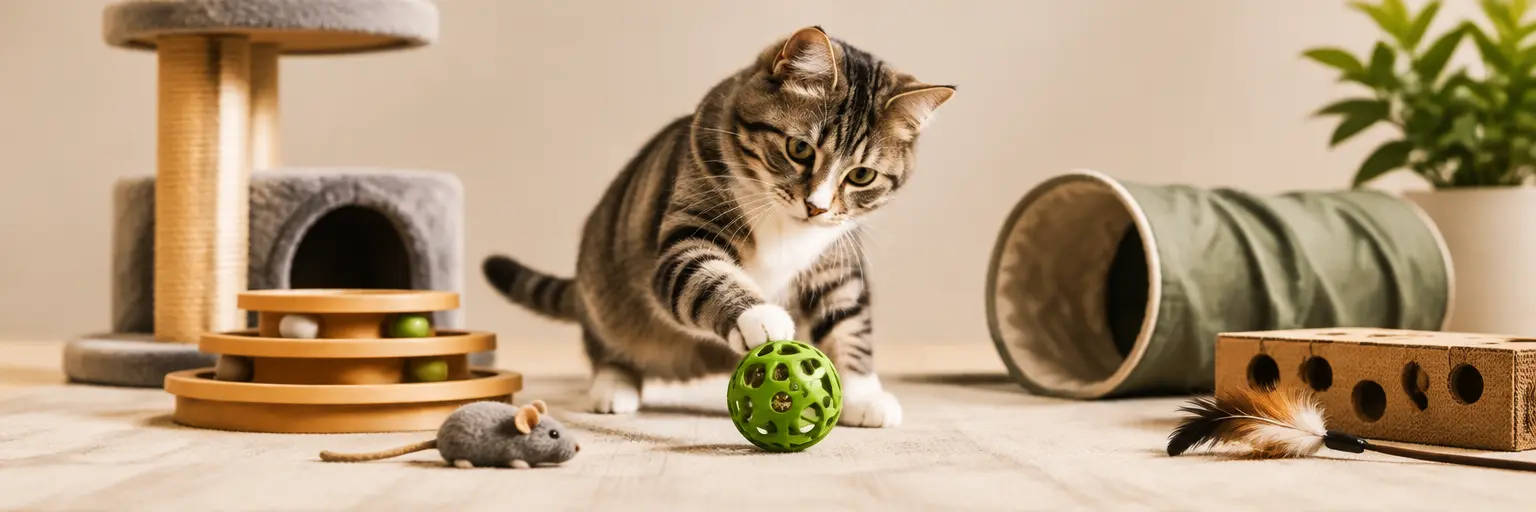
Unlock the secret to a happier, healthier feline with expert cat play behavior and enrichment insights. Discover how interactive play mimics natural hunting instincts, reduces stress, and prevents destructive habits, while enriching your cat’s environment with puzzle feeders, climbing towers, and rotating toy stations. From understanding play aggression to building a daily engagement routine, these practical strategies boost mental stimulation, physical fitness, and your bond. Whether you have a curious kitten or a senior lounger, tailored enrichment solves boredom and behavioral issues, making every pounce and chase count. Transform your home into a feline paradise and watch your cat thrive—explore proven tips for lasting well-being and fulfilling playtime today.
🤔 Stimulate your cat's mind and improve cat cognitive function with engaging playtime! PetCareWorld shows you how interactive games combat age-related decline…
Read article
😊 Unleash the hunter in your feline friend! PetCareWorld's guide, "The Magic of Wand Toys," reveals the secrets to captivating play sessions,…
Read article
🤔 Unlock the secrets of your cat's playful antics! Discover the fascinating world of feline behavior and what your cat's unique play…
Read articleAt PetCareWorld, we know that a bored cat is often a destructive or stressed cat. The subcategory of Cat Play Behavior and Enrichment dives deep into the instinctual drives behind feline play, offering actionable strategies to transform your home into a stimulating sanctuary. Whether you are dealing with a kitten’s endless energy or a senior cat’s declining interest, this guide covers the science of play, the right toys, and environmental tweaks. By mastering this area, you’ll reduce unwanted behaviors like scratching furniture or nighttime yowling, while strengthening the human-animal bond through interactive fun and mental challenges.
Play is not just a pastime for cats—it is a hardwired survival rehearsal. Stalking, pouncing, chasing, and batting mimic the hunting sequence that wild felines rely on for food. When your cat plays with a feather wand, it is satisfying a primal need to practice these skills, releasing pent-up energy and reducing anxiety. Understanding this instinct helps you choose play styles that resonate with your pet, avoiding frustration when a cat ignores a toy that does not mimic prey movement.
Moreover, early play shapes lifelong behavior. Kittens learn bite inhibition and social boundaries through play with littermates. For adult cats, regular interactive play prevents depression and obesity. Pay close attention to body language during play—dilated pupils, twitching tails, and low crouches indicate intense focus, while flattened ears or hissing signal overstimulation. By respecting these cues, you create a positive feedback loop where play remains enjoyable and stress-relieving, not chaotic or aggressive.
Not all toys are created equal. The most effective ones replicate the erratic, unpredictable movement of rodents or birds. Wand toys with feathers, fur, or crinkly materials allow you to simulate darting prey, triggering your cat’s chase reflex. Avoid lasers as the sole toy—cats cannot “catch” the light, leading to frustration and obsessive behavior. Rotate toys every few days to maintain novelty, and stash away toys that your cat ignores, reintroducing them weeks later to re-spark interest.
For solo play, puzzle feeders and treat-dispensing balls engage problem-solving skills, turning mealtime into a mini workout. Catnip-filled mice and crinkle balls appeal to prey drive, while motorized toys under a blanket mimic burrowing critters. Always inspect toys for loose parts or small pieces that could be swallowed, especially for aggressive chewers. Providing a mix of interactive and independent toys ensures your cat stays engaged even when you are busy, reducing boredom-driven mischief like knocking objects off shelves or excessive grooming.
Enrichment extends far beyond a toy box. Vertical space is crucial—cats are natural climbers who feel safer at heights. Install wall shelves, cat trees, or window perches to create a "cat superhighway" that allows your pet to observe territory from above. This reduces conflicts in multi-cat households by giving each feline an escape route. Additionally, scratching posts of varied textures (sisal, cardboard, carpet) placed near sleeping and play areas satisfy the need to mark territory and sharpen claws, protecting your furniture.
Incorporate sensory stimulation through safe outdoor access, such as a "catio" or harness training, which exposes your cat to new sights and sounds. Even indoor-only cats benefit from bird feeders outside windows or a fish tank with a secure lid. Rotate cardboard boxes, paper bags, and tunnels weekly to offer novel hiding spots. Finally, provide "grazing" opportunities by sprinkling a few kibble pieces around the house or using snuffle mats. These small changes mimic foraging, keeping your cat mentally sharp and physically active, significantly lowering the risk of lethargy and stress-related illnesses.
Cats are crepuscular, meaning they are most active at dawn and dusk. Aligning play sessions with these peaks prevents nighttime zoomies that disturb your sleep. Aim for two to three 10–15 minute interactive sessions daily, ideally before meals to simulate hunt-and-catch followed by a food reward. Consistent timing helps your cat anticipate play, reducing any attention-seeking meowing or destructive behavior when you are busy. Use a timer to signal the end of a session, followed by a small treat or portion of food, which reinforces the natural sequence of catch and consume.
For high-energy breeds like Bengals or Siamese, consider clicker training to channel their intelligence into tricks like “sit,” “high-five,” or fetching a ball. This mental work is more tiring than physical play alone. Conversely, senior or arthritic cats need gentler stimulation—use low-impact toys like rolling balls or soft wands, and always provide soft, warm resting spots near play areas. Never force a cat to play if it walks away; respect their autonomy to keep play a voluntary, joyful activity. Regularly assess your cat’s energy level and adjust session length to prevent overexertion or under-stimulation.
You do not need expensive gadgets to enrich your cat’s life. A simple cardboard box with holes cut in the sides becomes a hunting hideout. Create a "treat maze" by placing crumpled paper balls or small toys inside a muffin tin, then hiding treats under a few balls—your cat must nudge them out to get the reward. Another favorite is a "ping-pong ball in a bathtub" game, where the slippery surface makes the ball unpredictable and endlessly entertaining. Rotate these homemade options frequently to maintain novelty.
You can also repurpose household items: an empty toilet paper roll stuffed with treats and folded ends encourages pawing and shredding. For outdoor access without risk, build a "window hammock" using a sturdy shelf and cushion, letting your cat watch birds safely. Hide treats inside a rolled-up towel to stimulate foraging, or freeze a mix of wet food, broth, and tiny toys in an ice cube tray for a refreshing summer puzzle. These DIY solutions are budget-friendly, eco-conscious, and require minimal time, proving that enrichment is about creativity, not expense.
This is a classic hunting invitation. Your cat is offering you the role of cooperative hunter, inviting you to throw or move the prey so it can practice the chase. Ignoring the toy means it wants you to initiate play. Toss it a short distance and simulate prey motion to engage your cat’s interest.
Most adult cats thrive with 15–30 minutes of active play daily, split into 2–3 shorter sessions. Monitor your cat’s cues—if it is panting, lying down, or turning away, end the session. Kittens and high-energy breeds may need up to an hour, while seniors might prefer 10–15 minutes of gentle play.
Lasers can be fun but should never be the only play method because cats cannot catch the light, which may cause frustration or obsessive pawing. Pair laser sessions with a physical toy that your cat can “catch” and “kill” at the end to satisfy the hunting sequence fully.
This usually happens when play turns into overstimulation or when hunting instincts are misdirected. Never use your hands or feet as toys. Instead, immediately stop moving and offer a wand toy or kicker toy. Redirect this behavior by scheduling more active play sessions earlier in the day to drain excess energy.
Common signs include excessive meowing, destructive scratching or chewing, overgrooming, lethargy, weight gain, or aggressive outbursts. If you notice these, increase the frequency and variety of play, add vertical spaces, and try puzzle feeders. If behavior persists, consult your veterinarian to rule out medical issues.







