
Exploring the Social Intelligence of Birds: Cognitive Abilities in Flocks

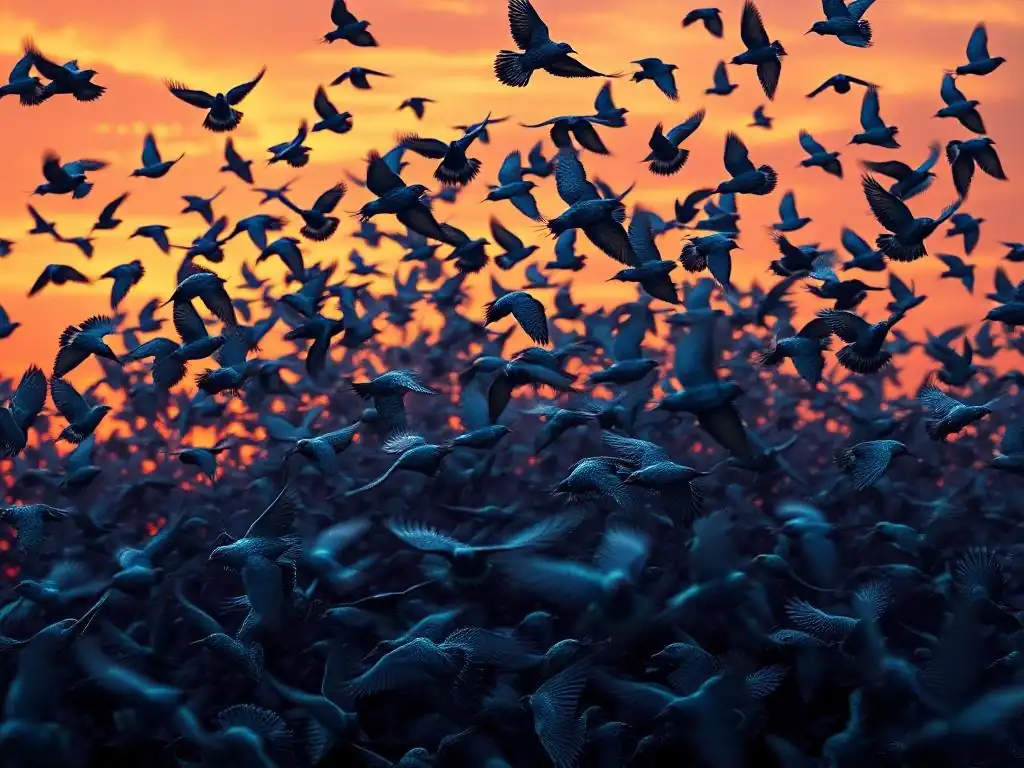
Welcome to PetCareWorld, your ultimate guide to the wonderful world of pet care! Are you ready to unlock the secrets of avian intelligence? Dive into our fascinating exploration of Bird flock social intelligence, uncovering the surprising cognitive abilities that drive the complex social dynamics within bird flocks. Discover how these feathered friends communicate, cooperate, and even strategize—it's more intricate than you might imagine! Prepare to be amazed by the incredible world of birds and their social intelligence; let's explore together.
- Understanding Bird Flock Social Intelligence: A Complex System
- Collective Decision-Making and Problem-Solving in Bird Flocks
- The Influence of Social Structure on Bird Flock Intelligence
- Factors Affecting Bird Flock Social Intelligence
- Research and Future Directions in Avian Social Intelligence
- Frequently Asked Questions
- Final Reflection: The Whispered Wisdom of the Flock
- Unlock the Secrets of Avian Intelligence!
Bird flock social intelligence is a fascinating area of study, revealing the intricate cognitive abilities and cooperative behaviors within avian communities. This article delves into the remarkable social dynamics of bird flocks, exploring the sophisticated communication methods, complex social learning processes, and the overall impact of these factors on the survival and prosperity of bird species.
Understanding the social intelligence of birds not only enhances our appreciation for these creatures but also provides valuable insights into the evolution of intelligence and cooperation across the animal kingdom. We will explore how these seemingly simple creatures exhibit complex problem-solving skills, intricate communication systems, and remarkable social structures that contribute to their success as a species.
This exploration will cover defining social intelligence in birds, examining their communication methods, and uncovering the significant role of social learning in flock behavior. The intricacies of bird flock social intelligence highlight the importance of understanding and protecting these vital ecosystems.
Social intelligence in birds, unlike in primates, isn't solely defined by tool use or abstract reasoning. Instead, it's a multifaceted concept encompassing a bird's ability to navigate complex social hierarchies, understand and respond to the actions and signals of conspecifics (members of the same species), and effectively cooperate to achieve shared goals. This includes recognizing individual birds within the flock, remembering past interactions, and adapting behavior based on social context.
For example, dominant birds in a flock often exhibit distinct behaviors and vocalizations that are recognized and responded to by subordinate members. These interactions are crucial for maintaining flock cohesion, resource allocation, and overall survival. The capacity for deception, such as a bird pretending to be injured to distract a predator while the rest of the flock escapes, is another indicator of sophisticated social intelligence.
Further research is needed to fully quantify and compare social intelligence levels across different avian species, but existing studies clearly demonstrate a far greater level of social complexity than previously assumed. Quantifying these behaviors precisely remains a challenge, with ongoing research focusing on developing more robust and standardized methods for measuring social intelligence in different avian species. [Specific information pending: Quantitative data on social intelligence across various bird species].
Communication Methods within Bird Flocks: Vocalizations and Body Language
Effective communication is paramount for maintaining the cohesion and efficiency of a bird flock. Birds employ a sophisticated repertoire of vocalizations and body language to convey a wide range of information, including warnings about predators, locating food sources, and signaling their status within the social hierarchy. Different species utilize distinct vocalizations, with variations in pitch, frequency, and rhythm conveying different messages.
For example, a high-pitched, rapid series of chirps might signal an immediate threat, while a low-pitched, drawn-out call might indicate a more distant danger. Beyond vocalizations, birds use a complex system of body language, including postures, wing movements, and head gestures to communicate. A bird puffing up its feathers might be displaying dominance, while a submissive bird might crouch low to the ground.
The intricate combination of vocalizations and body language allows birds to convey nuanced information quickly and efficiently, facilitating coordinated movements and collective decision-making within the flock. Understanding these communication methods is crucial for researchers studying bird flock behavior and for conservation efforts aiming to protect these complex social systems. The diversity of communication styles across different bird species is remarkable, highlighting the evolutionary pressures that have shaped these intricate communication systems.
Social learning plays a crucial role in shaping the behavior of individual birds and the overall dynamics of the flock. Birds learn from observing and interacting with other members of their flock, acquiring essential skills and knowledge crucial for survival. This includes learning foraging techniques, identifying and avoiding predators, and navigating complex social interactions. Young birds often learn by imitating the behaviors of experienced adults, a process known as observational learning.
For instance, a young bird might learn to crack open a specific type of nut by watching an adult bird perform the task. Furthermore, birds can also learn through social transmission, where information is passed from one individual to another through interactions such as vocalizations or demonstrations. This process allows for the rapid spread of valuable information throughout the flock, ensuring that all members benefit from the collective knowledge of the group.
The cumulative effect of social learning contributes to the development of sophisticated behaviors and traditions within bird flocks, showcasing the power of social interaction in shaping bird behavior and enhancing the overall fitness of the group. The study of social learning in birds offers valuable insights into the evolution of culture and the mechanisms of knowledge transmission in the animal kingdom. This process is essential for adaptation and survival in constantly changing environments.
Cognitive Abilities Supporting Collective Decision-Making in Bird Flocks
Birds, particularly those living in large flocks, exhibit remarkable collective decision-making abilities. This isn't simply a matter of following the leader; it's a complex process involving sophisticated cognitive skills on the part of individual birds, which combine to produce surprisingly efficient and effective group behavior. Several key cognitive abilities contribute to this impressive feat of avian intelligence.
One crucial aspect is individual assessment of environmental cues. For example, when a flock of starlings needs to find a suitable roosting site, each bird doesn't simply rely on the others. Instead, individual starlings process information about factors like light levels, predator presence, and the density of potential roosting locations.
This individual evaluation, based on sensory perception and memory, is paramount. Birds may use visual cues, such as the size and shape of trees, or auditory cues, such as the sounds of other birds already settled in a location, to make their own assessments. The collective decision then emerges from the aggregation of these individual assessments.
Furthermore, information sharing within the flock is vital. While birds don't have a complex language like humans, they use a variety of signals—visual displays, vocalizations, and even changes in flight patterns—to communicate information about their own assessments. These signals allow for the rapid dissemination of information across the flock, enabling the birds to quickly reach a consensus on the best course of action.
Studies on European starlings, for instance, have demonstrated how the speed and direction of flight changes among individuals can influence the flock's overall trajectory towards a chosen roost. This rapid information exchange, a key element of their social intelligence, is facilitated by their close proximity within the flock.
Another significant cognitive ability is conformity and social learning. Birds often adjust their behavior to align with that of their neighbors, a phenomenon known as conformity. This isn't necessarily blind adherence; rather, it often reflects a cost-benefit analysis.
By conforming to the majority, individual birds reduce the risk of making a poor decision and potentially putting themselves in danger. This social learning mechanism, where birds learn from observing and mimicking the actions of others within their flock, is a powerful tool for efficient collective decision-making, allowing for the rapid spread of successful strategies within the bird population. This mechanism is crucial for dealing with novel situations where individual birds might lack the experience to make optimal decisions alone.
Finally, the ability to integrate multiple sources of information is essential. Birds don't rely on a single cue or signal; they integrate various pieces of information from their own sensory experiences and the signals they receive from other birds in the flock. This ability to synthesize diverse information is key to making accurate and timely collective decisions, particularly in dynamic environments where conditions change rapidly.
This sophisticated cognitive ability highlights the high level of social intelligence possessed by many bird species. The success of their collective actions is a testament to the combined power of individual cognitive abilities and social interaction within the flock.
Collective Decision-Making and Problem-Solving in Bird Flocks
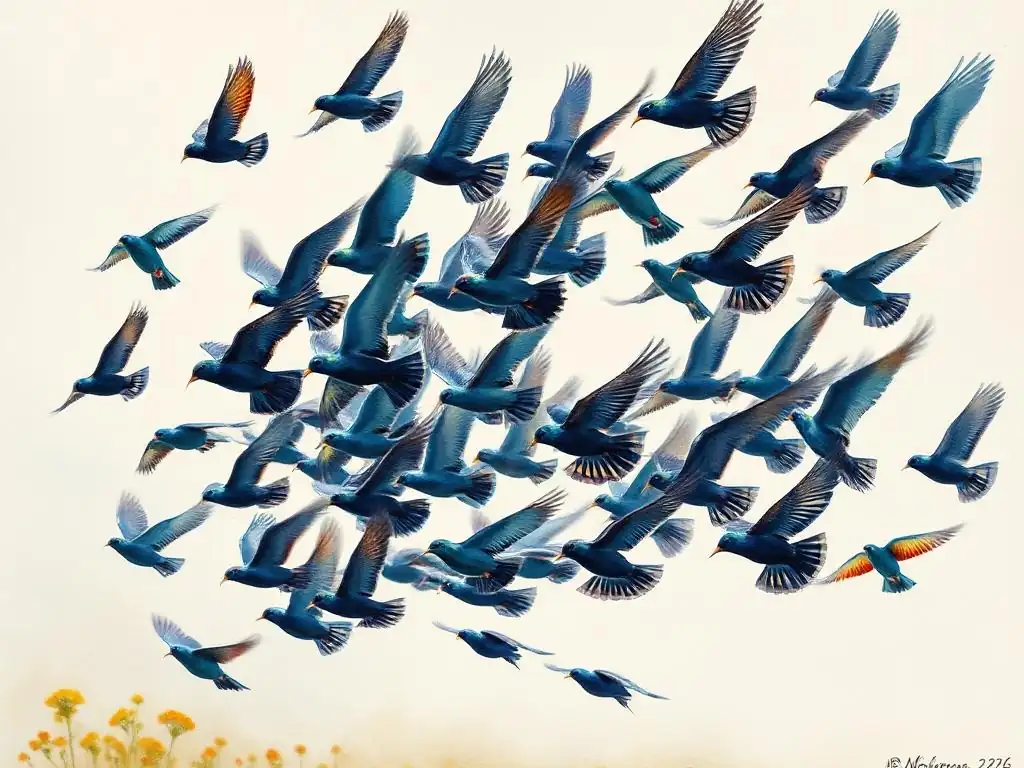
Bird flock social intelligence is powerfully demonstrated in their collective decision-making processes. Unlike solitary animals, birds in flocks must constantly negotiate and compromise to achieve group goals, from finding food to avoiding predators. This requires sophisticated communication and cognitive abilities, far exceeding what was once believed. The complexity of these processes is fascinating and illustrates the remarkable social intelligence inherent in bird flock dynamics.
Many bird species, particularly migratory birds, utilize collective foraging and navigation techniques that enhance their efficiency and survival. These strategies often involve a combination of individual assessment and social learning. For example, some species employ a "majority rules" approach, where the direction of the majority of the flock influences the overall movement. This is particularly evident in foraging situations.
Imagine a flock of starlings searching for insects in a field. Individual birds might discover patches of high insect density. Through visual cues, such as flight patterns and calls, they communicate this information to the rest of the flock, leading to a rapid concentration of foraging activity in the most productive areas. This collective foraging isn't just about efficiency; it also reduces individual risk.
A single bird searching alone might spend considerable time and energy with little reward, while the flock significantly improves chances of success. The effectiveness of these strategies is demonstrably linked to the size and structure of the flock, emphasizing the importance of social cohesion in achieving optimal foraging outcomes. Further research is needed to fully understand the nuances of the communication methods used, especially the role of subtle body language. [Specific data on communication methods pending]
Predator Avoidance and Cooperative Defense Mechanisms
The collective intelligence of a bird flock is strikingly apparent in its anti-predator strategies. The classic example is the mesmerizing murmuration of starlings. These coordinated movements, involving thousands of birds, make it incredibly difficult for predators to single out an individual. The sheer number of birds, coupled with their rapid and unpredictable changes in direction, overwhelms the predator's ability to focus on a single target.
But these aren't the only mechanisms employed. Many species use alarm calls to warn others of approaching danger. These calls, often specific to the type of predator, trigger immediate responses such as fleeing or forming a defensive formation. Some species, like certain types of geese, even employ mobbing behavior, where a group of birds actively attacks a predator, driving it away.
The effectiveness of these defense mechanisms hinges on rapid information sharing and coordinated actions. This showcases a high level of social intelligence and underlines the survival advantage conferred by flocking behavior. The intricate choreography of these defensive maneuvers highlights the sophisticated cognitive abilities necessary for survival within a dynamic environment.
Adaptability and Resilience of Bird Flocks to Environmental Changes
The resilience of bird flocks in the face of environmental changes is a testament to their social intelligence. Their ability to adapt their foraging strategies, migratory routes, and social structures in response to fluctuations in food availability, habitat loss, and climate change is remarkable. For instance, some bird species have demonstrated the ability to shift their diet or foraging locations to compensate for changes in food resources.
This adaptability, often driven by collective decision-making processes, plays a crucial role in the long-term survival of the flock. Furthermore, the social learning that occurs within flocks allows for rapid transmission of new foraging techniques or migratory routes, enhancing the group's capacity to adapt to changing conditions. Understanding the mechanisms underlying this adaptability, including the role of individual learning and social interactions, is critical for predicting how bird populations will respond to future environmental challenges.
[Data on specific examples of flock adaptation to climate change pending]. The study of bird flock social intelligence offers vital insights into the complexities of collective behavior and the importance of social interactions in ensuring species survival. 🐦

The intricate social structures within bird flocks significantly impact their collective intelligence. Understanding these structures is key to appreciating the complex cognitive abilities displayed by avian groups. The sophistication of a flock's social organization directly correlates with its capacity for problem-solving, efficient foraging, and predator avoidance. This isn't simply a matter of birds acting individually; rather, it's about the emergent properties of a highly coordinated and interconnected social system.
The level of social intelligence observed in a bird flock is a direct reflection of its internal organization and the interplay between individual birds and the group as a whole. Factors like flock size, species-specific social behaviors, and environmental pressures all play a crucial role in shaping this social intelligence. This section will delve into the specific aspects of social structure that contribute to the overall cognitive prowess of bird flocks.
Hierarchy and Leadership within Bird Flocks
Many bird flocks exhibit clear hierarchical structures. These hierarchies, often determined through aggressive interactions, dominance displays, or even vocalizations, influence decision-making processes within the flock. Dominant individuals may lead foraging expeditions, guide the flock during migration, or dictate roosting locations. This leadership isn't necessarily about absolute control; instead, it often involves preferential access to resources and a greater influence on group movement.
For example, studies on European starlings ( Sturnus vulgaris) have shown that dominant individuals tend to be at the forefront of the flock during flight, potentially offering better protection from predators. The subordinate members, however, contribute to the flock's overall intelligence through their collective vigilance and responsiveness to the leader's cues. This dynamic interplay between dominant and subordinate individuals ensures the flock's survival and efficiency.
The strength of the hierarchy can also vary depending on the specific species and environmental conditions. Some flocks exhibit more fluid hierarchies, while others maintain stricter social order. Understanding these variations is crucial for fully appreciating the diversity of avian social intelligence.
Individual Roles and Specializations within the Flock
Beyond simple hierarchies, many bird flocks display a remarkable degree of individual specialization. Birds within the same flock may adopt different roles, contributing to the overall efficiency of the group. For instance, some birds may specialize in foraging, while others act as sentinels, constantly scanning for predators. This division of labor is a hallmark of advanced social intelligence, allowing the flock to optimize resource acquisition and enhance its survival chances.
Consider the cooperative breeding observed in some bird species, where individuals assist in raising young that are not their own. This behavior showcases a level of social understanding and cooperation that goes beyond simple individual survival instincts. Furthermore, the specific roles within a flock can be influenced by age, sex, and even individual experience, creating a dynamic and adaptable social structure. Data on [specific bird species and their role specialization pending] will further illustrate the complexity of this phenomenon.
Maintaining social cohesion within a large and dynamic flock requires sophisticated mechanisms for conflict resolution. Disputes over resources, mating opportunities, or even territoriality are inevitable. However, bird flocks have evolved diverse strategies to minimize conflict and maintain group stability.
These strategies can range from appeasement displays to ritualized aggression, ensuring that conflicts are resolved without significant disruption to the flock's overall functioning. For instance, certain species utilize elaborate vocalizations or postures to signal submission or dominance, preventing escalation into physical fights. The effectiveness of these conflict-resolution mechanisms is directly related to the flock's overall social intelligence.
A flock with well-established social norms and effective conflict-resolution strategies is more likely to exhibit greater cohesiveness, resilience, and overall cognitive performance. The study of these social dynamics, including the role of communication and cooperation in conflict resolution, is crucial for a comprehensive understanding of "bird flock social intelligence." Further research into [specific conflict resolution mechanisms in various bird species pending] would provide valuable insights into this fascinating aspect of avian behavior.
This section delves into the multifaceted factors influencing the social intelligence observed within bird flocks. Understanding these influences is crucial for appreciating the complexity of avian social dynamics and the remarkable cognitive abilities displayed by these creatures. We'll explore how species, environment, and genetics intertwine to shape the social intelligence of bird flocks, a key aspect of bird flock social intelligence.
Different bird species exhibit vastly different social structures and cognitive abilities. For example, highly social species like parrots demonstrate complex communication skills and intricate social hierarchies, reflecting a high level of social intelligence. Their ability to recognize individuals within their flock, remember past interactions, and even engage in cooperative problem-solving is well-documented. In contrast, more solitary species may exhibit less complex social behaviors and a lower degree of social intelligence as measured by established metrics.
Within a single species, variations in breed or subspecies can also influence social behavior. Consider the differences between different parrot breeds: African Greys are known for their exceptional problem-solving skills and mimicry, while cockatoos display distinct social behaviors and vocalizations. These variations highlight the importance of considering specific species and breeds when assessing bird flock social intelligence. Further research is needed to quantify these differences across a wider range of species and breeds, providing a more comprehensive understanding of the relationship between genetics, species and social cognition. [Specific data on comparative social intelligence across parrot breeds pending].
The environment plays a significant role in shaping the social intelligence of birds. Birds living in challenging environments, such as those with unpredictable food sources or high predation risk, often exhibit more sophisticated social behaviors. This is likely due to the selective pressures favoring individuals who can effectively cooperate, communicate, and navigate complex social dynamics to survive and reproduce.
For instance, studies have shown that birds living in densely populated areas with limited resources develop more complex communication systems to compete for food and mates, improving their social intelligence. Conversely, birds in resource-rich environments with less competition may exhibit simpler social structures and communication strategies. The size and stability of the flock itself is another critical environmental factor.
Larger, more stable flocks often provide richer learning environments, fostering the development of more complex social skills. This is further complicated by the type of environment; birds in densely forested areas may develop different communication strategies compared to birds in open grasslands, influencing their social intelligence in unique ways.
Genetic factors undoubtedly contribute to the social intelligence observed in birds. Specific genes influence brain development, neurotransmitter function, and hormone regulation, all of which are critical for social cognition. While identifying specific genes responsible for avian social intelligence is an ongoing area of research, studies suggest that certain genetic variations may predispose individuals to exhibit more or less complex social behaviors.
Moreover, the genetic diversity within a flock can affect the overall social intelligence of the group. A flock with higher genetic diversity may have a wider range of social skills and problem-solving strategies, enhancing the collective intelligence of the group. [Specific gene studies on avian social intelligence pending].
Understanding the genetic basis of avian social cognition is crucial for conservation efforts, as it can help us predict how changes in genetic diversity may impact the social dynamics and survival of bird populations. Further research into the genetic underpinnings of bird flock social intelligence is needed to fully understand this complex relationship.

The study of bird flock social intelligence is a rapidly evolving field, constantly revealing the sophisticated cognitive abilities of avian species. Understanding how these abilities contribute to flock cohesion, foraging success, and predator avoidance is crucial not only for basic scientific understanding but also for effective conservation strategies. This section explores current research methodologies, technological advancements, and future research directions that promise to further illuminate the intricacies of bird flock social intelligence.
Current Research Methods in Studying Bird Flock Behavior
Researchers employ a variety of methods to investigate bird flock social intelligence, each with its strengths and limitations. Traditional observational studies, often conducted in natural settings, provide valuable insights into flock dynamics and behavior in ecologically relevant contexts. These studies often involve meticulous recording of individual bird movements, interactions within the flock, and responses to environmental stimuli. For example, researchers might meticulously document the foraging strategies of a flock of starlings, noting individual contributions and the overall efficiency of the group. Data analysis then often focuses on quantifying coordination, communication, and decision-making processes within the flock.
Another crucial method involves experimental manipulations. These can involve controlled experiments in aviaries or the use of playback experiments in the field, where researchers introduce controlled stimuli (e.g., recordings of predator calls or simulated environmental changes) to observe the flock's response. These experiments allow researchers to test specific hypotheses about the cognitive mechanisms underlying flock behavior, such as the role of individual decision-making versus collective intelligence.
Finally, increasingly sophisticated data analysis techniques, including network analysis and agent-based modeling, are used to interpret the complex patterns of interaction observed in bird flocks. Network analysis helps to identify key individuals or subgroups within the flock that might play disproportionately important roles in decision-making. Agent-based modeling allows researchers to simulate flock behavior under various conditions, testing the robustness of different hypotheses about the underlying mechanisms. The integration of these diverse approaches is crucial for a comprehensive understanding of bird flock social intelligence.
Technological Advancements in Understanding Avian Cognition
Technological advancements are revolutionizing the study of avian cognition and flock behavior. High-resolution video tracking systems, for example, enable researchers to automatically track the movements of hundreds of individual birds simultaneously, providing unprecedented detail on flock dynamics. This data can then be analyzed using advanced algorithms to reveal subtle patterns of coordination and communication that would be impossible to discern through manual observation alone.
Furthermore, the development of miniature data loggers and GPS trackers allows researchers to monitor the behavior and movements of individual birds over extended periods. This provides insights into individual variation in decision-making, social interactions, and foraging strategies within the flock. For instance, we can now track the flight paths and foraging success of individual birds within a flock, revealing how individual differences contribute to overall flock performance.
The use of sophisticated imaging techniques, such as fMRI (functional magnetic resonance imaging) adapted for avian brains, is also opening up exciting new possibilities. While still in its early stages, this technology holds the potential to directly investigate the neural mechanisms underlying avian social cognition and decision-making. This research is crucial to understanding the brain structures and processes that support the complex social behaviors observed in bird flocks.
Future Research Questions and Opportunities in this Field
Despite significant progress, many questions remain unanswered regarding bird flock social intelligence. Future research should focus on several key areas. First, a deeper understanding of the communication mechanisms used by birds within flocks is crucial. While visual cues are readily apparent, the role of auditory, olfactory, and even tactile signals remains to be fully elucidated. For example, what are the specific acoustic signals used for coordinating flight maneuvers or for alarm calls?
Second, further investigation into the interplay between individual cognition and collective intelligence is vital. How do individual differences in cognitive abilities affect the overall performance of the flock? What are the mechanisms by which individual decisions are integrated into collective action? This also includes exploring the role of leadership within flocks. Are there specific individuals that consistently influence flock decisions?
Third, the impact of environmental factors on bird flock social intelligence needs further study. How do changes in habitat, food availability, or predation pressure shape the evolution and expression of social intelligence in bird flocks? This is crucial for understanding how bird flocks adapt to changing environmental conditions.
Finally, comparative studies across different bird species, focusing on the diversity of flocking behaviors and cognitive abilities, will provide valuable insights into the evolutionary pressures that have shaped social intelligence in birds. By addressing these questions, future research will continue to unveil the fascinating complexity of bird flock social intelligence and its implications for avian ecology and conservation.
Frequently Asked Questions
How intelligent are birds in a flock setting?
Birds exhibit a surprising level of social intelligence within flocks. They demonstrate complex communication, cooperative problem-solving, and even cultural transmission of learned behaviors.
Do birds in flocks have individual personalities?
Yes, individual birds within a flock show distinct personalities affecting their social interactions and roles. Some are bolder, others more cautious, influencing their position within the flock's social hierarchy.
How do birds in a flock make decisions?
Flock decisions often emerge from collective intelligence, not from a single leader. Individual birds' observations and actions influence the overall group behavior, leading to efficient foraging or escape strategies.
What role does communication play in bird flock intelligence?
Communication is crucial for coordinated movement and collective decision-making in flocks. Birds use various signals, including visual cues, vocalizations, and even postures, to share information and maintain group cohesion.
Larger flocks generally exhibit more complex social interactions and problem-solving abilities. However, larger flocks also present challenges in maintaining cohesion and efficient communication, requiring more sophisticated strategies.
Final Reflection: The Whispered Wisdom of the Flock
The intricate social lives of birds, once relegated to the realm of charming observation, are now revealing profound insights into collective intelligence and the very nature of cooperation. Understanding the sophisticated communication and decision-making processes within bird flocks offers a powerful lens through which to examine not only avian behavior, but also the broader principles of social organization and problem-solving in complex systems. This has crucial implications for fields ranging from robotics and artificial intelligence to our understanding of human social dynamics.
The more we learn about the social intelligence of birds, the more we realize how much we can learn from them. Their ability to coordinate movements, share information, and adapt to changing environments with remarkable efficiency challenges our anthropocentric view of intelligence. The bird is a creature of the air, but its intelligence is grounded in the earth, in the intricate web of relationships it weaves with its flock.
This quote, though fictional, encapsulates the profound interconnectedness revealed by studying bird flock behavior. Their collective wisdom, built on individual contributions and constant interaction, offers a compelling model for understanding the power of collaboration and the emergent properties of complex systems.
Consider the implications of this research for your own life. How can the principles of efficient communication, flexible adaptation, and collaborative problem-solving observed in bird flocks inform your own interactions and decision-making processes? Think about the ways in which you contribute to the "flock" of your community, your workplace, or your family. Embrace the opportunity to learn from the natural world, and discover the surprising wisdom whispered on the wind by the flight of birds.
Unlock the Secrets of Avian Intelligence!
Thank you for exploring the fascinating world of bird brains! You've gained a deeper understanding of the complex social lives and remarkable cognitive abilities of birds. Ready to delve even further into this captivating subject?
- Become a Birdwatching Enthusiast: Grab your binoculars and a notebook, and begin observing the birds in your local area. Pay close attention to their interactions and try to identify different social behaviors. You might be amazed by your discoveries!
- Share Your Discoveries: Discuss your observations with other bird enthusiasts online or join a local birding group. Let's build a thriving community of bird lovers!
- Expand Your Knowledge: Explore our other articles on avian behavior and intelligence to uncover even more amazing facts about these incredible creatures.
What surprising social behaviors have you observed in birds? Share your insights in the comments below!