Feeding Large Breed Puppies: Special Nutritional Needs
🤔 Discover the crucial nutritional requirements of your giant growing friend! Our "Large breed puppy food guide" provides expert advice on selecting…
Read article
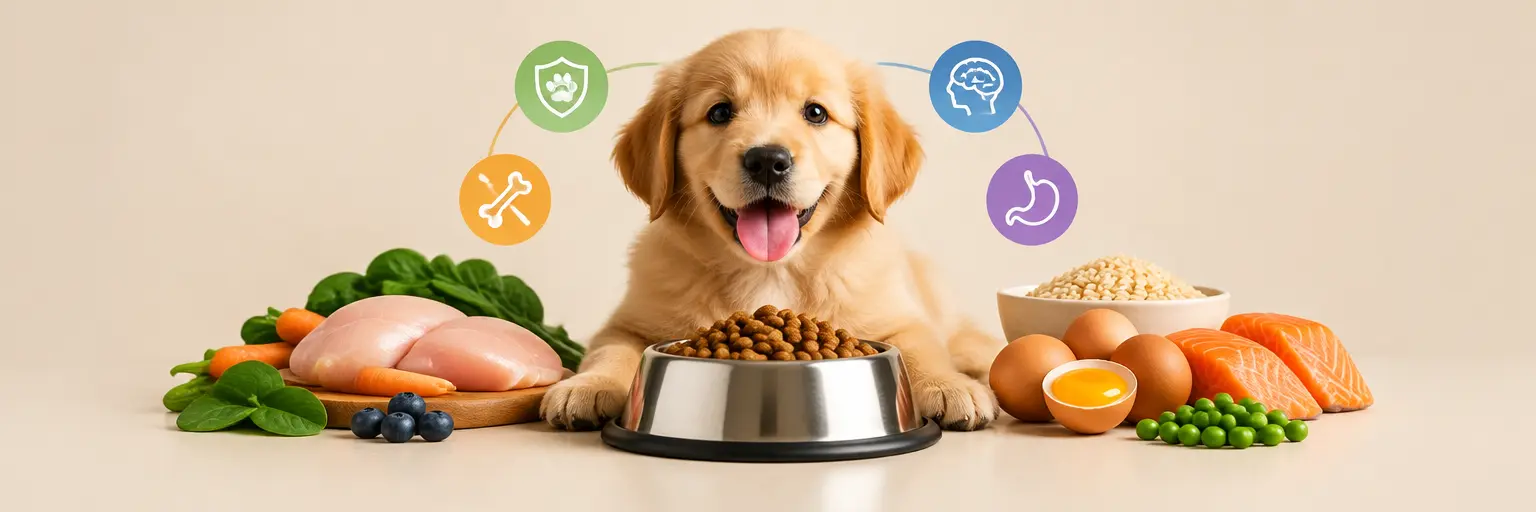
Puppy nutrition is the cornerstone of a happy, healthy life, and getting it right from day one sets the stage for strong bones, a shiny coat, and boundless energy. 🐶 At PetCareWorld, we cut through the confusion of endless food labels and feeding charts to bring you evidence-based, veterinarian-approved guidance tailored to your pup’s unique age, breed, and size. From decoding the right balance of proteins, fats, and essential vitamins to understanding when to switch from growth formulas to adult diets, our expert tips help you make confident decisions. You’ll learn how to spot high-quality ingredients, manage portion control to prevent obesity, and navigate common pitfalls like food allergies or picky eaters. Whether you’re raising a playful Labrador or a tiny Chihuahua, we empower you to build lifelong healthy eating habits that fuel their playful zoomies and support optimal development. Start here for practical, trustworthy advice that turns mealtime into the building block of your puppy’s thriving future. 🦴✨

🤔 Discover the crucial nutritional requirements of your giant growing friend! Our "Large breed puppy food guide" provides expert advice on selecting…
Read article
🤔 Deciphering your puppy's food label? PetCareWorld's guide to puppy food guaranteed analysis explained simplifies the nutritional information, empowering you to make…
Read article
🤔 Discover if the purported organic puppy food benefits justify the higher cost. PetCareWorld explores nutritional value, potential risks, and long-term health…
Read article
🤔 Successfully transitioning your puppy to adult dog food is crucial for their health. Learn the optimal timing and best practices for…
Read articleWelcoming a puppy into your home is a joyful milestone, and ensuring proper nutrition is the single most important step you can take for their long-term health and happiness. At PetCareWorld, our Puppy Nutrition subcategory provides evidence-based guidance tailored to your growing companion’s unique developmental needs. From deciphering ingredient labels to managing picky eaters, we cover everything you need to fuel your puppy’s growth with confidence. Discover how the right balance of proteins, fats, calcium, and essential vitamins supports bone development, cognitive function, and a robust immune system. Let us help you make informed choices that set the stage for a vibrant, active adult dog.
Puppies have vastly different metabolic and developmental needs compared to adult dogs. They require higher levels of protein for muscle growth, DHA for brain and eye development, and a precise calcium-to-phosphorus ratio to prevent skeletal abnormalities. This section breaks down the science behind puppy formulas, including growth-stage feeding charts and calorie density. You’ll learn why “all-life-stages” foods may not be optimal, how to assess guaranteed analysis values, and the critical role of omega-3 fatty acids. Whether you have a large-breed puppy prone to joint issues or a small-breed with rapid energy turnover, we provide stage-specific recommendations to support steady, healthy growth without overfeeding.
We also demystify the difference between dry kibble, wet food, raw diets, and home-cooked meals in the context of puppy physiology. Each feeding method carries unique benefits and risks regarding nutrient absorption, dental health, and food safety. Our guidance includes how to transition your pup between food types gradually to avoid digestive upset, and how to monitor body condition scores rather than relying solely on weight. By understanding these foundational requirements, you can avoid common pitfalls like excessive protein causing kidney strain or insufficient fat leading to dull coats. This knowledge empowers you to become an active participant in your puppy’s nutritional journey, ensuring every meal contributes to their developing athleticism and longevity.
Navigating the pet food aisle can feel overwhelming with dozens of brands claiming superiority. This section teaches you how to read ingredient lists like a professional—identifying high-quality animal proteins (chicken, lamb, salmon) as primary components versus vague by-products or fillers like corn gluten. We explain the difference between named meat sources and meat meals, the significance of whole grains versus grain-free formulas (including current research on dilated cardiomyopathy), and how to spot artificial preservatives, colors, and flavors. You’ll also learn about AAFCO nutritional adequacy statements, which verify that a food meets minimum nutrient profiles for growth, and why “human-grade” is a marketing term that lacks federal enforcement.
Beyond the label, we offer practical tools for comparing cost per calorie, evaluating feeding trials versus formulation-only claims, and understanding the role of prebiotics and probiotics in digestive health. We also discuss the emerging trend of novel proteins (venison, duck) for puppies with food sensitivities, and how to conduct an elimination diet if allergic reactions occur. Crucially, we emphasize the importance of rotating protein sources to prevent future intolerances while maintaining a stable digestive environment. With our guidance, you’ll approach the pet store with a clear checklist, avoiding marketing hype and selecting a diet that truly matches your puppy’s biological needs, budget, and your lifestyle.
Young puppies have small stomachs but high energy demands, requiring frequent, measured meals to maintain stable glucose levels and prevent overeating. Here, we provide sample feeding schedules based on age: every 2–3 hours for 8-week-old pups, four meals by 3 months, three meals at 4–6 months, and two meals by 6–12 months, adjusting for breed size. We detail how to calculate daily kilocalories using puppy’s current weight, expected adult size, and activity level, then divide into appropriate portions. You’ll also learn about the “slit test” for body condition (ribs easily felt but not visible) to fine-tune amounts dynamically.
Portion control extends beyond kibble – we cover safe treat-to-meal ratios (keeping treats under 10% of daily intake), the dangers of free-feeding in multi-pet households, and how to avoid rapid growth that predisposes large breeds to hip dysplasia. We address common issues like food guarding, resource guarding, and using interactive puzzle feeders to slow down speed eaters. Additionally, we provide troubleshooting for puppies who are underweight or overweight, including when to seek veterinary intervention. With precise feeding strategies, you’ll maintain a lean body condition that reduces risks of obesity later in life, without compromising your pup’s energy for play and learning.
Water is the most overlooked nutrient, yet dehydration can quickly lead to restlessness, poor appetite, and urinary issues. This section stresses constant access to fresh, clean water and offers tips for encouraging drinking during hot weather or when switching to dry food. We discuss electrolyte balance, recognizing early signs of dehydration (skin tenting, dry gums), and how different diets (wet vs. dry) affect water intake. Regarding supplements, we take a critical stance—most complete puppy foods already meet micronutrient needs, so unnecessary supplements can cause toxicity. We explain which situations might require supplementation, such as omega-3s for coat quality, glucosamine only post-veterinary diagnosis, or probiotics during antibiotic use.
We also cover the controversial use of calcium supplements in large breed puppies, which can disrupt bone development, and caution against human vitamins unless prescribed. Instead, we recommend nutrient-dense whole-food additions like mashed pumpkin for fiber, plain yogurt for probiotics, and bone broth for hydration—always with veterinary approval. By understanding what’s truly necessary versus marketing fluff, you’ll avoid spending on expensive additives that could harm your puppy. Our evidence-based approach helps you rely on a balanced commercial diet as the foundation, while making wise, vet-approved choices only when gaps are identified.
Whether you’re switching brands or transitioning from mother’s milk to solid food, abrupt changes can cause nausea, diarrhea, or refusal to eat. We provide a step-by-step 7–10 day transition plan: mixing 25% new food with 75% old for the first 2–3 days, then increasing every 2 days, monitoring stool quality and appetite. For puppies who turn up their noses at new textures or flavors, we share behavioral techniques—adding warm water to kibble, using toppers (freeze-dried liver, plain pumpkin), and establishing regular mealtimes with 15-minute windows. We emphasize patience and avoiding the “diner” mentality, where you swap foods endlessly, which teaches pickiness.
We also address medical contributors to poor appetite, such as teething pain, intestinal parasites, or post-vaccination malaise, and when to consult a vet. For transitioning from raw to commercial or vice versa, we outline extra precautions against bacterial cross-contamination and gradual protein adjustments. Additionally, we cover feeding during developmental milestones like spay/neuter surgery, where metabolism slows, requiring calorie reduction. With research-backed strategies, you’ll successfully navigate finicky eating phases without resorting to unhealthy fast-food like treats, ensuring your puppy maintains a balanced diet while developing positive food associations that last a lifetime.
Daily portions depend on age, current weight, breed size, and food’s calorie density. Use the feeding chart on the label as a starting point, then adjust every week based on body condition. For example, a 10-week-old, 10-pound pup typically needs 1–1.5 cups of high-quality kibble split into four meals. Always consult your vet for personalized guidance, especially for large or giant breeds with slower growth needs.
Small amounts of plain cooked chicken, carrots, green beans, or unsweetened applesauce are safe and healthy treats, provided they don’t exceed 10% of daily calories. Avoid onions, garlic, grapes, chocolate, xylitol, and high-fat human snacks. For supplements, never give adult vitamins or calcium without vet approval—overdosing can be fatal. Stick to vet-recommended, puppy-specific products only.
Most small breeds transition around 9–12 months, while large breeds may need puppy food until 18–24 months due to slower bone maturation. Switching too early can stunt growth, while waiting too long can lead to obesity. Watch for decreased appetite, full body condition, or lines on the label indicating “growth” to adult formulation. Always graduate over 7–10 days to prevent digestive upset.
Not necessarily. Grains like rice and oats provide digestible carbohydrates, fiber, and B vitamins. Grain-free diets are only necessary for confirmed allergies, which are rare. Recent FDA investigations have linked some grain-free, high-legume formulas to heart disease (DCM) in dogs. Choose a food with named animal protein first and grains second unless your vet advises otherwise. Focus on overall quality, not just grain content.
First, withhold food for 12–24 hours but keep water available to avoid dehydration. Then reintroduce a bland diet—boiled white rice with boiled chicken breast or plain pumpkin—in small, frequent meals. If vomiting/diarrhea persists beyond 24 hours, if there’s blood, or if your puppy is lethargic, contact your vet immediately. Rule out sudden food changes, parasites, or foreign bodies; never ignore these symptoms.







