Understanding and Resolving Resource Guarding in Dogs
Resource guarding is a common yet often misunderstood canine behavior where a dog displays protective behaviors over items they value—such as food, toys, beds, or even people. At PetCareWorld, our dedicated subcategory on Dog Behavior Issues – Resource Guarding offers science-backed, compassionate, and practical guidance to help you prevent, manage, and rehabilitate this instinctive behavior. Whether your dog growls over a bone or snaps near their food bowl, our expert articles break down the root causes, early warning signs, and step-by-step training protocols. With a focus on safety and positive reinforcement, you’ll learn how to build trust, reduce conflict, and create a harmonious home environment for both you and your furry companion.
🐾 Recognizing the Early Signs of Resource Guarding
Identifying resource guarding early is crucial for preventing escalation. Common signals include stiffening, a hard stare, freezing, growling, lip lifting, or even snapping when someone approaches a valued item. Some dogs guard only high-value items like rawhides, while others guard their water bowl or favorite sleeping spot. In multi-dog households, guarding often appears during mealtimes or when treats are present. At PetCareWorld, we teach you how to read these subtle body language cues before a bite occurs. Our guides emphasize that growling is not “bad” behavior but a communication tool—punishing it can suppress warning signs and lead to a bite without notice. Understanding this foundation is the first step toward effective intervention.
Beyond obvious triggers, context matters. A dog may guard only when tired, anxious, or in pain, so we help you assess situational factors. For puppies, early socialization and handling exercises can prevent guarding from forming. For adult dogs with established habits, our resources outline controlled desensitization and counter-conditioning protocols that safely change your dog’s emotional response. You’ll also learn which items are most commonly guarded and why, from food bowls to stolen socks, so you can anticipate potential conflicts. By recognizing signs early, you reduce the risk of injury and make training far more successful.
🛡️ Safety First: Managing High-Risk Situations
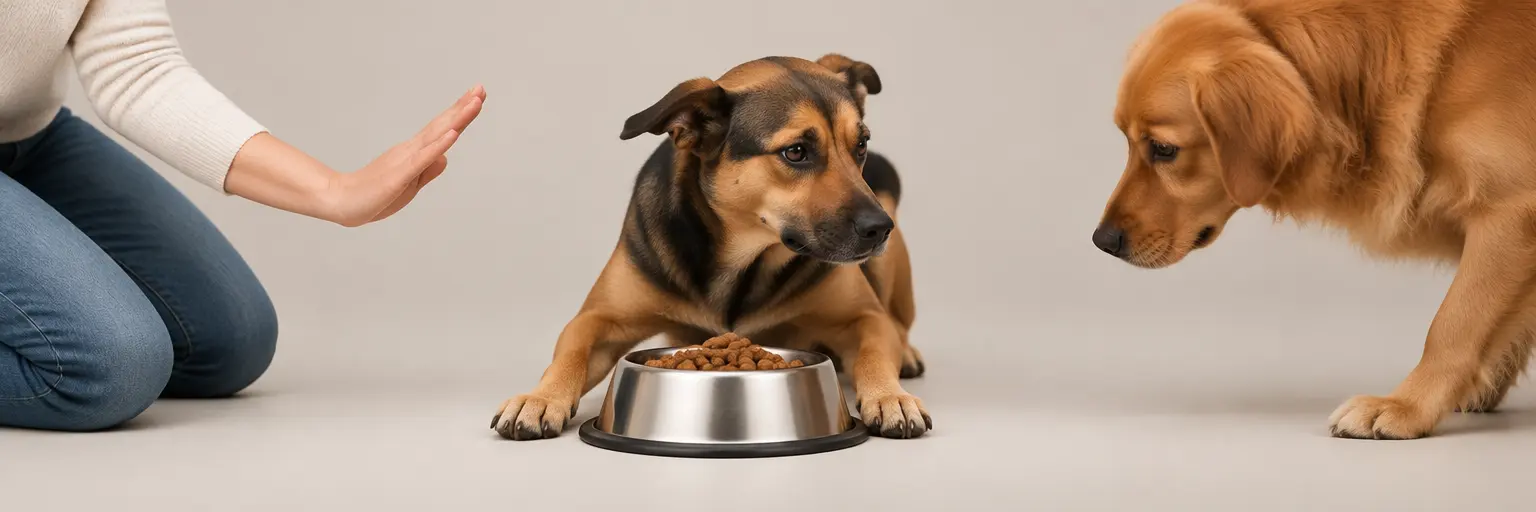
When resource guarding is severe, immediate safety protocols are essential. Never physically punish, grab, or forcibly remove an item from a guarding dog—this can provoke a defensive bite. Instead, our safety-first guides teach you proactive management strategies, such as feeding in separate rooms, using baby gates, or trading up with high-value treats. For multi-dog homes, we explain how to create structured routines that prevent competition, like feeding at staggered times or using puzzle feeders. You’ll also discover how to safely walk past a dog eating without triggering a reaction, and how to use leashes or muzzles (with proper conditioning) during emergencies. These practical tips ensure you and your family stay safe while you work on long-term behavior modification.
Management also extends to visitors and children, who are often unaware of guarding triggers. We provide clear guidelines on teaching kids to never approach a dog during meals or when toys are present, and how to supervise interactions. For dogs that guard their owners, we explain boundary-setting techniques that make the dog feel secure without resorting to aggression. Additionally, our articles cover how to identify warning signs during vet visits, grooming, or boarding, so you can communicate risks to professionals. By prioritizing safety, you create a predictable environment that reduces your dog’s stress and allows training to progress without incidents.
🧠 The Psychology Behind Resource Guarding
Resource guarding stems from an ancestral survival instinct: in the wild, losing a valuable resource could mean death. Your dog is not being “mean” or “dominant”—they are simply expressing fear of losing something precious. At PetCareWorld, we dive deep into canine ethology to explain why certain items trigger guarding, how hormones like cortisol affect behavior, and why some breeds or stray-rescue backgrounds have a higher predisposition. You’ll learn about the difference between true resource guarding and possessive behavior, plus how anxiety, pain, or past trauma can amplify the response. This psychological perspective helps you approach training with empathy, which is far more effective than confrontation.
We also explore how your own behavior might inadvertently reinforce guarding. For instance, constantly taking away toys teaches a dog to guard even harder, while sporadic hand-feeding can build trust. Our articles explain how to use classical conditioning—pairing your approach with delicious rewards—to change your dog’s negative association. You’ll understand the concept of “safe distance” and how to gradually reduce it using a systematic desensitization plan. Moreover, we cover how to establish yourself as a reliable provider rather than a threat, using structured meal times and “give-and-take” games. Armed with this knowledge, you can address the emotional root of guarding, not just the surface behavior.
🛠️ Step-by-Step Training: Counter-Conditioning and Desensitization
Our most requested resource is the detailed training protocol for resource guarding. You’ll learn a step-by-step counter-conditioning method that begins at a distance where your dog feels safe and progressively moves closer, rewarding calm, non-guarding behavior with high-value treats. For example, start by tossing a treat near the food bowl while your dog eats, then gradually move your hand closer, always offering something better. We break down exercises for food bowls, bones, toys, and even resting areas. Each guide includes clear criteria for success, troubleshooting tips for setbacks, and advice on when to seek professional help. These protocols rely entirely on positive reinforcement—no punishment, no alpha rolls—which is both humane and scientifically proven to reduce guarding.
Beyond basic desensitization, we cover advanced techniques like “trading up” (exchanging a low-value item for a high-value treat) and teaching a solid “leave it” and “drop it” command. You’ll also learn how to practice with real-world distractions, such as other pets or people walking by. For severe cases, we explain how to use a “consent to pet” and “protection from touch” approach, allowing your dog to signal when they’re comfortable. Our guides include printable training logs, video demonstrations, and quick-reference charts to track progress. With consistent practice, most dogs show significant improvement within weeks, and you’ll be equipped to maintain those gains long-term. Remember, every dog is unique—our framework adapts to your dog’s pace and personality.
🏠 Prevention and Long-Term Maintenance
Preventing resource guarding is far easier than treating it, especially for puppies. At PetCareWorld, we offer early-life protocols that include handling exercises, trading games, and regular hand-feeding to teach puppies that humans near their resources mean good things. For adopted adult dogs, we provide a 30-day “safety plan” that combines management, trust-building, and gradual exposure. Long-term maintenance involves sustaining a routine: never free-feed without supervision, rotate toys predictably, and regularly practice “drop it” games. We also discuss how to adapt your approach as your dog ages, since pain or cognitive decline can re-trigger guarding. Our maintenance articles include seasonal tips, such as holiday food hazards or new baby introductions, ensuring your training stays relevant and effective.
Moreover, we emphasize the importance of ongoing environmental enrichment. A bored or anxious dog is more likely to guard. We suggest food-dispensing toys, scent work, and structured exercise to reduce overall anxiety. You’ll also learn how to involve family members in the training so everyone uses consistent cues and rewards. For multi-pet homes, we outline supervised group sessions that reinforce calm behavior around shared resources. If you ever feel stuck, our resources guide you toward certified behaviorists or trainers who specialize in positive methods. Remember, prevention is a lifelong commitment—but the payoff is a relaxed, confident dog who trusts you completely. With our expert backup, you’ll turn a potentially dangerous behavior into a non-issue.
Frequently Asked Questions
Is resource guarding always a sign of aggression?
Not necessarily. Resource guarding is an instinctive fear-based behavior, not malicious aggression. Many dogs merely stiffen or give a hard stare, while others growl or snap. The intensity varies. Early, low-level guarding can be managed with training, but any warning bite is a serious sign. Never punish growling, as it’s your dog’s way of avoiding a bite. Work with a professional if guarding escalates.
Can resource guarding be cured completely?
With consistent positive conditioning, most dogs show dramatic improvement, but “cured” may mean they are relaxed enough that guarding never occurs. For many, the underlying anxiety diminishes permanently. However, relapses can happen under stress, pain, or new environments. Maintenance training and awareness are key to keeping guarding minimal. In severe cases, management (e.g., separate feeding) remains necessary.
Should I take away my dog’s food bowl while they eat?
No, doing so can worsen guarding. Instead, during training, practice approaching the bowl only to add a high-value treat, never to remove it. This teaches your dog that your presence near food predicts good things. If you must take an item, use a “trade” with something better. For safety, avoid reaching for food while your dog is eating unsupervised.
My dog only guards toys, not food. Is that still serious?
Yes, toy guarding is just as real and can lead to bites, especially for children. Apply the same counter-conditioning principles: approach your dog, offer a high-value treat, and practice “drop it.” Use toys as training tools, but avoid free access to high-value ones until your dog learns to relax. Consistent trading teaches that you bring good things, not loss.
When should I hire a professional dog trainer for resource guarding?
If your dog has bitten someone, guards multiple resources, or if you feel unsafe, seek professional help immediately. A certified positive-reinforcement trainer or veterinary behaviorist can assess severity and design a tailored plan. Also, consult a professional if your own attempts don’t improve behavior within two weeks, or if guarding involves human-directed aggression. Safety always comes first.