
Choosing the Right Heat Source for Arboreal Reptile Species

Welcome to PetCareWorld, your ultimate guide to a happier, healthier life for your beloved companions! Are you ready to unlock the secrets to creating the perfect environment for your arboreal reptile? Discover the essential information you need to choose the Best Heat Lamp for Arboreal Reptiles, ensuring your scaly friend thrives in a safe and stimulating habitat. Dive into our expert guide and learn how to select the ideal heat source, avoiding common pitfalls and ensuring optimal well-being for your unique pet.
- Understanding Arboreal Reptile Heating Needs
-
Best Heat Lamps for Arboreal Reptiles: A Comparative Guide
- Ceramic Heat Emitters (CHEs): Pros and Cons for Arboreal Habitats
- Heat Bulbs: Incandescent vs. Halogen - Choosing the Right Wattage for Your Reptile's Enclosure Size
- Under Tank Heaters (UTHs) for Arboreal Species: Applications and Limitations
- Heat Mats for Arboreal Reptiles: Effective Use and Safety Considerations
- Choosing the Right Heat Lamp Wattage for Your Arboreal Reptile
- Safety Precautions When Using Heat Lamps for Arboreal Reptiles
- Maintaining Optimal Humidity and Temperature for Arboreal Reptiles
- Case Studies: Successful Heat Lamp Setups for Popular Arboreal Reptile Species
-
Frequently Asked Questions
- What is the best type of heat lamp for arboreal reptiles?
- How do I determine the correct wattage for my heat lamp?
- Why are ceramic heat emitters often recommended for arboreal reptiles?
- How important is maintaining a proper temperature gradient in the enclosure?
- What safety precautions should I take when using heat lamps for my arboreal reptile?
- Final Reflection: The Vital Glow: Choosing the Right Heat for Arboreal Companions
- Unleash Your Reptile's Inner Sunbather!
Understanding Arboreal Reptile Heating Needs
Keeping arboreal reptiles thriving requires a nuanced understanding of their thermal needs. Unlike terrestrial species that often rely on substrate heat, arboreal reptiles, such as geckos, chameleons, and tree boas, need a carefully managed thermal gradient within their enclosures to mimic their natural habitat. This gradient ensures they can thermoregulate effectively, basking in warmer areas for digestion and activity, and retreating to cooler spots for rest and temperature regulation.
Choosing the right heat source is crucial for their health, behavior, and overall well-being. This guide will explore the best heat lamps for arboreal reptiles, focusing on the key factors you need to consider to create a successful and safe environment for your scaled friend. We'll delve into the specifics of basking spots, ambient temperatures, and the vital role of UVB and infrared radiation in maintaining a healthy and vibrant reptile habitat.
Finding the perfect balance is key to ensuring your arboreal reptile thrives and lives a long and happy life. The wrong heating setup can lead to serious health problems, so understanding the intricacies of heat provision is paramount. This article will empower you to make informed decisions to ensure the health and happiness of your pet.
Basking Spots vs. Ambient Temperature: Maintaining Optimal Thermal Gradients for Crested Geckos
Crested geckos, a popular arboreal species, exemplify the importance of a proper thermal gradient. They require a basking spot significantly warmer than the ambient temperature of the enclosure. A healthy gradient allows them to regulate their body temperature by moving between these zones.
The basking spot should ideally reach temperatures between 88-92°F (31-33°C), measured with an accurate thermometer placed on the basking surface where the gecko is likely to rest. The ambient temperature of the enclosure should be maintained between 72-78°F (22-26°C). Failure to provide this difference can lead to improper digestion, lethargy, and ultimately, illness.
Using a combination of heat lamps and possibly under-tank heaters (UTHs for supplemental night time heat) is often necessary to achieve this gradient, depending on the size and construction of the enclosure and the ambient room temperature. It is crucial to monitor temperatures consistently, using multiple thermometers placed at various points within the enclosure, to ensure the gradient remains within the optimal range. This approach ensures the crested gecko can choose its preferred temperature at any time.
Consider this example: A 20-gallon long enclosure for a crested gecko might benefit from a 50-watt ceramic heat emitter for nighttime heat, supplementing a daytime basking spot created by a low wattage incandescent bulb or a specialized reptile heat lamp. The placement of these heat sources is critical. The basking lamp should be positioned to create a focused warm zone on a branch or other elevated surface, while the ceramic heat emitter should provide a more diffuse warmth across a larger area of the enclosure. The use of a thermostat is strongly recommended to avoid overheating.
The Importance of UVB and Infrared Radiation for Arboreal Reptiles
Beyond simply providing warmth, appropriate UVB and infrared (IR) radiation are essential for the well-being of arboreal reptiles. UVB radiation is crucial for calcium metabolism and the prevention of metabolic bone disease (MBD). A lack of UVB can lead to weakened bones, skeletal deformities, and other serious health issues. Many arboreal reptiles also benefit from infrared radiation, which helps with digestion and overall thermoregulation.
Choosing the right bulb is crucial; many heat lamps offer both UVB and IR radiation in varying intensities. However, it's important to select bulbs specifically designed for reptiles and to follow the manufacturer's instructions carefully regarding distance and usage. Overexposure can be just as harmful as insufficient exposure.
The intensity of UVB and IR radiation should be carefully considered based on the specific species and size of the reptile. For example, a smaller species like a crested gecko may require a lower-wattage UVB bulb than a larger species like a veiled chameleon. Regularly checking the bulb's output with a UVB meter is recommended to ensure optimal levels are being provided.
Remember that UVB output diminishes over time, so bulbs should be replaced according to the manufacturer's recommendations, usually every 6-12 months. Ignoring this vital aspect of care can lead to significant health problems and compromise the overall well-being of your arboreal reptile.
Best Heat Lamps for Arboreal Reptiles: A Comparative Guide
This section dives deep into the specifics of choosing the best heat lamp for your arboreal reptile, focusing on the most popular options and their suitability for various species and enclosure setups. Finding the perfect balance between providing sufficient heat and maintaining a safe and comfortable environment is crucial for the health and well-being of your pet. We'll explore the nuances of each heating method, highlighting their advantages and disadvantages to help you make an informed decision.
Remember, always prioritize the specific needs of your reptile species when selecting a heat source. Improper heating can lead to serious health problems, so thorough research is essential.
Ceramic Heat Emitters (CHEs): Pros and Cons for Arboreal Habitats
Ceramic Heat Emitters (CHEs) are a popular choice among reptile keepers due to their ability to produce heat without emitting visible light. This is particularly beneficial for nocturnal species or those sensitive to bright light cycles. For arboreal reptiles, however, their placement requires careful consideration.
CHEs emit infrared radiation, which is easily absorbed by the surrounding environment, including branches and basking sites. This means effective heat distribution may require strategic positioning within the enclosure to ensure your arboreal reptile can access a suitable thermal gradient. Simply placing a CHE at one end of the enclosure might not provide sufficient heat at higher levels where your reptile spends most of its time.
Pros:
- No visible light emission: Ideal for nocturnal species and maintaining natural day/night cycles.
- Efficient heat production: Converts a high percentage of energy into heat, reducing energy costs compared to incandescent bulbs.
- Long lifespan: CHEs generally have a longer lifespan than incandescent or halogen bulbs.
Cons:
- Difficult to achieve even heat distribution in tall enclosures: Requires careful placement and potential use of additional heat sources for optimal basking spots.
- Can be brittle: Handle with care to avoid breakage.
- Can be expensive upfront: While they are energy-efficient in the long run, the initial investment might be higher than other options.
Heat Bulbs: Incandescent vs. Halogen - Choosing the Right Wattage for Your Reptile's Enclosure Size
Incandescent and halogen heat bulbs are readily available and relatively inexpensive options. However, they emit significant visible light, which can disrupt the natural sleep-wake cycles of some arboreal reptiles. The wattage you choose is critical and directly impacts the temperature within the enclosure. A higher wattage bulb will produce more heat, but it also carries a higher risk of overheating if not properly regulated.
Choosing the right wattage depends heavily on the size of the enclosure and the ambient temperature of the room. A larger enclosure will require a higher wattage bulb to achieve the desired temperature gradient. It's crucial to use a reliable thermometer (digital thermometers are recommended) to monitor the basking spot temperature and adjust the wattage accordingly. Always ensure the bulb is properly shielded to prevent burns to your reptile.
| Bulb Type | Pros | Cons | Wattage Considerations |
|---|---|---|---|
| Incandescent | Inexpensive, readily available | Short lifespan, inefficient, emits bright light | Start with a lower wattage and gradually increase. |
| Halogen | More efficient than incandescent, brighter | Still emits light, can be more expensive | Similar to incandescent, monitor closely. |
Under Tank Heaters (UTHs) for Arboreal Species: Applications and Limitations
Under Tank Heaters (UTHs) are typically used to provide a supplemental heat source for the bottom of the enclosure. While effective for many terrestrial species, their application for arboreal reptiles is more limited. UTHs primarily heat the substrate, and the heat transfer to the upper levels of the enclosure where arboreal reptiles typically bask can be inefficient. They are more effective at maintaining a consistent overall temperature within the enclosure rather than providing a focused basking spot.
Therefore, UTHs are generally not the primary heat source for arboreal reptiles. They might be used as a supplementary heat source to maintain a consistent base temperature, particularly in colder environments. However, it's essential to combine UTHs with other heat sources, such as CHEs or heat bulbs, to create a proper thermal gradient and ensure your reptile can thermoregulate effectively. Over-reliance on UTHs alone can lead to uneven heating and potentially harm your reptile. Always monitor the temperature gradient using multiple thermometers placed at different levels within the enclosure. 🌡️
Heat Mats for Arboreal Reptiles: Effective Use and Safety Considerations
Heat mats, while not the primary heat source for most arboreal reptiles due to their basking preferences, can play a valuable supplementary role in maintaining a proper thermal gradient within the enclosure. They are best used to gently warm the substrate, providing a thermal refuge for your reptile, especially at night or during cooler periods. However, it's crucial to understand their limitations and potential dangers to ensure the safety of your pet.
One significant advantage of heat mats is their ability to provide consistent, gentle bottom heat. This is particularly beneficial for species that prefer slightly warmer ground temperatures, even if they bask primarily under a heat lamp. The even distribution of heat can help prevent localized overheating, a common problem with other heating methods. For instance, a heat mat placed under a portion of the enclosure's substrate can create a warmer area, allowing your reptile to thermoregulate effectively by moving between warmer and cooler zones.
However, improper use of heat mats can lead to serious consequences. The most critical concern is the risk of burns. Never place the heat mat directly under the enclosure; always use a thermostat to regulate the temperature and prevent overheating. Furthermore, the heat mat should be placed on the outside of the enclosure, beneath the substrate, to avoid direct contact with your reptile. Using a non-conductive material like a tile or thick cork bark between the heat mat and the enclosure floor is highly recommended as an additional safety precaution.
Another important consideration is the type of heat mat. Ceramic heat emitters (CHEs) are often preferred over traditional heat mats because they don't emit light, which is crucial for maintaining the natural day-night cycle crucial for your reptile's well-being. Traditional heat mats, while cheaper, can emit a faint glow that can disrupt this cycle.
Always choose a heat mat designed for reptile enclosures and appropriate for the size of your enclosure. Oversized heat mats can be inefficient and potentially unsafe, while undersized mats may not provide adequate warmth. Remember to regularly check the mat for any signs of wear and tear and replace it immediately if any damage is detected.
This proactive approach is essential for preventing electrical hazards and ensuring your pet's safety. Regularly monitoring the temperature using an accurate thermometer placed within the enclosure, outside of the basking area, is crucial for successful and safe heat mat implementation. This allows you to make necessary adjustments to maintain the ideal temperature gradient for your arboreal reptile.
Choosing the Right Heat Lamp Wattage for Your Arboreal Reptile
Selecting the appropriate wattage for your arboreal reptile's heat lamp is crucial for their health and well-being. An incorrectly sized lamp can lead to thermal burns, insufficient basking temperatures, or even death. The "best heat lamp" for arboreal reptiles isn't about a specific brand, but about choosing the right wattage to achieve the correct temperature gradient within the enclosure. This requires careful consideration of several factors. We'll delve into these factors, helping you make an informed decision to create the perfect basking spot for your scaly friend. Remember, always prioritize the safety and comfort of your pet.
Calculating Heat Lamp Wattage Based on Enclosure Size and Reptile Species
Determining the ideal wattage for your heat lamp involves understanding the relationship between enclosure volume, reptile species, and ambient temperature. Larger enclosures require higher wattage lamps to adequately heat the space, while smaller enclosures may only need lower wattage options. Furthermore, different species have varying thermal requirements. For example, a large green tree python will need a significantly higher wattage lamp than a smaller crested gecko.
Here's a simplified approach, but remember that accurate temperature monitoring (discussed in the next section) is paramount:
- Enclosure Size: Measure the length, width, and height of your enclosure in inches or centimeters to calculate its volume. Larger volumes necessitate higher wattage.
- Reptile Species: Research the specific thermal requirements of your reptile species. Look for information on their preferred basking temperature and the optimal temperature gradient within their enclosure. This information is readily available in reptile care guides and online forums.
- Ambient Temperature: Consider the ambient temperature of the room where the enclosure is located. Colder rooms require higher wattage lamps to maintain the desired temperature gradient.
| Reptile Species | Approximate Wattage Range (for a medium-sized enclosure) | Notes |
|---|---|---|
| Green Tree Python | 50-100W | Requires a significant heat source due to size and thermal needs. |
| Crested Gecko | 15-25W | Smaller species require less wattage. |
| Day Gecko | 15-30W | Wattage will depend on enclosure size and ambient temperature. |
| Various arboreal lizards | 25-75W | This is a broad range; research your specific species' needs carefully. |
Remember, this table provides estimates. Always prioritize accurate temperature monitoring to fine-tune the wattage. It's better to start with a lower wattage and gradually increase it, carefully observing your reptile's behavior and the temperature readings.
Monitoring Temperature and Adjusting Wattage: Essential Tools and Techniques
Accurate temperature monitoring is not optional; it's essential for the well-being of your arboreal reptile. Incorrect temperatures can lead to serious health problems, including metabolic bone disease (MBD) and respiratory infections. Using reliable equipment is crucial.
Here's what you need:
- Digital Thermometer with a Probe: This allows for precise temperature measurement at the basking spot and in the cooler areas of the enclosure. Avoid using mercury thermometers due to safety concerns.
- Temperature Gradient: Aim for a temperature gradient within the enclosure. This allows your reptile to thermoregulate effectively by moving between warmer and cooler areas.
- Regular Monitoring: Check the temperature at least twice daily, once in the morning and once in the evening. Note that temperatures can fluctuate due to factors like ambient room temperature and the heat lamp's age.
- Adjusting Wattage: If the temperature is consistently too high or too low, adjust the wattage of your heat lamp accordingly. You might need to switch to a higher or lower wattage bulb.
- Safety Precautions: Never leave a heat lamp unattended for extended periods. Ensure the lamp is securely mounted and away from flammable materials. Regularly inspect the lamp and its cord for damage.
Using a combination of careful calculation, diligent monitoring, and the right equipment, you can create a safe and thermally appropriate environment for your arboreal reptile, ensuring its health and longevity. Remember, consistent monitoring and adjustments are key to maintaining the optimal temperature gradient. The wellbeing of your pet depends on your attentiveness and responsible care.
Safety Precautions When Using Heat Lamps for Arboreal Reptiles
Selecting the best heat lamp for your arboreal reptile is only half the battle. Ensuring the safe and responsible use of these heat sources is crucial for your pet's well-being and your home's safety. This section details vital safety measures to prevent accidents and ensure a healthy environment for your reptile companion. Understanding and implementing these precautions will help you provide optimal care while minimizing risks associated with heat lamp usage. Remember, a proactive approach to safety is paramount when dealing with heat sources and electricity.
Preventing Burns and Fires: Safe Placement and Enclosure Design
Preventing burns and fires is paramount when using heat lamps for arboreal reptiles. Improper placement can lead to serious injuries for your reptile and even cause a fire hazard. The ideal setup involves careful consideration of lamp placement, enclosure materials, and the use of protective guards.
The heat lamp should never be placed directly on or within touching distance of any flammable materials, such as wood, paper, or cloth. This includes the enclosure itself; certain types of wood are particularly susceptible to ignition. Consider the use of heat-resistant materials like glass or ceramic for the enclosure base.
Optimal placement involves positioning the heat lamp above the enclosure, at a sufficient distance to provide a thermal gradient. This gradient allows your reptile to thermoregulate by moving between warmer and cooler areas. The distance will depend on the wattage of the lamp and the size of the enclosure. A good rule of thumb is to start with a higher distance and gradually decrease it, monitoring the temperature with an accurate thermometer. Remember, consistently monitoring temperatures is key to maintaining a safe and healthy environment.
Consider using a protective guard around the heat lamp to prevent accidental contact. This is especially crucial if you have other pets or young children in the house. The guard should be made of a heat-resistant material and securely fastened to prevent it from falling or being knocked over.
Here's a table summarizing safe placement practices:
| Factor | Recommendation |
|---|---|
| Lamp Placement | Above the enclosure, at a safe distance, allowing for a thermal gradient. |
| Enclosure Materials | Heat-resistant materials (glass, ceramic) preferred. |
| Protective Guard | Highly recommended, especially with other pets or children. |
| Temperature Monitoring | Essential; use an accurate thermometer. |
🔥 Remember, prevention is key! A little extra caution goes a long way in ensuring a safe environment for your reptile.
Regularly Inspecting Heat Lamps and Wiring: Avoiding Electrical Hazards
Regular inspection of heat lamps and their wiring is essential to prevent electrical hazards. Damaged cords or faulty lamps can lead to short circuits, fires, and even electric shocks. A proactive approach to maintenance can significantly reduce these risks.
Inspect the lamp and its cord regularly for any signs of damage, such as fraying, cracks, or exposed wires. Replace any damaged components immediately. Never use a heat lamp with a damaged cord. This seemingly small step can prevent serious accidents.
Furthermore, ensure that the lamp's wattage is compatible with the socket and the overall electrical system of your home. Overloading a circuit by using too many high-wattage appliances can cause overheating and lead to a fire hazard.
Keep the lamp and its cord away from water and moisture. Water and electricity are a dangerous combination, and even minor exposure can cause significant damage or lead to an electrical shock.
Here’s a checklist for regular inspections:
- [ ] Visually inspect the heat lamp cord for any signs of damage (fraying, cracks, etc. ).
- [ ] Check the bulb for any cracks or discoloration.
- [ ] Verify that the wattage of the lamp is compatible with the socket and your home's electrical system.
- [ ] Ensure the lamp and cord are kept dry and away from moisture.
- [ ] Replace any damaged components immediately.
Regular maintenance, coupled with careful observation, will contribute significantly to a safe and healthy environment for your arboreal reptile. Remember, proactive safety measures are essential for responsible pet ownership. 💡
Maintaining Optimal Humidity and Temperature for Arboreal Reptiles
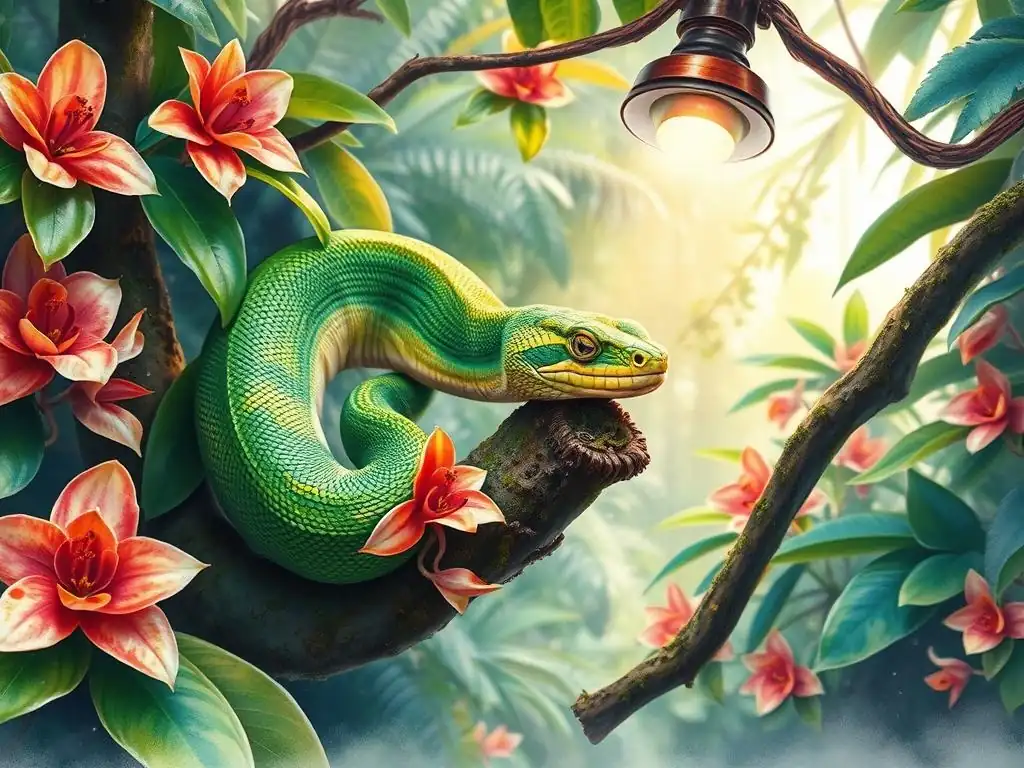
Maintaining the correct temperature and humidity levels is crucial for the health and well-being of arboreal reptiles. These species, adapted to life in trees and high humidity environments, require specific parameters to thrive. Failure to provide these can lead to serious health problems, including respiratory infections, dehydration, and metabolic bone disease (MBD). Understanding the delicate balance between heat and humidity is paramount for responsible reptile ownership. The "best heat lamp arboreal reptiles" isn't just about temperature; it's about creating a holistic environment that mimics their natural habitat.
The Relationship Between Heat, Humidity, and Reptile Health
Heat and humidity are inextricably linked in the health of arboreal reptiles. Temperature dictates the reptile's metabolism, influencing digestion, activity levels, and immune function. Insufficient heat slows metabolism, leading to poor digestion and a weakened immune system, making the reptile more susceptible to illness. Conversely, excessive heat can cause dehydration and heat stress.
Humidity plays a critical role in maintaining healthy skin and preventing respiratory problems. Low humidity can lead to dry skin shedding difficulties, while excessively high humidity can encourage the growth of harmful bacteria and fungi. The ideal balance varies significantly depending on the species, with some needing higher humidity levels than others.
For example, a green tree python requires significantly higher humidity than a bearded dragon, even though both are considered semi-arboreal. Finding the optimal balance, often requiring careful monitoring and adjustment, is key to ensuring a healthy and happy reptile. Failing to achieve this balance significantly increases the risk of health complications.
The impact of incorrect humidity levels is often more immediately noticeable than temperature issues. Symptoms of low humidity include difficulty shedding, dry skin, and lethargy. High humidity, conversely, can manifest as respiratory infections, skin infections, and a general decline in the reptile's overall condition. Regular monitoring of both temperature and humidity is essential for early detection and correction of any imbalances, preventing serious health problems. This proactive approach ensures the long-term health and happiness of your arboreal reptile.
Using Thermostats and Hygrometers for Precise Environmental Control
Precise environmental control is essential for maintaining optimal conditions for your arboreal reptile. Relying solely on observation is insufficient; accurate measurements are necessary. This is where thermostats and hygrometers become indispensable tools for responsible reptile keepers.
A reliable thermostat, paired with your chosen heat source (such as the "best heat lamp arboreal reptiles" for your specific needs), allows for precise temperature regulation, preventing dangerous fluctuations. This automated control is vital, especially for species with narrow temperature tolerance ranges. Similarly, a hygrometer provides accurate humidity readings, allowing you to make informed adjustments to maintain the appropriate moisture level within the enclosure.
The type of thermostat and hygrometer you choose depends on the size and complexity of your setup. Digital models offer greater accuracy and often include features like alarms to alert you to deviations from the set parameters. Analog models, while simpler, can still provide useful information. Regardless of the type, regular calibration is necessary to ensure accuracy. Consider the following when choosing equipment:
| Feature | Important Considerations |
|---|---|
| Accuracy | Choose models with high accuracy ratings to ensure reliable readings. |
| Range | Select a range appropriate for your reptile species' specific temperature and humidity needs. |
| Ease of Use | Opt for user-friendly models for simple monitoring and adjustments. |
| Durability | Choose durable models that can withstand the conditions within a reptile enclosure. |
| Calibration | Regular calibration is crucial to maintain accuracy. |
Investing in high-quality thermostats and hygrometers is a worthwhile investment in your arboreal reptile's health and well-being. They provide the data-driven approach necessary for creating and maintaining a safe and thriving environment, ultimately contributing to a longer, healthier life for your pet. Remember, the "best heat lamp arboreal reptiles" is only part of the equation; precise control of both temperature and humidity is equally crucial.
Case Studies: Successful Heat Lamp Setups for Popular Arboreal Reptile Species
This section delves into specific examples of successful heat lamp setups for popular arboreal reptile species. Understanding these case studies will help you tailor your own setup to your pet's specific needs, ensuring optimal thermoregulation and overall well-being. Remember, the "best" heat lamp for arboreal reptiles depends heavily on the species and its specific requirements. Always research your specific reptile's needs before making a purchase. Finding the best heat lamp for your arboreal reptile involves careful consideration of wattage, placement, and supplemental heating methods.
Crested Geckos: Optimal Heating and Lighting Configuration
Crested geckos ( Correlophus ciliatus) are popular pets due to their relatively low maintenance. However, providing the correct temperature gradient is crucial for their health and activity levels. These nocturnal animals don't require high basking temperatures. Instead, focus on maintaining a consistent ambient temperature.
A successful setup typically involves a low-wattage ceramic heat emitter (CHE) positioned outside the enclosure, providing gentle background heat. Avoid using heat lamps that produce visible light, as these can disrupt their nocturnal cycle. A thermostat is essential to prevent overheating. Aim for a consistent temperature gradient ranging from 70-75°F (21-24°C) at the coolest point to 80-85°F (27-29°C) at the warmest point. This allows the gecko to thermoregulate effectively.
Supplementing with a low-output UVB bulb for a few hours daily is also beneficial for calcium absorption and overall health. However, ensure it's positioned so that it does not directly shine on the gecko, preventing potential burns. Providing a variety of hides and branches at different levels allows the gecko to choose its preferred temperature zone.
Remember, consistent monitoring of temperatures with an accurate thermometer is paramount. Regularly check the temperature at multiple points within the enclosure. This proactive approach is crucial for preventing health issues associated with improper thermoregulation. The goal is to mimic their natural habitat as closely as possible, providing a comfortable and stimulating environment.
Green Tree Pythons: Addressing Common Heating Challenges
Green tree pythons ( Morelia viridis) are arboreal snakes with specific heating requirements. They need a significant temperature gradient, and maintaining this gradient can present challenges. Common mistakes include inconsistent heating, improper placement of heat sources, and neglecting humidity control. These factors can lead to stress, poor appetite, and susceptibility to illness.
A successful setup typically involves a combination of heating methods. A CHE might be used as a primary heat source, positioned outside the enclosure to provide a consistent background temperature. Additionally, a low-wattage heat lamp can be used to create a basking spot, but it's crucial to monitor the temperature closely to avoid overheating. The basking spot should reach temperatures around 88-92°F (31-33°C), while the cool side should remain around 75-80°F (24-27°C). This gradient is essential for digestion and thermoregulation.
One common challenge is maintaining humidity. Green tree pythons require high humidity levels, typically between 60-80%. This is often achieved through misting, the use of a fogger, or by placing a water bowl within the enclosure. The humidity level directly impacts the effectiveness of the heating system and the overall health of the snake. Improper humidity levels can affect shedding and increase the risk of respiratory infections.
Regular monitoring of both temperature and humidity is therefore crucial. Using a hygrometer alongside a thermometer allows precise control of the environment, ensuring optimal conditions for the green tree python. Careful planning and observation are key to providing a suitable environment for this demanding species. The best heat lamp for a green tree python is one that works effectively in conjunction with a robust humidity control system.
Frequently Asked Questions
What is the best type of heat lamp for arboreal reptiles?
The best heat lamp depends on your reptile's specific needs and enclosure size. Ceramic heat emitters are generally preferred for arboreal species as they provide heat without emitting light, which can disrupt their natural sleep cycles. Consider infrared heat lamps as a secondary option.
How do I determine the correct wattage for my heat lamp?
Wattage depends on the size of the enclosure, the ambient temperature, and your reptile's specific requirements. It’s crucial to use a thermometer to monitor the temperature gradient within the enclosure and adjust wattage accordingly to ensure the basking spot reaches the correct temperature.
Why are ceramic heat emitters often recommended for arboreal reptiles?
Ceramic heat emitters produce heat without light, allowing for a natural day/night cycle crucial for the health and well-being of many arboreal reptiles. This mimics their natural habitat and promotes healthy sleep patterns.
How important is maintaining a proper temperature gradient in the enclosure?
A proper temperature gradient is essential for arboreal reptiles. It allows them to thermoregulate by moving between warmer and cooler areas within the enclosure, crucial for digestion and overall health. Improper temperature can lead to illness.
What safety precautions should I take when using heat lamps for my arboreal reptile?
Always use a heat-resistant fixture and place the lamp securely to prevent fire hazards. Never leave the lamp unattended for extended periods, and regularly inspect the bulb and wiring for any damage. Ensure the lamp is out of reach of your reptile to prevent burns.
Final Reflection: The Vital Glow: Choosing the Right Heat for Arboreal Companions
The responsible care of arboreal reptiles hinges on providing the perfect thermal environment; getting it wrong can mean the difference between a thriving pet and a struggling one. The seemingly simple act of choosing a heat source is, in reality, a crucial decision impacting the health, longevity, and overall well-being of these fascinating creatures. This careful selection, as detailed throughout this article, is not just about temperature; it's about mimicking their natural habitat and ensuring a life of comfort and vitality.
The impact of proper heating extends beyond the individual reptile; it speaks to our responsibility as keepers to understand and meet the specific needs of the species under our care. This understanding fosters a deeper connection, transforming the relationship from simple ownership to genuine stewardship. The best measure of a man is how he treats those who can do him no good.
While this quote speaks to human interactions, its essence applies equally to our responsibility towards our animal companions. The choices we make regarding their care reflect our values and commitment to their welfare.
Consider the information presented here – the nuances of UVB and infrared radiation, the importance of basking spots and thermal gradients – and apply this knowledge to your own reptile keeping practices. You have the power to create a thriving environment for your arboreal friend, ensuring they live a long, healthy, and fulfilling life. Take the time to research your specific species' needs, observe their behavior, and adjust your heating strategy accordingly. Your dedication will be rewarded with the vibrant health and captivating presence of your scaly companion.
Unleash Your Reptile's Inner Sunbather!
Thank you for exploring the world of arboreal reptile heating! We hope you've gained valuable insights into creating the perfect basking environment for your reptile. Now, let's put that knowledge into practice.
- Prioritize the perfect basking spot: Carefully evaluate your current setup and make any necessary adjustments to ensure your reptile receives optimal warmth and UVB light. This is crucial for their health and well-being.
- Share your success: Share a picture of your improved basking area with our community on the PetCareWorld forum! Let's inspire each other with creative and effective solutions.
- Enhance your heating system: Consider different heat lamps or under-tank heaters to fine-tune your reptile's temperature gradient and ensure a comfortable environment.
Ready to create the ultimate tropical paradise for your arboreal companion? What small improvement will you make today to enhance your reptile’s basking experience?