
Clicker Training for Puppies: A Fun and Effective Method


Welcome to PetCareWorld, your ultimate guide to a happier, healthier life for your beloved companion! Are you ready to unlock the secrets to effective pet communication and build a stronger bond with your furry friend? Our comprehensive Puppy Clicker Training Guide provides a fun and effective method to teach your puppy essential commands, building a foundation of trust and understanding. Discover how this innovative training technique can transform your relationship and pave the way for a lifetime of joyful companionship. Dive in and start your training journey today!
- Understanding Clicker Training for Puppies: A Comprehensive Guide
- Getting Started with Clicker Training: Initial Steps
- Teaching Basic Commands Using Clicker Training
- Troubleshooting Common Clicker Training Challenges
- Advanced Clicker Training Techniques for Puppies
- Clicker Training and Puppy Socialization: A Holistic Approach
- Maintaining Your Puppy’s Training Momentum: Continued Success
- Beyond Basic Commands: Expanding Your Puppy's Training
- Frequently Asked Questions
- Final Reflection: The Lasting Click of Connection
- Unlock Your Puppy's Potential: Start Clicker Training Today!
Understanding Clicker Training for Puppies: A Comprehensive Guide
Clicker training is a humane and highly effective method for teaching puppies new behaviors and commands. This comprehensive guide will equip you with the knowledge and skills to successfully implement clicker training with your furry friend, transforming your training sessions into fun, rewarding experiences for both of you.
We'll explore the mechanics of clicker training, delve into its numerous benefits, and guide you through selecting the appropriate tools – the clicker and the right treats – to maximize your puppy's learning potential. This method is particularly beneficial for puppies, whose short attention spans and eagerness to please make them ideal candidates for this positive reinforcement technique.
By the end of this guide, you will be well-prepared to embark on a rewarding journey of training your puppy using this positive and effective method, strengthening your bond and ensuring a well-behaved companion. This guide acts as your complete "Puppy clicker training guide," providing all the necessary information to begin your training adventure today!
What is Clicker Training and How Does it Work?
Clicker training utilizes a small handheld device called a clicker, which emits a distinct clicking sound. This sound acts as a marker, signaling the precise moment your puppy performs the desired behavior. The clicker’s sound is always followed by a rewarding treat or praise. This consistent pairing creates an association: the click means "good job," immediately followed by a reward.
The timing is crucial; the click must occur instantly after the desired behavior. This precise timing helps the puppy understand exactly which action earned the reward. For example, if you're teaching your puppy to sit, the click should happen the instant their rear touches the ground.
This positive reinforcement approach fosters a positive learning environment, making training enjoyable for both you and your puppy. It avoids punishment or harsh methods, building trust and a strong bond between you and your canine companion. The process involves several steps: choosing the right clicker and treats, associating the clicker sound with positive reinforcement, and gradually shaping the desired behavior through successive approximations.
Benefits of Clicker Training for Puppies
Clicker training offers a multitude of advantages over traditional training methods. It's incredibly versatile, suitable for teaching a wide range of behaviors, from basic commands like sit, stay, and come, to more complex tricks. Furthermore, it fosters a positive learning environment, building confidence in your puppy and strengthening your bond. The use of positive reinforcement motivates your puppy without resorting to punishment or intimidation. This leads to a happier, more well-adjusted dog. Some key benefits include:
- Improved Communication: Clicker training enhances communication between you and your puppy, creating a clearer understanding of expectations.
- Faster Learning: The precise timing of the clicker helps puppies learn commands quickly and efficiently.
- Increased Motivation: The reward system keeps puppies engaged and eager to learn.
- Reduced Stress: The positive reinforcement approach minimizes stress and anxiety during training.
- Stronger Bond: The positive interactions strengthen the bond between you and your puppy.
- Greater Versatility: This method is adaptable to different breeds, ages, and temperaments.
The effectiveness of clicker training is widely documented and supported by numerous studies on canine behavior and learning. It's a scientifically-backed method that consistently yields positive results.
Choosing the Right Clicker and Treats for Your Puppy
Selecting the right clicker and treats is essential for successful clicker training. The clicker itself should be lightweight, easy to hold, and produce a clear, crisp sound that's easily audible to your puppy. Avoid clickers with a faint or muffled sound. As for treats, choose small, high-value items that your puppy finds irresistible.
These should be easily digestible and small enough to be given frequently without causing digestive upset. Consider your puppy's preferences – some puppies might prefer small pieces of cooked chicken or cheese, while others might adore tiny bits of their favorite kibble. The key is to find a treat your puppy is highly motivated to earn. Remember, consistency is key; always use the same clicker and similar types of treats throughout your training sessions to maintain a clear association.
Avoid using treats that might cause allergies or digestive problems. A well-chosen clicker and treats will significantly contribute to the success of your clicker training journey. 🐶
Essential Supplies for Successful Clicker Training
Clicker training your puppy requires minimal equipment, but having the right tools makes the process smoother and more enjoyable for both you and your furry friend. The most crucial element, of course, is the clicker itself. Choose a clicker that's easy for you to operate and produces a clear, distinct sound.
Avoid clickers that are too quiet or have a muffled sound, as your puppy needs to clearly associate the sound with a reward. Many different types are available, from basic plastic clickers to those with wrist straps for easier handling. Consider your personal preference and what feels most comfortable in your hand.
Beyond the clicker, you'll need high-value rewards. This is where understanding your individual puppy's preferences comes into play. While some puppies might be easily motivated by small kibble pieces, others might require something more enticing, such as small pieces of cooked chicken, cheese, or even a tiny bit of their favorite dog treat.
Experiment to find what truly excites your puppy and makes them eager to participate. The key is to use small, easily consumed rewards to maintain focus and avoid overwhelming your puppy during training sessions. Remember to keep the treats readily available in a small container or treat pouch for easy access during training.
Finally, consider the training environment. While you can practice clicker training in various locations, starting in a quiet, distraction-free area is best. This could be a quiet room in your house, a fenced-in yard, or even a designated spot in your living room. The goal is to minimize distractions that might divert your puppy's attention and disrupt the learning process.
A calm and predictable environment promotes better focus and allows your puppy to concentrate on learning the desired behaviors. Remember to keep training sessions short and sweet, especially in the beginning stages, to avoid overwhelming your puppy and maintain their engagement. A positive and patient approach is key to a successful puppy clicker training experience.
Getting Started with Clicker Training: Initial Steps

This section focuses on the foundational steps necessary for successful puppy clicker training. We'll cover associating the clicker with positive reinforcement, introducing your puppy to the clicker and treats, and selecting an ideal training environment. Remember, patience and consistency are key to a positive learning experience for your furry friend.
This guide will help you navigate the initial stages of this rewarding training method, ultimately leading to a well-behaved and happy pup. The goal is to create a positive association with the clicker, making it a signal for good things to come. This forms the bedrock of effective puppy clicker training.
Associating the Clicker with Positive Reinforcement
The core principle behind clicker training lies in associating the click of the clicker with an immediate reward. This creates a powerful conditioned response – the puppy learns that the click means "good job!" followed by a treat. To achieve this, start by selecting high-value treats – small, soft pieces of your puppy's favorite food that are easy to consume quickly. Avoid large treats that might distract your puppy from the training process.
Begin the association process in a quiet area, free from distractions. Click the clicker once, and immediately give your puppy a treat. Repeat this process 10-15 times, ensuring a seamless connection between the click and the reward. The timing is crucial; the click should precede the treat by a fraction of a second. Observe your puppy's reaction; a wagging tail or eager anticipation is a good sign that the association is forming.
If your puppy seems uninterested, try different treats or shorten your training sessions. The key is to keep it short, sweet, and positive. Don't worry if it takes a few sessions to fully establish the association; some puppies learn faster than others. Remember, consistency is key! 🎉
Introducing Your Puppy to the Clicker and Treats
Before you begin formal training sessions, familiarize your puppy with the clicker and treats. Let your puppy sniff the clicker and the treats. Allow them to explore both items without pressure. This helps to eliminate any potential fear or anxiety associated with new objects. This desensitization process can significantly improve the overall training experience. Some puppies might be initially hesitant or cautious; allow them to approach at their own pace. Avoid forcing interaction; instead, create a relaxed and inviting atmosphere. Positive reinforcement is not just about treats; it’s about building trust and confidence.
Next, start with the clicker-treat association as described in the previous section. Ensure your puppy understands that the click means a tasty treat is coming. This foundational step is crucial for successful clicker training. Observe your puppy's body language throughout the process. Are they showing signs of excitement, such as tail wags and eager anticipation? If not, consider adjusting the type of treat, the environment, or the frequency of the clicks and treats. Remember, the goal is to create a positive and enjoyable experience for your puppy. 🐶
Choosing a Quiet and Comfortable Training Environment
The environment plays a significant role in your puppy's learning process. A quiet, distraction-free space is ideal for initial training sessions. Avoid areas with loud noises, excessive activity, or other animals that could divert your puppy's attention. A calm and predictable environment helps your puppy focus on the task at hand, improving learning and retention. Choose a location where your puppy feels safe and comfortable. This could be a quiet corner of your living room, a spare bedroom, or even your backyard if weather permits.
Consider the size and layout of the training area. The space should be large enough for your puppy to move around freely but not so large that it becomes overwhelming. A smaller, enclosed space can be particularly beneficial for puppies who are easily distracted. Remember, the goal is to minimize distractions and maximize your puppy's focus. The more focused your puppy is, the more effective the training will be. Creating a consistent training environment helps to establish a routine and build positive associations. This consistency is essential for successful clicker training. 🏠
Keeping Training Sessions Short and Sweet
Short, frequent training sessions are key to successful puppy clicker training. Puppies have short attention spans, and overwhelming them with lengthy sessions will lead to frustration for both you and your furry friend. Aim for sessions lasting no more than 5-10 minutes, especially in the beginning. Think of it like this: you wouldn't expect a toddler to sit still and focus for an hour on a single task; puppies are similar.
These shorter sessions maintain their focus and enthusiasm, making the learning process more effective and enjoyable. Remember, consistency is far more important than duration. Two 5-minute sessions a day are far more beneficial than one 20-minute session where your puppy becomes bored and disengaged.
Consider scheduling your training sessions at times when your puppy is alert and receptive, usually after a short period of rest or play. Avoid training when your puppy is overly tired, hungry, or overly stimulated. Observe your puppy's body language; yawning, looking away, or excessive licking are all signs that they need a break. Respect these cues and end the session. A happy, engaged puppy is a learning puppy.
By keeping sessions concise and positive, you build a strong foundation for future training success and foster a positive association with learning. Remember, the goal is to create a fun and rewarding experience for your puppy, not a stressful chore. Positive reinforcement is crucial in this method, and maintaining a positive environment is essential for successful training. The reward system, centered around the clicker and treats, should be consistently positive, avoiding any negative experiences that could damage the process.
Teaching Basic Commands Using Clicker Training
This section delves into the practical application of clicker training for teaching your puppy fundamental commands. Remember, consistency and positive reinforcement are key to success in puppy clicker training. Patience is crucial; puppies learn at different paces. The goal isn't perfection overnight, but steady progress built on positive associations. This guide provides a structured approach to building a strong foundation for future training endeavors. We'll cover the "sit," "stay," and "come" commands in detail, offering step-by-step instructions and troubleshooting tips to help you navigate common challenges. This is your complete Puppy clicker training guide to mastering basic obedience.
Teaching Your Puppy "Sit" Using Clicker Training
Begin by having your puppy's favorite treats readily available. Hold a treat close to your puppy's nose. Slowly move the treat over their head, towards their tail. As their nose follows the treat, their rear end will naturally lower into a sitting position. The moment their bottom touches the ground, click the clicker immediately followed by rewarding them with the treat. Repeat this process several times, aiming for 5-10 repetitions per session. Keep the sessions short, around 5-10 minutes, to maintain your puppy's focus and prevent them from becoming overwhelmed.
Remember to pair the clicker sound with the treat consistently. The clicker becomes a predictor of reward, making it a powerful training tool. If your puppy doesn't immediately understand, try using a different type of treat or adjusting the speed at which you move the treat. Some puppies learn faster than others; patience and persistence are key! 🐕🦺
Once your puppy reliably sits when you move the treat, start adding the verbal cue "sit." Say "sit" just before moving the treat. Eventually, you should be able to say "sit" and have your puppy sit without the lure of the treat. This process requires consistent practice and positive reinforcement. Celebrate even the smallest successes! 🎉
Teaching Your Puppy "Stay" Using Clicker Training
Once your puppy masters the "sit" command, you can begin teaching "stay." Start with short durations. Have your puppy sit, then hold your hand out in front of them, palm down, as a "stay" signal. Say "stay," and wait a second or two. If they stay, click and treat immediately. Gradually increase the duration of the "stay," adding a second or two each time. If your puppy breaks the "stay," calmly guide them back to the sitting position and try again. Never punish your puppy for mistakes; instead, redirect their behavior and continue with positive reinforcement.
You can gradually increase the distance between you and your puppy during the "stay" command. Start with just a few steps away, then increase the distance as your puppy's ability improves. You can also introduce distractions gradually – a toy, a person walking by, etc. – to help your puppy learn to stay focused even in less controlled environments. Remember to always end the training session on a positive note, with a successful "stay" and a generous reward. This positive reinforcement is vital for building your puppy's confidence and enthusiasm for training. 🐾
Teaching Your Puppy "Come" Using Clicker Training
Teaching "come" requires a bit more finesse, as it involves your puppy moving towards you rather than staying still. Start in a small, enclosed area to minimize distractions. Say "come" enthusiastically, and lure your puppy towards you with a treat. The moment they reach you, click and reward them. Repeat this process several times. Keep your tone upbeat and positive. The goal is to create a positive association with the "come" command.
As your puppy becomes more responsive, start incorporating longer distances. You can also practice "come" in different areas. Initially, keep the sessions short to maintain your puppy's interest. If your puppy doesn't come when called, avoid punishment. Instead, try using a higher-value treat or changing your approach. Remember to always maintain a positive and encouraging tone. Creating a positive association with the "come" command is crucial for safety and overall training success. A reliable "come" is a vital skill for your puppy's safety and well-being. Never underestimate the power of positive reinforcement in clicker training! 🐶
Teaching Your Puppy "Down" Using Clicker Training
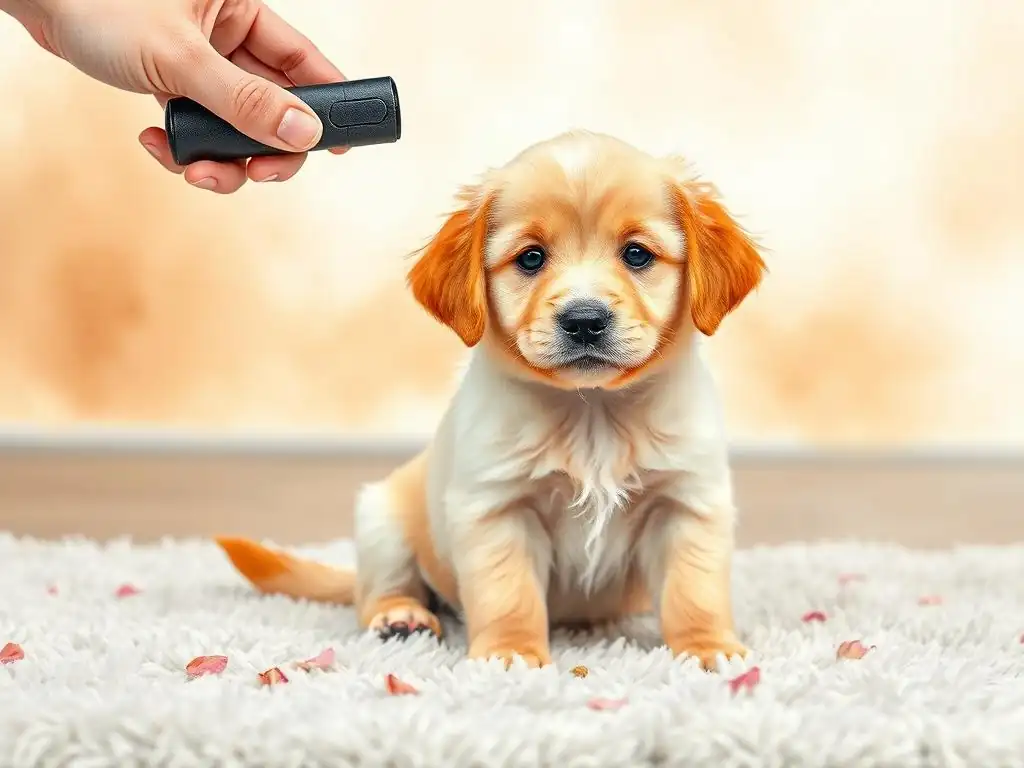
Teaching your puppy the "down" command using clicker training involves associating the sound of the clicker with the desired behavior – lying down. Begin by having your puppy on a leash in a quiet area, minimizing distractions. Hold a high-value treat close to your puppy's nose. Slowly move the treat towards the floor, guiding your puppy's nose in a downward motion.
As their body starts to lower, make a clicking sound with the clicker, immediately followed by giving them the treat. Repeat this process several times. The timing is crucial; the click must coincide precisely with the moment their body begins to lower.
Gradually, you can start to introduce the verbal cue "down" just before you begin moving the treat towards the floor. This helps your puppy associate the word with the action. Remember to always click and treat immediately after the desired behavior. Consistency is key. If your puppy doesn't understand at first, don't get frustrated.
Short, frequent training sessions (5-10 minutes) are more effective than long, tiring ones. Always end on a positive note, with your puppy successfully completing the command and receiving a reward. Over time, your puppy will learn to associate the clicker with a positive outcome and will readily perform the "down" command upon hearing it. Be patient and celebrate even the smallest successes! Remember to always use positive reinforcement; never punish your puppy for not understanding immediately.
With consistent practice and positive reinforcement, your puppy will master the "down" command in no time. Consider varying the location of training to help your puppy generalize the command to different environments. For example, try practicing in the garden, or even a local park (on leash of course! ).
Teaching Your Puppy "Leave It" Using Clicker Training
The "leave it" command is crucial for preventing your puppy from ingesting potentially harmful objects. This command is particularly important to teach using clicker training because it requires precise timing and positive reinforcement. Start with a high-value treat in your hand, closed tightly. Show your puppy the treat, letting them sniff it. Then, place your hand on the floor and say “leave it”. If your puppy tries to grab the treat, simply move your hand away and try again in a few moments.
The goal is to reward your puppy for not taking the treat. Once your puppy remains calm and doesn't attempt to grab the treat for a few seconds, click the clicker and immediately reward them with a separate treat from your other hand. This reinforces the desired behavior (leaving the treat). Gradually increase the duration your puppy needs to resist the temptation before receiving the reward.
Start with just a few seconds, then gradually increase the time. You can also increase the difficulty by placing the treat on the floor instead of in your hand. Remember, the clicker should always be used to mark the precise moment your puppy demonstrates the "leave it" behavior – resisting the temptation.
It's crucial to start with simple scenarios and gradually increase the level of distraction. Begin with a low-value item, gradually progressing to higher-value items as your puppy masters the command. Never punish your puppy for attempting to take the item; instead, simply remove the item and try again later. Positive reinforcement is key to success.
With patience and consistent training, your puppy will learn to reliably follow the "leave it" command, keeping them safe and preventing potential accidents. This command is incredibly useful in a variety of situations, from preventing them from eating dropped food to avoiding hazardous objects. Remember, consistent practice and positive reinforcement are the foundation of successful clicker training.
Troubleshooting Common Clicker Training Challenges
Clicker training, while incredibly effective for puppies, isn't always smooth sailing. Understanding and addressing common challenges is crucial for maintaining a positive and productive training experience. This section will delve into some frequent hurdles and provide practical solutions to keep your puppy engaged and learning. Remember, patience and consistency are key ingredients in successful puppy clicker training. This guide will help you navigate those inevitable bumps in the road.
Addressing Distractions During Puppy Clicker Training
Distractions are a significant obstacle in puppy clicker training. A playful squirrel, a passing car, or even the scent of another dog can easily derail your pup's focus. The key is to manage the environment and gradually increase the level of distraction.
Start training sessions in a quiet, controlled environment with minimal distractions. As your puppy masters the basic cues in this calm setting, gradually introduce low-level distractions. This might involve having someone quietly walk past or introducing a soft toy at a distance. Reward your puppy generously for maintaining focus amidst these minor diversions.
If your puppy becomes overly distracted, don't punish them; simply end the training session and try again later. You can also utilize a technique called "desensitization and counter-conditioning." This involves gradually exposing your puppy to the distractions at a distance and rewarding them for remaining calm. Slowly decrease the distance over multiple sessions. For example, if a passing car is a distraction, start by training far from the road and gradually move closer as your puppy demonstrates improved focus.
Remember, the goal is to build your puppy's ability to concentrate on you even when other stimuli are present. This process requires patience and consistency, but the result is a well-trained puppy who can perform reliably in various environments. Positive reinforcement is always the most effective approach.
Dealing with Inconsistent Responses from Your Puppy
Inconsistent responses are another common challenge. One moment your puppy might respond perfectly to the clicker and cue, and the next they might seem completely uninterested or confused. Several factors can contribute to this inconsistency.
One common reason is timing. The clicker must mark the precise moment of the desired behavior. If there's a delay between the action and the click, your puppy won't understand the connection. Practice your timing until it's almost instantaneous.
Another factor is clarity of cues. Ensure your hand signals and verbal cues are consistent and unambiguous. If you use different hand signals or verbal cues for the same action, your puppy will become confused. Maintain a consistent body language that clearly communicates the desired behavior.
Additionally, consider your puppy's physical and mental state. A tired, hungry, or sick puppy won't be as receptive to training. Always ensure your puppy is well-rested, fed, and feeling their best before starting a training session. Short, frequent sessions are more effective than long, tiring ones. Observe your puppy's body language for signs of tiredness or frustration.
Finally, overwhelm can lead to inconsistent responses. If you introduce too many cues at once or make the training session too long, your puppy may become overwhelmed and stop paying attention. Keep training sessions short, focused, and positive.
Maintaining Motivation During Clicker Training Sessions
Maintaining your puppy's motivation throughout clicker training is essential for success. A bored or uninterested puppy won't learn effectively. Here's how to keep those training sessions engaging:
Vary the rewards: Don't rely solely on one type of treat. Experiment with different high-value treats to keep your puppy interested. Consider incorporating praise and petting along with treats for a more well-rounded reward system.
Keep sessions short and sweet: Short, frequent training sessions are more effective than long, grueling ones. Puppies have short attention spans, so keep each session to around 5-15 minutes, depending on your puppy's age and attention level.
Make it fun! Clicker training should be a positive and enjoyable experience for both you and your puppy. Use a playful tone of voice and incorporate games into your training sessions. Remember that positive reinforcement is key – focus on rewarding good behavior rather than punishing mistakes.
End on a high note: Always finish a training session while your puppy is still enthusiastic and engaged. This will leave them with a positive association with clicker training and make them more eager for the next session. This positive reinforcement is crucial for building a strong bond and ensuring your puppy enjoys the training process. Remember, a happy puppy is a learning puppy!
Adjusting Training Methods Based on Your Puppy's Learning Style
Every puppy is an individual, and what works wonders for one might fall flat with another. Some puppies are visual learners, readily picking up cues from hand signals and body language. Others are auditory learners, responding best to verbal commands and the sound of the clicker itself. Still others are kinesthetic learners, needing hands-on experience and physical guidance to grasp new concepts. Understanding your puppy's preferred learning style is crucial for successful clicker training.
For example, a visual learner might benefit from exaggerated hand signals accompanying the clicker and treat. You could use a clear, distinct hand gesture to signal the desired behavior before using the clicker, reinforcing the association between the gesture and the reward. Conversely, an auditory learner may respond better to a clear, consistent verbal cue alongside the click. Try pairing the click with a word like "yes" or "good dog," ensuring the timing is precise. This helps them associate the sound of the word with the positive reinforcement.
Kinesthetic learners need more physical interaction. For instance, if you're teaching your puppy to sit, gently guide them into the sitting position while simultaneously clicking and treating. This hands-on approach helps them connect the physical sensation of sitting with the positive reward. Remember to gradually fade out the physical guidance as your puppy begins to understand the command.
Observing your puppy's reactions during training sessions is key. Does your puppy respond better to visual cues, auditory cues, or physical guidance? If one method isn't producing results, try a different approach. Flexibility is paramount; don't be afraid to adapt your training methods to suit your puppy's unique learning preferences.
Experiment with different combinations of visual, auditory, and kinesthetic cues to find the most effective approach for your furry friend. The goal is to make the learning process enjoyable and successful for both you and your puppy. Remember that patience and persistence are key ingredients in overcoming any training challenges. 🎉
Advanced Clicker Training Techniques for Puppies

This section delves into more sophisticated applications of clicker training for puppies, moving beyond the basic association of sound and reward. We'll explore techniques to shape complex behaviors and address specific behavioral problems, ultimately enhancing your puppy's training journey. Remember, patience and positive reinforcement are key throughout this process. This comprehensive guide will help you become a proficient puppy clicker trainer.
Introducing Shaping Techniques for Complex Behaviors
Shaping is a powerful clicker training technique that allows you to teach your puppy complex behaviors by rewarding successive approximations of the desired action. Instead of waiting for your puppy to perform the entire behavior perfectly, you reward each small step that moves them closer to the goal. Let's illustrate with an example: teaching your puppy to "fetch."
Instead of simply throwing a toy and expecting your puppy to immediately retrieve it, you'd break it down:
- Looking at the toy: Click and reward when your puppy looks at the toy.
- Touching the toy: Click and reward when your puppy touches the toy with their nose.
- Picking up the toy: Click and reward when your puppy picks up the toy in their mouth.
- Carrying the toy a short distance: Click and reward for carrying the toy a few steps.
- Returning the toy: Click and reward when your puppy brings the toy back to you.
Each step is a small victory, positively reinforced with a click and a treat. This gradual process makes learning less daunting for your puppy, leading to faster and more effective acquisition of complex commands. Remember to keep training sessions short and fun, avoiding overwhelming your puppy. The key is to consistently reinforce the desired behaviors, gradually increasing the difficulty. This method is particularly effective for teaching tricks like "play dead," "roll over," or even more complex tasks. Data suggests that using shaping techniques reduces frustration for both the puppy and the owner, leading to a more positive training experience.
Using Clicker Training to Address Behavioral Issues
Clicker training isn't just for teaching tricks; it's a valuable tool for modifying unwanted behaviors. By carefully identifying the triggers and rewarding alternative behaviors, you can effectively address issues like excessive barking, jumping, or chewing.
For instance, if your puppy barks excessively when left alone, you can use clicker training to teach them a "quiet" command. Start by clicking and rewarding your puppy when they are quiet for even a few seconds. Gradually increase the duration of quiet time you reward. Simultaneously, you can work on other calming behaviors like chewing on appropriate toys, rewarding these actions with clicks and treats. This approach utilizes the principles of counter-conditioning, replacing the unwanted behavior (barking) with a desired one (quietness or chewing a toy).
Another example involves jumping. Instead of punishing your puppy for jumping, click and reward them when all four paws are on the ground. This positive reinforcement approach focuses on rewarding the desired behavior, making it more likely to occur in the future. Consistency is crucial; every instance of appropriate behavior should be rewarded. This proactive method avoids the potential negative consequences of punishment-based training. Careful observation and the identification of triggers are paramount in effectively addressing behavioral issues with clicker training. Remember to consult a professional dog trainer if you encounter persistent or severe behavioral problems.
Combining Clicker Training with Other Training Methods
Clicker training isn't a standalone method; it works exceptionally well when integrated with other training approaches. Combining it with traditional methods like lure training or positive reinforcement techniques can create a well-rounded and highly effective training program.
For example, you could use a lure (a treat or toy) to guide your puppy into the desired position, then click and reward when they hold the position. This combines the guidance of lure training with the precision of clicker training. The synergy between these methods enhances learning and creates a more positive and engaging experience for your puppy.
This multifaceted approach caters to different learning styles, ensuring a more comprehensive understanding of commands. The flexibility of clicker training allows for seamless integration with various techniques, maximizing your training's efficiency and effectiveness. This holistic approach is supported by numerous studies demonstrating the superior results of integrated training methods compared to single-method approaches.
Maintaining Consistency in Clicker Training for Long-Term Success
Consistency is the cornerstone of successful clicker training for puppies. A sporadic approach will only confuse your pup and hinder progress. Think of it like this: if you inconsistently reward a behavior, your puppy won't understand which actions are desirable and which are not. This leads to frustration for both you and your furry friend.
To avoid this, establish a regular training schedule. Even short, 10-15 minute sessions several times a day are far more effective than infrequent, longer sessions. This allows for focused learning and prevents your puppy from becoming overwhelmed. Remember, short, frequent sessions are key to maintaining your puppy's engagement and preventing burnout.
Furthermore, consistency extends beyond the frequency of training sessions. It also encompasses the use of the clicker itself. Always click immediately after the desired behavior occurs. Any delay will break the association between the click and the reward, weakening the effectiveness of the training.
Similarly, always follow the click with a high-value reward, consistent in type and amount. This predictability is crucial for your puppy to understand the cause-and-effect relationship between their actions and the positive reinforcement they receive. Inconsistency in the type or amount of reward can lead to confusion and decreased motivation. For example, if sometimes you reward with a small piece of kibble and other times with a whole piece of sausage, your puppy will struggle to understand what is expected.
Finally, maintain consistency across all family members involved in the training. Everyone should use the same cues, the same timing for clicks and rewards, and the same overall approach. Inconsistent cues or methods will create confusion and potentially undo the progress made during training sessions. Hold a family meeting to ensure everyone understands the training process and their roles in it.
Consistent application of the clicker training method across the board will significantly improve your puppy's comprehension and accelerate their learning process, creating a more enjoyable experience for everyone involved. This unified approach is a vital component of achieving long-term success in puppy clicker training. Remember, a well-trained puppy is a happy puppy, and consistent training is the key to unlocking their full potential. This consistency will build trust and a strong bond between you and your pup, laying the foundation for a lifetime of happy companionship.
Clicker training isn't just about teaching your puppy to sit or stay; it's a powerful tool for shaping behavior and building a strong, positive relationship. When integrated with socialization, clicker training becomes even more effective, fostering well-adjusted, confident pups. This approach leverages the puppy's natural curiosity and desire for reward, creating a positive learning environment that encourages interaction and reduces fear-based responses. Early socialization, combined with consistent clicker training, is crucial for preventing behavioral issues later in life.
A well-socialized puppy is more likely to be comfortable around other dogs, people, and various environments, leading to a happier and more fulfilling life for both the pet and the owner. This holistic approach ensures your puppy develops into a confident and well-behaved companion. The key is consistency and positive reinforcement; never punish your puppy during training. Instead, focus on rewarding desired behaviors.
Clicker training provides a precise and rewarding way to manage puppy interactions. For example, if your puppy displays appropriate behavior towards another dog – a gentle approach, playful sniffing, or a calm retreat when the other dog shows signs of stress – immediately click and reward. This reinforces the desired behavior.
Conversely, if your puppy exhibits unwanted behaviors like excessive barking, lunging, or snapping, redirect their attention with a different command (like "leave it" or "look at me") and reward calm behavior. The clicker acts as a marker, clearly indicating the exact moment the desired behavior occurs, making the association between action and reward much stronger. This method is particularly useful during supervised playdates or visits to dog-friendly parks.
Remember to start with short, controlled interactions to avoid overwhelming your puppy. Gradually increase the duration and complexity of social situations as your puppy demonstrates increasing comfort and appropriate behavior. Data suggests that puppies trained with this method show a significantly higher rate of successful social integration compared to those trained using traditional methods.
Puppy socialization classes provide a structured environment for your puppy to interact with other dogs and people. Clicker training can significantly enhance the effectiveness of these classes. Instead of relying solely on verbal commands, incorporate the clicker to mark specific behaviors you want your puppy to repeat.
For instance, if your puppy calmly approaches another puppy, clicks and rewards immediately reinforce this positive interaction. This targeted approach helps your puppy learn to associate positive experiences with other dogs, reducing anxiety and promoting confident social interaction. The instructor can also use the clicker to guide puppies through exercises and games that encourage appropriate play behaviors.
A well-structured class incorporating clicker training will create a safe and controlled environment for your puppy to learn and grow, building confidence and reducing the likelihood of developing behavioral problems. Observational learning plays a role here too; puppies learn from each other's successes and failures, further enhancing the learning process.
Clicker Training and Building Confidence in Your Puppy
Clicker training is incredibly effective in building a confident puppy. By rewarding even the smallest attempts at desired behaviors, you create a positive feedback loop that reinforces bravery and reduces anxiety. For instance, if your puppy is hesitant to approach a new person or object, start by clicking and rewarding them for simply looking in the direction of the stimulus. Gradually increase the proximity and reward each small step forward.
This approach helps your puppy associate positive emotions with potentially stressful situations. Building confidence is a gradual process; you will need patience and consistency. Avoid forcing your puppy into situations they find overwhelming. Instead, let them progress at their own pace, rewarding each small victory.
This method helps to prevent the development of fear-based behaviors and promotes a resilient and well-adjusted canine companion. Remember, every puppy learns at their own speed. Celebrate even the smallest successes and continue to use positive reinforcement to build your puppy's confidence and create a strong bond based on trust and mutual respect.
Maintaining Your Puppy’s Training Momentum: Continued Success

Successfully starting your puppy on clicker training is only half the battle. Maintaining their engagement and ensuring continued progress requires consistent effort and a keen understanding of your puppy's learning style. This section delves into the strategies necessary to keep your puppy motivated and learning, transforming your clicker training journey into a rewarding experience for both of you. Remember, a well-trained puppy is a happy puppy, and a happy puppy is a joy to be around! This guide will help you navigate the ongoing process and avoid common pitfalls.
Consistency is Key: Regular Clicker Training Sessions
The key to successful puppy clicker training lies in consistency. Think of it like building a strong muscle – you need regular exercise to see results. Similarly, your puppy needs regular, short training sessions to reinforce learned behaviors and prevent confusion. Aim for multiple short sessions (5-15 minutes) throughout the day, rather than one long, tiring session. This approach keeps your puppy engaged and prevents them from becoming overwhelmed or bored. A tired, overstimulated puppy will learn less effectively.
Consider incorporating training into your daily routine. For instance, you could practice "sit" and "stay" before meals, or work on "leave it" during playtime. This integration makes training a natural part of your day, not a chore. Remember to always end on a positive note, with a successful command and a rewarding treat, even if the session is short. This positive reinforcement is crucial for maintaining your puppy's enthusiasm. Think of it like this: short, sweet, and successful! 🐕
Rewarding Desired Behaviors Consistently
Consistent rewarding is paramount in clicker training. The clicker acts as a marker, signaling the precise moment your puppy performs the desired behavior. This should immediately be followed by a reward – a high-value treat, praise, or a combination of both. Inconsistent rewarding can confuse your puppy, leading to frustration and slower progress. The timing is critical; the click should sound at the exact moment the behavior is completed.
Consider using a variety of rewards to keep your puppy engaged. While small, high-value treats are ideal, you can also incorporate praise, petting, or a favorite toy. The goal is to find what motivates your puppy most effectively. Observe their reactions to different rewards and adjust your approach accordingly. For instance, some puppies respond better to a game of fetch than to a simple treat. Experimentation is key to discovering what works best for your unique puppy.
Adjusting Your Approach Based on Your Puppy's Progress
Your puppy's learning pace is unique. Some puppies pick up new commands quickly, while others require more time and repetition. It's crucial to adapt your training approach based on your puppy's progress. If your puppy is struggling with a particular command, don't get discouraged. Try breaking it down into smaller, simpler steps. For example, if "stay" is proving difficult, start with shorter durations and gradually increase the time.
Regularly assess your puppy's understanding. Are they consistently responding to the clicker? Are they exhibiting the desired behaviors reliably? If not, consider adjusting the difficulty of the commands, the type of rewards used, or the training environment. Perhaps your puppy is being distracted, or the training sessions are too long. Analyzing your approach and making necessary adjustments is an essential part of successful clicker training. Remember, patience and flexibility are your best allies in this journey. Celebrate every small victory and adjust your strategy as needed to ensure a positive and successful training experience. 🎉
Seeking Professional Guidance When Needed
Even with diligent effort and a well-structured approach, some puppy owners may encounter challenges that require professional intervention. This isn't a sign of failure; rather, it's a testament to recognizing when specialized assistance can significantly benefit both you and your puppy. Many dogs exhibit unique behavioral quirks or possess underlying anxieties that require the expertise of a certified professional dog trainer or veterinary behaviorist. These professionals possess a deep understanding of canine behavior and can pinpoint the root causes of problematic behaviors, often going beyond the scope of general clicker training techniques.
For instance, a puppy exhibiting severe separation anxiety, aggression towards other dogs, or obsessive-compulsive behaviors might require a more tailored approach than what a standard clicker training guide can provide. A professional can assess the situation, rule out underlying medical conditions, and design a comprehensive behavior modification plan. This plan might involve a combination of clicker training, desensitization techniques, medication (in some cases prescribed by a veterinarian), and environmental modifications to create a more supportive environment for your puppy's well-being.
Remember, seeking professional help is a proactive measure, not a reactive one. Don't wait until problems escalate to critical levels before seeking assistance. Early intervention can often prevent more significant behavioral issues from developing. Finding a reputable professional involves research; look for certifications, reviews, and testimonials to ensure you're working with someone experienced and qualified in addressing your puppy's specific needs.
The investment in professional guidance can prove invaluable in ensuring your puppy's long-term happiness and success in learning and adapting to their new home and family. A well-trained puppy is a happy puppy, and sometimes, that requires a team effort, including a skilled professional. Your puppy's mental and emotional well-being should always be a priority, and seeking help when needed is a sign of responsible pet ownership. 🐶
Beyond Basic Commands: Expanding Your Puppy's Training
This section delves into the exciting possibilities of clicker training beyond the fundamental "sit," "stay," and "come." Once your puppy masters these basics, you can seamlessly transition to more complex commands and tricks, significantly enhancing their cognitive abilities and your bond. The key is to maintain a positive reinforcement approach, rewarding even the smallest steps towards the desired behavior. This gradual progression prevents frustration and keeps your puppy engaged. Remember, consistency is key to successful clicker training at any level.
Teaching Advanced Tricks Using Clicker Training
Teaching advanced tricks leverages the same principles as basic training but requires more patience and creative shaping of behaviors. Let's look at teaching your puppy to "play dead," a popular and impressive trick.
First, lure your puppy into a down position using a treat. The moment they lie down, click and reward. Repeat this several times, ensuring the click and treat follow immediately after the down. Gradually, start adding the verbal cue "play dead" just before luring them down.
Next, introduce the "roll over" element. While your puppy is down, gently guide them onto their side using a treat. Click and reward the moment they are on their side. Repeat this, gradually adding the verbal cue. Finally, connect the "down" and "roll over" movements, rewarding each step with a click and treat until they complete the entire "play dead" sequence.
Remember to keep training sessions short and fun, ideally 10-15 minutes at a time. Overtraining can lead to frustration and disengagement. A tired puppy is less receptive to learning. Consider breaking up longer sessions with play breaks. This approach ensures your puppy remains enthusiastic and eager to participate.
Clicker Training for Problem Solving
Clicker training isn't just for tricks; it's a powerful tool for addressing behavioral problems. For instance, if your puppy exhibits excessive barking, you can use clicker training to shape a "quiet" command. Instead of punishing the barking, reward silence.
Identify times when your puppy is naturally quiet. The moment the barking stops, even for a brief second, immediately click and reward. Gradually increase the duration of the quiet period you reward. Pair the click with the verbal cue "quiet," reinforcing the association. This positive approach is far more effective than punishment, which can create fear and anxiety. Remember to always be patient and consistent; changing ingrained behaviors takes time and dedication.
Enhancing Your Bond with Your Puppy Through Clicker Training
Clicker training isn't just about teaching commands; it profoundly strengthens the bond between you and your puppy. The process fosters trust, communication, and mutual understanding. The positive reinforcement approach builds confidence in your puppy, while the consistent interaction strengthens your relationship. The shared successes during training create a positive feedback loop, fostering a deeper connection based on mutual respect and affection. The consistent praise and rewards build your puppy's confidence and make them eager to please you, leading to a more harmonious and loving relationship.
This positive reinforcement approach extends beyond training sessions, creating a more relaxed and trusting environment overall. The process of learning together is a powerful bonding experience. Consider incorporating various tricks and games to keep training engaging and fun, further strengthening this bond. The shared experiences and mutual successes create a strong foundation for a lifetime of companionship.
Frequently Asked Questions
What is clicker training?
Clicker training is a positive reinforcement method using a clicker to mark the exact moment a puppy performs a desired behavior. This is followed by an immediate reward, such as a treat, creating a positive association. It's gentle and effective.
Why is clicker training good for puppies?
Clicker training is ideal for puppies because it's fun and engaging, helping build a strong bond between you and your puppy. It's also effective for teaching basic obedience and complex tricks in a positive way. It avoids harsh punishments.
What kind of clicker should I use?
Any small, handheld clicker will work. Look for one that's easy to use and makes a clear, distinct sound. The most important aspect is consistency in its use.
How often should I train my puppy using a clicker?
Short, frequent training sessions are best, ideally several short sessions per day. Keep them fun and positive to maintain your puppy's interest and avoid overwhelming them. Aim for 5-15 minute sessions.
What if my puppy doesn't respond to the clicker?
Ensure you're pairing the click with an immediate reward. If your puppy doesn't understand, try associating the click with something they already enjoy, like a favourite toy. Patience and persistence are key!
Final Reflection: The Lasting Click of Connection
Clicker training isn't just a trendy puppy-raising technique; it's a powerful tool for building a lifetime of understanding and trust between you and your canine companion. The positive reinforcement approach detailed in this guide offers a pathway to a happier, healthier relationship with your puppy, far beyond the initial house-training hurdles.
The impact of positive reinforcement extends far beyond basic obedience. It fosters a bond built on mutual respect and joyful collaboration, shaping a dog's personality into one that is confident, cooperative, and eager to please. The best way to find yourself is to lose yourself in the service of others.
While this quote isn't specifically about dogs, it beautifully encapsulates the reciprocal nature of positive reinforcement training; by focusing on your puppy's needs and rewarding desired behaviors, you strengthen the bond and discover a deeper connection with your furry friend.
Now, consider how you can apply these principles beyond the clicker and treat pouch. Think about the ways you communicate with your puppy, not just through commands, but through your overall demeanor. Are you patient and encouraging? Do you celebrate even the smallest successes? Remember, the clicker is just a tool; the true magic lies in the consistent positive reinforcement and the unwavering love you share with your puppy. Embrace this journey of learning and growth together, and watch your bond flourish.
Unlock Your Puppy's Potential: Start Clicker Training Today!
Thank you for learning about clicker training! You've discovered a fun and effective way to strengthen your bond with your puppy while teaching essential commands. Ready to begin?
- Start your puppy's clicker training journey today! Begin with short, positive sessions focusing on one command at a time. Remember to keep it fun and rewarding for both of you.
- Share your experiences—both successes and challenges—with other PetCareWorld readers in the comments below. Let's build a supportive community!
- Explore additional resources on our website to further your understanding of positive reinforcement training methods.
What exciting new trick will you and your puppy learn first?